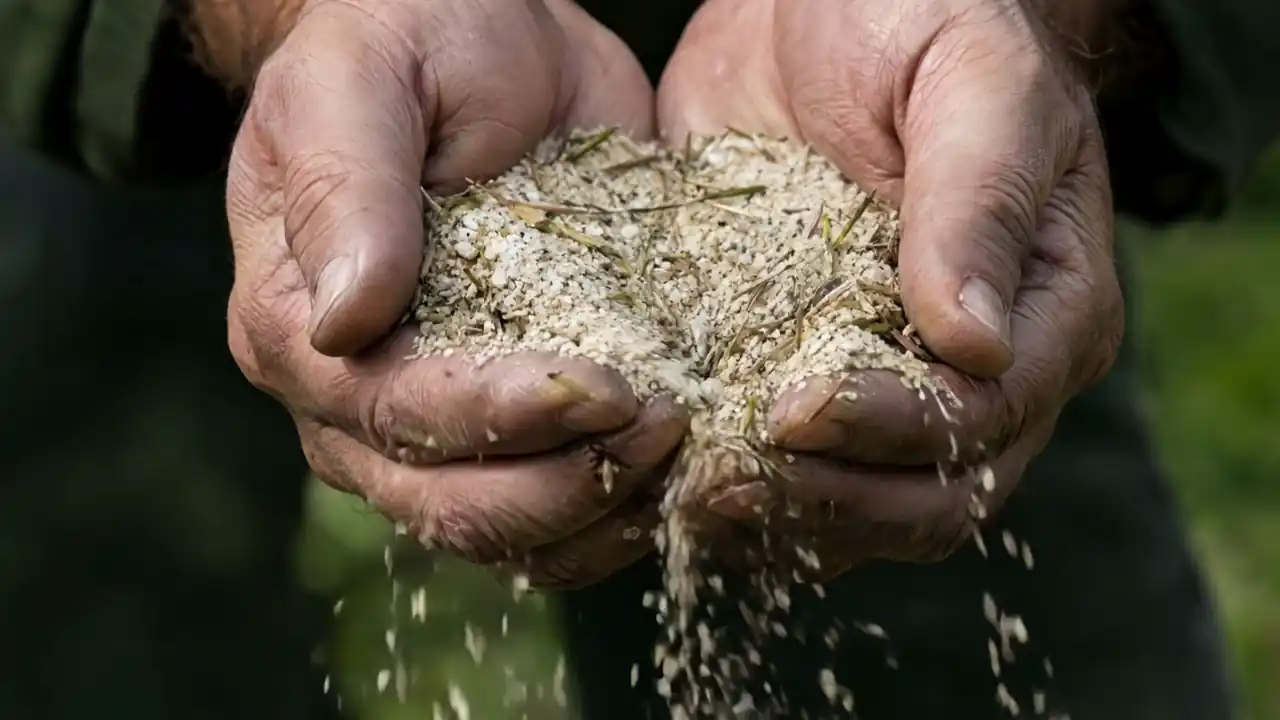
Does hydroseeding work in Pensacola's sandy soil?
Yes, when moisture and pH are managed. Local sands drain fast and hold little water or nutrient, so prep and early watering carry extra weight.

Yes. Hydroseeding works in Pensacola's sandy soil when moisture is managed. Common local soils such as Lakeland sand are excessively drained, with very low available water and about 1 percent organic matter, per the USDA soil survey. The hydromulch layer holds seed and moisture at the surface, and light watering two or three times a day for two weeks carries germination.
- Lakeland sand organic matter
- About 1 percent
- Lakeland sand depth
- More than 80 inches
- Bahia iron chlorosis
- Above pH 7.0
- Centipede preferred pH
- About 5.0 to 5.5
- UF/IFAS routine soil test
- $10, results in about 2 weeks
What the soil survey says about local sand
The USDA-NRCS soil survey for Escambia County maps mostly deep sands. Inland, the common series are Lakeland, Troup, Kureb, Resota and Foxworth. Along the coast, Corolla, Newhan and Duckston sands dominate, alongside beaches and dunes.
Lakeland sand, mapped on slopes from 0 to 12 percent, is described as excessively drained, with "very low" available water to 60 inches and about 1 percent organic matter in the surface layer. The official series description puts the sand at more than 80 inches thick, with "rapid to very rapid permeability." Kureb sand on coastal ridges is similarly excessively drained. The survey places nonirrigated Lakeland in land capability class 4s and Kureb in 7s, where the "s" flags limits from the soil itself.
The county also maps a unit called "Troup and Perdido soils, 8 to 35 percent slopes, severely eroded," a reminder that sand on a slope moves easily once cover is stripped.
| Soil | Where it occurs | What it means for hydroseeding |
|---|---|---|
| Lakeland sand | Inland uplands, 0 to 12 percent slopes | Excessively drained, very low available water, about 1 percent organic matter, acidic |
| Troup and Perdido soils | Slopes of 8 to 35 percent, mapped as severely eroded | Erosion-prone; slopes may need bonded fiber matrix or blankets |
| Resota and Foxworth sands | Inland | Deep sands; plan for frequent early watering |
| Kureb sand | Coastal ridges, 0 to 12 percent slopes | Excessively drained, very low available water |
| Corolla, Newhan and Duckston sands | Coast and dune areas | Salt exposure; dunes need native plants, not turf |
| Arents and urban land complexes | Disturbed and developed ground | Fill varies; test before choosing grass |
Why hydroseed suits fast-draining ground
Hydroseeding sprays seed, wood-fiber mulch, fertilizer, tackifier and dye together as one slurry. On sand, that mulch blanket does the work bare soil cannot: it shades the seed, slows evaporation and keeps seed from blowing or washing off the surface.
Dry broadcast seed, by contrast, sits exposed on loose sand unless it is covered; UF/IFAS advises mulching enough to cover 50 to 75 percent of bare ground, about one bale of hay per 1,000 sq ft. Hydroseeding does not change the sand underneath, though. In summer, a seedbed on Lakeland sand still dries within hours, and fertilizer leaches easily. That is why the first two weeks of watering, covered in our aftercare guide, matter so much here.
On slopes, a standard mulch may not hold through a Pensacola downpour; bonded fiber matrix forms a continuous layer that stays put when re-wetted.
Acidity, pH and iron chlorosis
Native inland sand is naturally acidic. The Lakeland series description gives its reaction as "very strongly acid to moderately acid throughout except where the surface has been limed." That suits the two grasses best adapted to local upland soil:
- Bahiagrass prefers acidic soil and develops iron chlorosis, a yellowing, above pH 7.0, per UF/IFAS.
- Centipedegrass does best around pH 5.0 to 5.5 and shows "severe iron chlorosis" above about 6.5 to 7.0. UF/IFAS says lime is seldom needed.
Coastal soils can run the other way. UF/IFAS notes that bahia "does not grow well in high-pH soils, such as those found in coastal areas." On new-construction lots, imported fill may not match the native sand at all. Either way, a test beats a guess, and lime is easy to add but slow to undo. See the Pensacola grass guide for grass-by-pH choices.
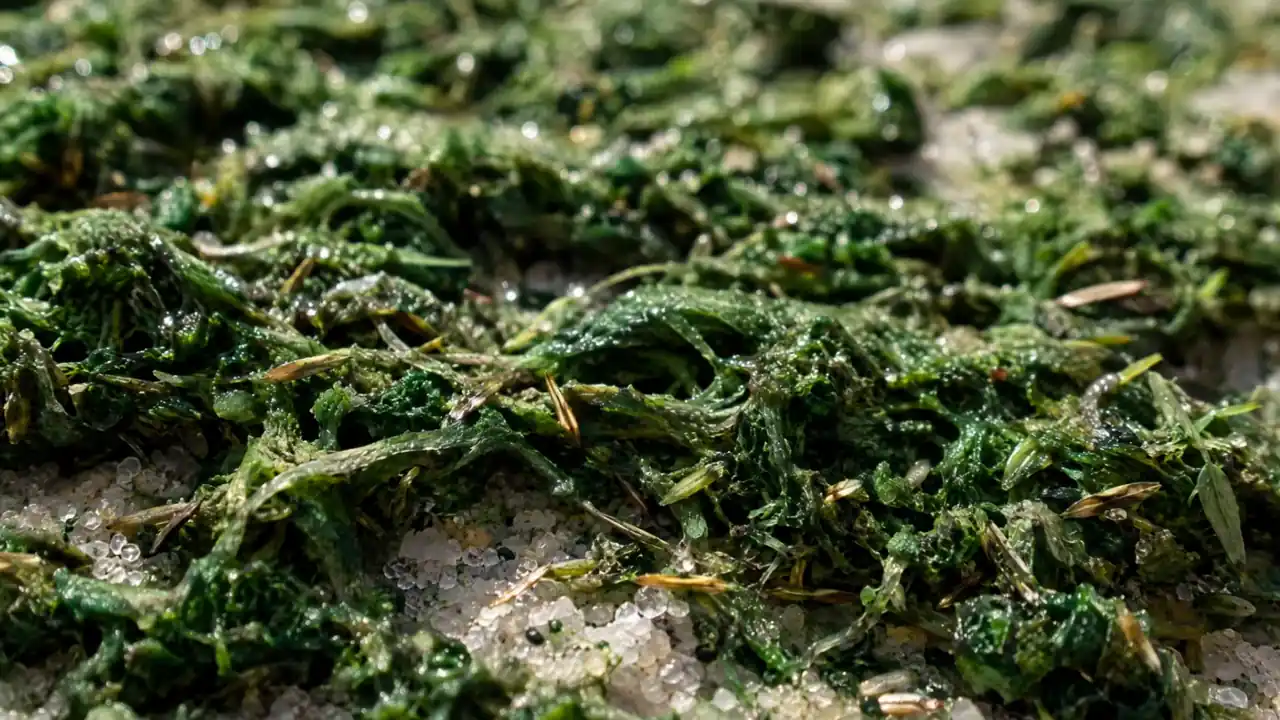
Test the soil before you pick the seed
A $10 routine test through UF/IFAS Extension Escambia reports pH, phosphorus, potassium, calcium and magnesium in about two weeks, and shows whether lime would help or hurt.
How to get a soil test in Escambia County
UF/IFAS Extension Escambia County provides kits for the UF Soil Testing Lab. A routine test costs $10 and covers pH, phosphorus, potassium, calcium and magnesium. Results take about two weeks.
- Office: 3740 Stefani Road, Cantonment, FL 32533
- Phone: (850) 475-5230, Monday to Friday, 8:00 to 4:30
- Sampling: collect 10 to 15 subsamples across the area, air-dry them, then mail the combined sample to the lab
If timing allows, test before seeding; two weeks fits easily into planning for a spring job.
Preparing sand for hydroseed
UF/IFAS turf specialist Laurie Trenholm says "the most important factor is how well the ground is prepped prior to sodding or seeding." On local sand, our prep focuses on a few things:
- Grading so water sheets across the lot instead of cutting channels
- Breaking up compacted layers left by equipment
- Correcting pH only when a test calls for it, and keeping fertilizer to what the test supports, since it leaches quickly
- Choosing grass for the ground: bahia or centipede on acidic upland sand, bermuda on salt-exposed coastal sites
- Seeding between April and early July, so irrigation can cover the dry May stretch and roots run deep before late-summer storms
For new lawns, see residential hydroseeding; for slopes and drainage problems, erosion control.
Common questions about does hydroseeding work in sandy soil? pensacola guide
Short, sourced answers to what people ask us most. If your site has a wrinkle these do not cover, send it through the quote form below and we will talk it through with you.
Will hydroseed wash away on sandy soil?
On flat ground, a properly applied hydromulch with tackifier usually holds seed in place on sand. On slopes, heavy rain can still wash it out; Escambia even maps a severely eroded Troup and Perdido soil unit on 8 to 35 percent slopes. Steep or channeled areas get bonded fiber matrix or erosion control blankets.
What grass grows best in sandy soil in Pensacola?
On inland acidic sand, bahiagrass and centipedegrass are the best fits. Both tolerate low fertility, and bahia has excellent drought tolerance, per UF/IFAS. On salt-exposed coastal sand, common bermudagrass is the seeded choice. St. Augustine and zoysia also handle coastal sites but are installed as sod rather than seed.
Should I add lime before hydroseeding?
Only if a soil test calls for it. Native Pensacola sands are naturally acidic, which suits bahia and centipede. UF/IFAS says lime is seldom needed for centipede, which prefers pH around 5.0 to 5.5. Raising pH too far causes iron chlorosis in both grasses, above pH 7.0 for bahia.
How do I get my soil tested in Escambia County?
UF/IFAS Extension Escambia County, at 3740 Stefani Road in Cantonment, provides kits for the UF Soil Testing Lab. A routine test of pH, phosphorus, potassium, calcium and magnesium costs $10, with results in about two weeks. Collect 10 to 15 subsamples, air-dry them and mail them in.
What kind of soil does Pensacola have?
Mostly deep, excessively drained sands. The USDA soil survey for Escambia County lists Lakeland, Troup, Kureb, Resota and Foxworth sands inland, and Corolla, Newhan and Duckston sands on the coast. Lakeland sand is more than 80 inches deep, holds very little water and is naturally acidic unless limed.
Does sandy soil need more water after hydroseeding?
Yes. Lakeland sand, common in Escambia County, is excessively drained with very low available water, so a seedbed dries quickly, sometimes within hours in summer. UF/IFAS advises watering new seed two or three times a day in small quantities for about two weeks, then tapering to deeper, less frequent watering as the grass establishes.
Keep reading
Related guides and services for sandy soil, heavy rain and the grasses that hold on the Gulf Coast, each written for Escambia and Santa Rosa county sites.
Hydroseeding guides
Plan the project, choose grass and care for new growth.
Open
Hydroseed aftercare: watering and mowing
Light, frequent water for two weeks, then a slow taper to deep, infrequent irrigation. The details below are tuned for fast-draining local soil.
Open
Best grass for Pensacola: hydroseeding grass guide
Seven turf grasses and two temporary covers, compared on the traits that matter in Escambia and Santa Rosa sand, salt and summer heat.
Open
Residential Hydroseeding
New-build lots and thinning lawns, seeded with a grass that suits deep Panhandle sand, in the months when it will actually take.
Open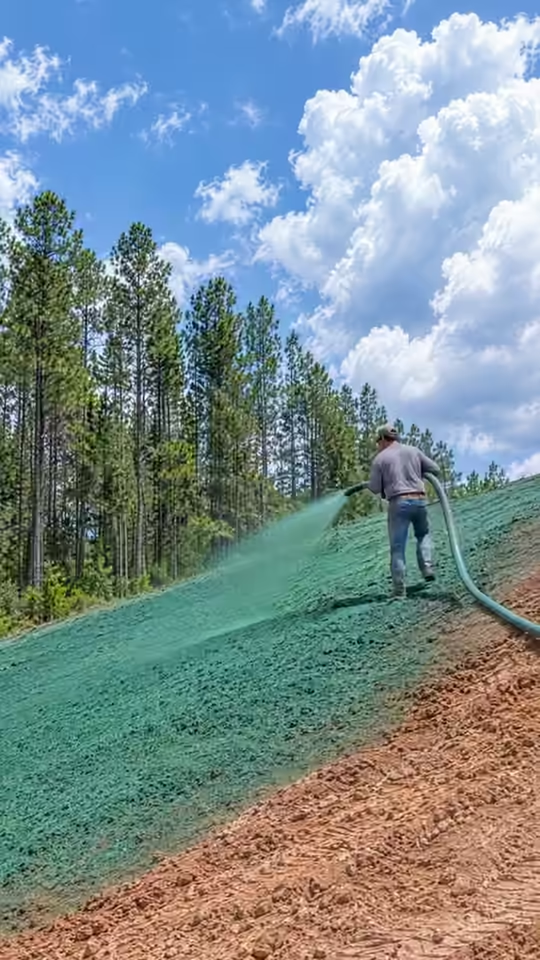
Bonded Fiber Matrix and Hydromulch
Sprayed erosion protection for slopes and bare ground: what BFM and hydromulch are, what FDOT requires of them, and when blankets are the better call.
Open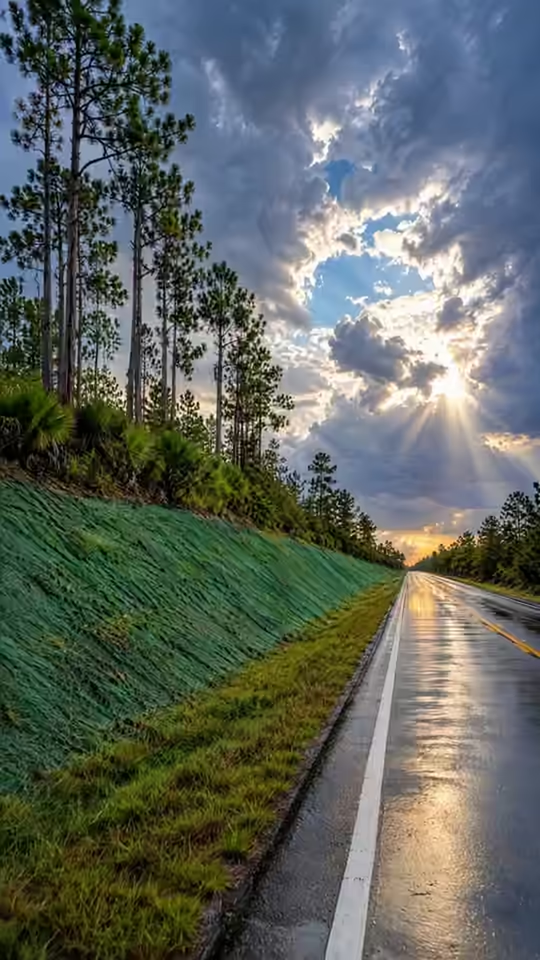
Erosion Control
Hydromulch, bonded fiber matrix, blankets and temporary grass for slopes, ditches and bare ground in one of the rainiest cities in the country.
OpenSources
Facts on this page come from public sources, mostly UF/IFAS Extension, the Florida Department of Environmental Protection, FDOT and NOAA. We recheck them whenever we update the page.
- USDA-NRCS Map Unit Description, Escambia County FL
- USDA Official Series Description: Lakeland
- UF/IFAS Extension Escambia County: Soil Testing
- UF/IFAS EDIS LH006, Bahiagrass for Florida Lawns
- UF/IFAS EDIS LH009, Centipedegrass for Florida Lawns
- UF/IFAS ENH6, Bahiagrass for Florida Lawns
- UF/IFAS EDIS LH013, Establishing Your Florida Lawn
- UF/IFAS News: Summer sodding and lawn preparation (2020)
Tell us about the ground
Send the address and what you are trying to grow or hold in place. We look at the site, the soil and the slope, then quote the mix and the method that fit it.