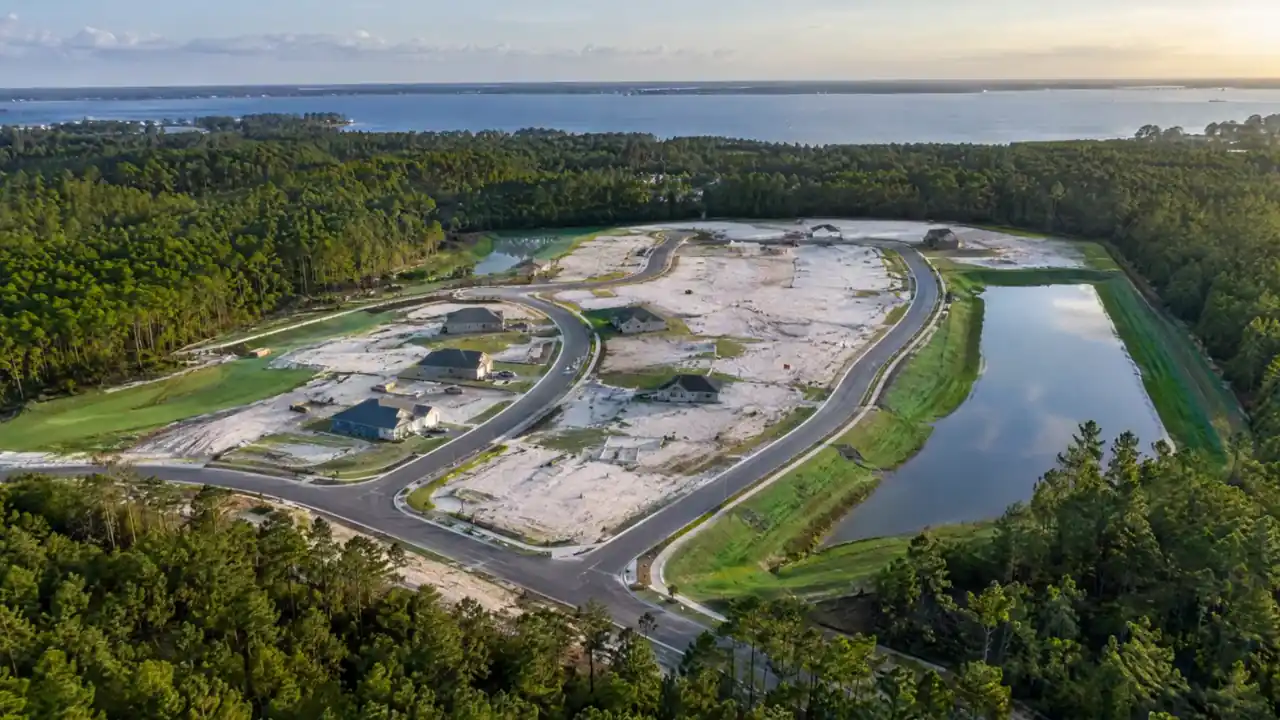
Commercial hydroseeding for Northwest Florida sites
Subdivisions, commercial pads, HOA common areas, solar fields and right-of-way, with the planting scope coordinated around site conditions, access and the project schedule.

Commercial hydroseeding covers large disturbed areas quickly with seed, mulch and tackifier sprayed from a truck-mounted machine. For Pensacola-area builders and developers, the useful starting point is a marked treatment area, current project specifications and a clear aftercare responsibility. Application is one step toward establishment; it does not itself establish final stabilization or close a permit.
- Quote input
- Current plans and treatment boundary
- Schedule input
- Site readiness and applicable requirements
- Completion review
- Project-specific establishment criteria
- FDOT 570 allows
- Seed, hydroseed, BFM or sod
- Spring/summer mix
- Bahia, common bermuda, browntop millet
Who we work with
Commercial work in Escambia and Santa Rosa counties comes from a wide set of owners, each with a different deadline.
- Builders and developers need lots, common areas and subdivision infrastructure stabilized fast so SWPPP inspections stay clean and the permit can be closed.
- HOAs and property managers deal with eroding retention-pond banks, entrance berms and common-area turf that has thinned to sand.
- Commercial and industrial owners have pads, outparcels and detention areas that sit bare between phases.
- Solar, utility and pipeline contractors have large acreage or long linear corridors to restore.
For a useful quote, provide slope and soil information, drainage concerns, water access and the required schedule. Discuss whether the proposed planting scope is standard hydroseed or bonded fiber matrix. Any separate channel protection, blanket installation or engineering work should be identified explicitly rather than assumed to be included.
| Site type | Typical driver | Typical approach |
|---|---|---|
| Subdivision or commercial pad | Applicable project stabilization requirements | Specified planting scope, phased with grading |
| HOA retention pond | Bank erosion, thin turf | Site assessment and specified vegetation or protection |
| Solar farm | Large cleared acreage | Phased hydroseed following clearing |
| Utility or pipeline ROW | Linear restoration | Specified vegetation; crossings reviewed separately |
| Off-season site | Outside the April to early July window | Millet or ryegrass cover, hydromulch or BFM |
Permits set the clock
Florida DEP's NPDES Construction Generic Permit applies when construction disturbs 1 acre or more, or less than an acre that is part of a larger common plan of development, and discharges stormwater. Under the permit, stabilization has to begin within 7 calendar days after work stops on any part of the site. Listed measures include temporary seeding, permanent seeding, mulching, geotextiles and sod. Inspections run at least every 7 days and within 24 hours of a 0.50 inch rain.
The cited Florida CGP defines final stabilization as completion of soil-disturbing work plus the specified uniform perennial coverage on applicable areas, or equivalent permanent stabilization. Application alone does not establish that outcome. The responsible operator should confirm the applicable completion and termination requirements. Locally, Escambia County requires a land disturbance permit before clearing or grading, and Santa Rosa County's environmental department calls for temporary cover after 7 days of no activity and lists hydroseeding among accepted practices. Our final stabilization page walks through the permit language in detail.
Solar, utility and pipeline acreage
Large-acreage jobs are where hydroseeding pays off most, because one machine can cover ground that would take days to sod or straw. North Escambia now hosts several FPL solar energy centers, including Sparkleberry at about 553 acres and Mitchell Creek at about 1,282 acres, and the region has a steady stream of utility and pipeline right-of-way work.
The risk on these sites is clearing too much at once. In March 2024, WEAR-TV reported that a solar site in Holt, Okaloosa County, sent heavy sediment into Trawick Creek after about 4 inches of rain; the site had been cleared in its entirety before stormwater controls went in. A phased restoration scope should identify which ground is ready after clearing and grading. Stream crossings and steeper cuts need their own specified protection; do not assume a hydroseeding quote includes blanket installation or work in a waterway.
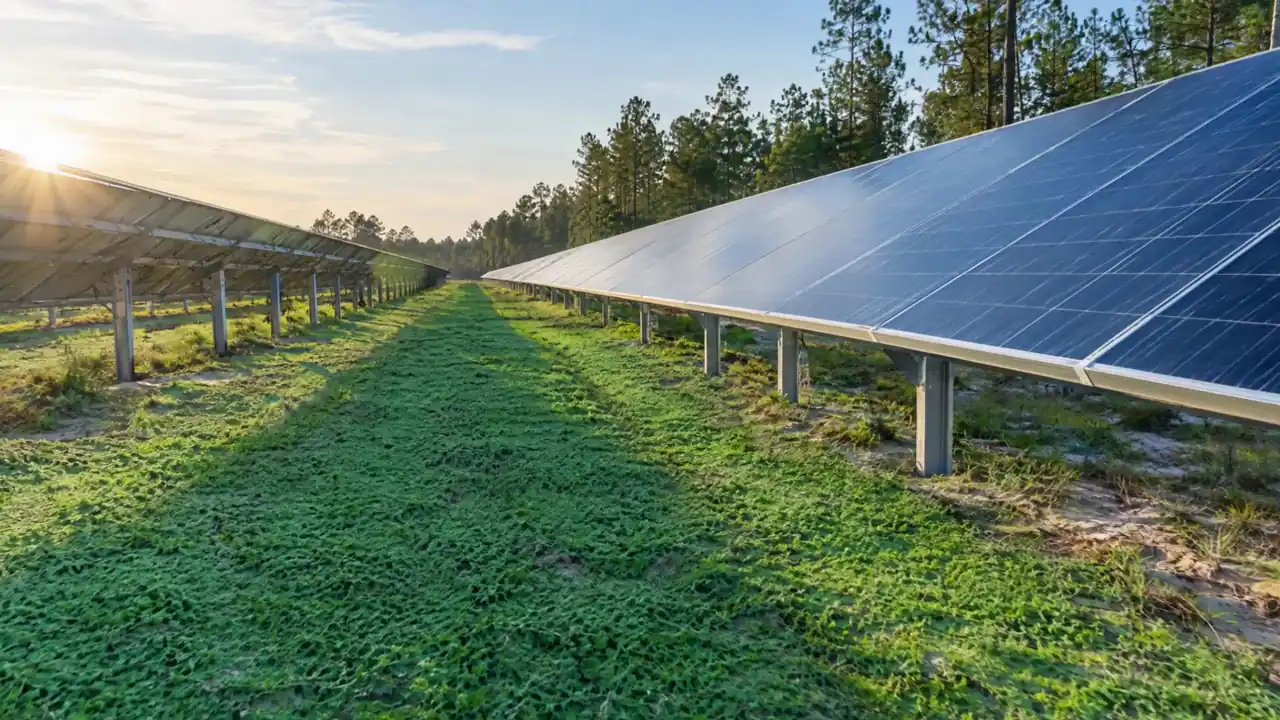
Spec-grade mixes for spec-grade sites
FDOT Section 570 allows seed, hydroseed, bonded fiber matrix or sod outside areas designated for sod, and sets clear rules for what goes in the tank.
Mixes and materials by season
Commercial seeding in Northwest Florida typically follows FDOT-style seasonal mixes: bahia, common bermuda and browntop millet in spring and summer, and bahia with annual ryegrass in fall and winter. The UF/FDOT roadside guide describes millet and ryegrass as the two temporary grasses FDOT uses; they hold soil while the permanent grass establishes and then die out, as long as rates stay within recommendations. 'Pensacola' bahia is the variety FDOT uses most often as roadside utility turf because of its drought, cold and pest resistance.
On materials, FDOT 570 requires hydroseed mulch with no reprocessed wood or paper fibers and allows only anionic polyacrylamide with less than 0.05 percent residual monomer; cationic PAM is prohibited. Provide the actual contract specification so material availability, suitability and scope can be confirmed before work is agreed. Off-season work leans on temporary cover and erosion control products until the spring window opens.
Military-base and government subcontract work
The region is home to NAS Pensacola, Corry Station, Saufley Field, NAS Whiting Field near Milton, Eglin AFB and Hurlburt Field, and base construction generates stabilization scopes for prime contractors. Procurement and registration requirements differ by contract and installation, and must be confirmed with the contracting party. The contract determines the technical specification; a military or government location alone does not establish that FDOT requirements apply. No procurement registration or base-access credential is implied here.
For a commercial quote, send the plan sheets, SWPPP stabilization notes and acreage through our quote form. We price each site after reviewing it.
Common questions about commercial hydroseeding and nw florida
Short, sourced answers to what people ask us most. If your site has a wrinkle these do not cover, send it through the quote form below and we will talk it through with you.
When is a SWPPP required in Florida?
When construction disturbs 1 acre or more, or less than an acre as part of a larger common plan of development, and discharges stormwater to surface waters or a municipal storm sewer. Coverage falls under Florida DEP's NPDES Construction Generic Permit, which requires a stormwater pollution prevention plan and a Notice of Intent filed before construction starts.
How soon must a Florida construction site be stabilized?
Under Florida DEP's Construction Generic Permit, stabilization measures must begin within 7 calendar days after construction activity temporarily or permanently stops on any portion of the site. Santa Rosa County's environmental department likewise calls for temporary cover on exposed soil after 7 days of no activity. Hydroseeding is one of the accepted measures.
Can hydroseed meet FDOT specifications?
Yes. FDOT Section 570, Performance Turf, says to use seed, hydroseed, bonded fiber matrix or sod outside areas designated for sod. It sets requirements for hydroseed mulch, which may not contain reprocessed wood or paper fiber, and allows only anionic polyacrylamide. Check the current FDOT specification book for the version on your contract.
What grass mix is used for commercial hydroseeding in Florida?
FDOT-style mixes are common: bahia, common bermuda and browntop millet in spring and summer, and bahia with annual ryegrass in fall and winter. Millet and ryegrass are temporary grasses that protect the soil while the permanent bahia or bermuda establishes, then die out. Pensacola bahia is FDOT's most frequently used roadside turf.
Do you hydroseed solar farms and pipeline corridors?
Yes. Large cleared acreage and long linear corridors suit hydroseeding because a truck-mounted machine covers ground quickly. We phase seeding to follow clearing so large areas are not left bare, and add blankets at stream crossings and steep cuts. Each site is quoted after we review the plans and walk the ground.
Keep reading
Related guides and services for sandy soil, heavy rain and the grasses that hold on the Gulf Coast, each written for Escambia and Santa Rosa county sites.
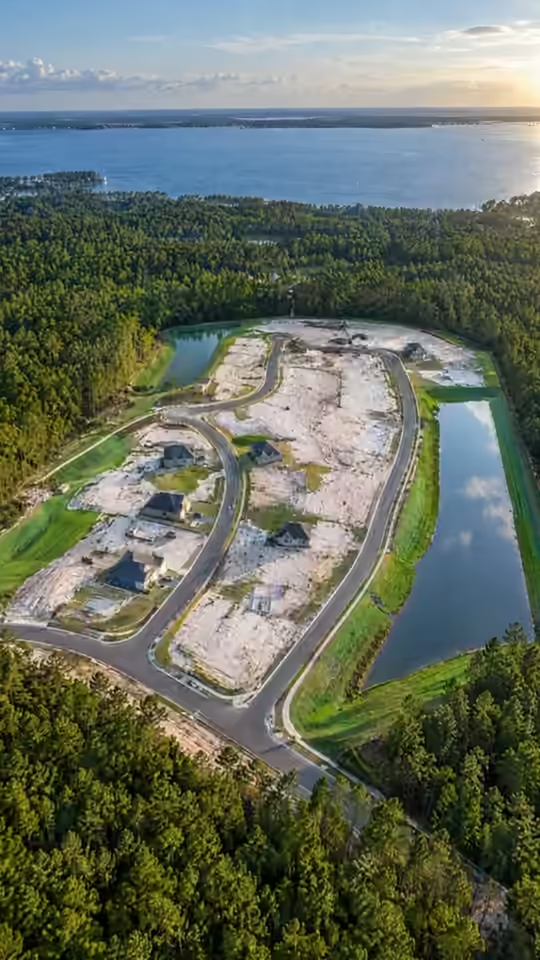
Final Stabilization and 70% Cover in Florida
Getting a permitted site to 70 percent uniform perennial cover so the Notice of Termination can be filed, with seed mixes timed to the season.
Open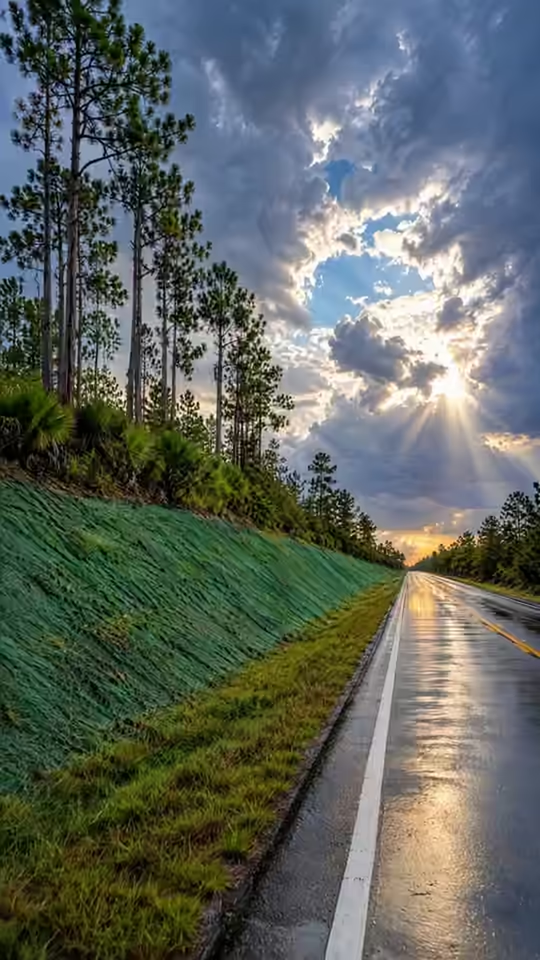
Erosion Control
Hydromulch, bonded fiber matrix, blankets and temporary grass for slopes, ditches and bare ground in one of the rainiest cities in the country.
Open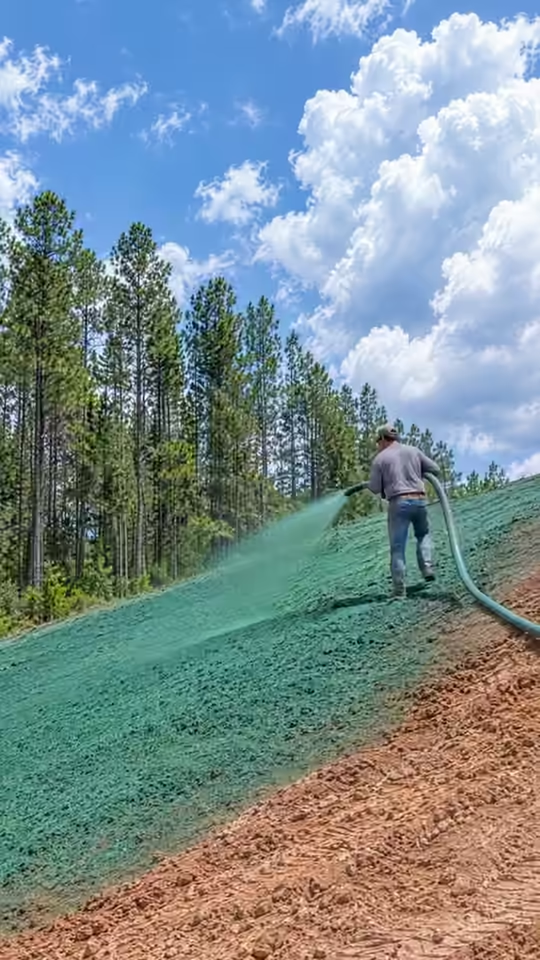
Bonded Fiber Matrix and Hydromulch
Sprayed erosion protection for slopes and bare ground: what BFM and hydromulch are, what FDOT requires of them, and when blankets are the better call.
Open
Pond Bank and Retention Pond Hydroseeding
Retention and detention pond banks, roadside ditches and swales, regraded where needed and seeded with grass that fits wet toes and dry crests.
Open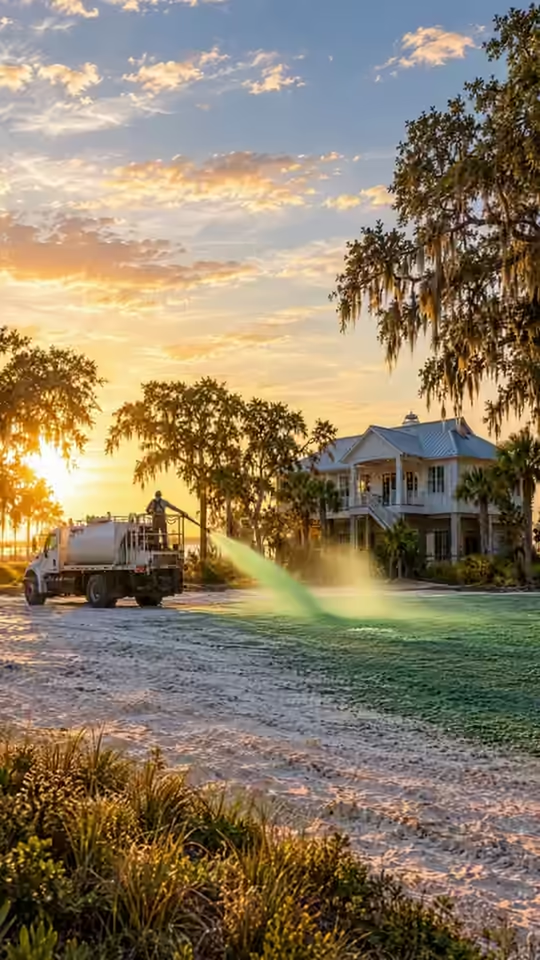
Request a quote
Tell us about the site and we will quote the mix and method that fit it.
OpenSources
Facts on this page come from public sources, mostly UF/IFAS Extension, the Florida Department of Environmental Protection, FDOT and NOAA. We recheck them whenever we update the page.
- Florida DEP NPDES Construction Generic Permit, 62-621.300(4)(a)
- Florida DEP: Construction Activity (stormwater)
- FDOT Standard Specifications Section 570, Performance Turf
- UF/FDOT, A Guide for Roadside Vegetation Management (2012)
- Santa Rosa County Environmental Dept.: Erosion & Sediment Control brochure
- Escambia County: Land Disturbance Permit
- WEAR-TV: Creek damage from Okaloosa County solar farm (Mar 2024)
- NorthEscambia.com: fourth north Escambia FPL solar farm (2023)
Tell us about the ground
Send the address and what you are trying to grow or hold in place. We look at the site, the soil and the slope, then quote the mix and the method that fit it.