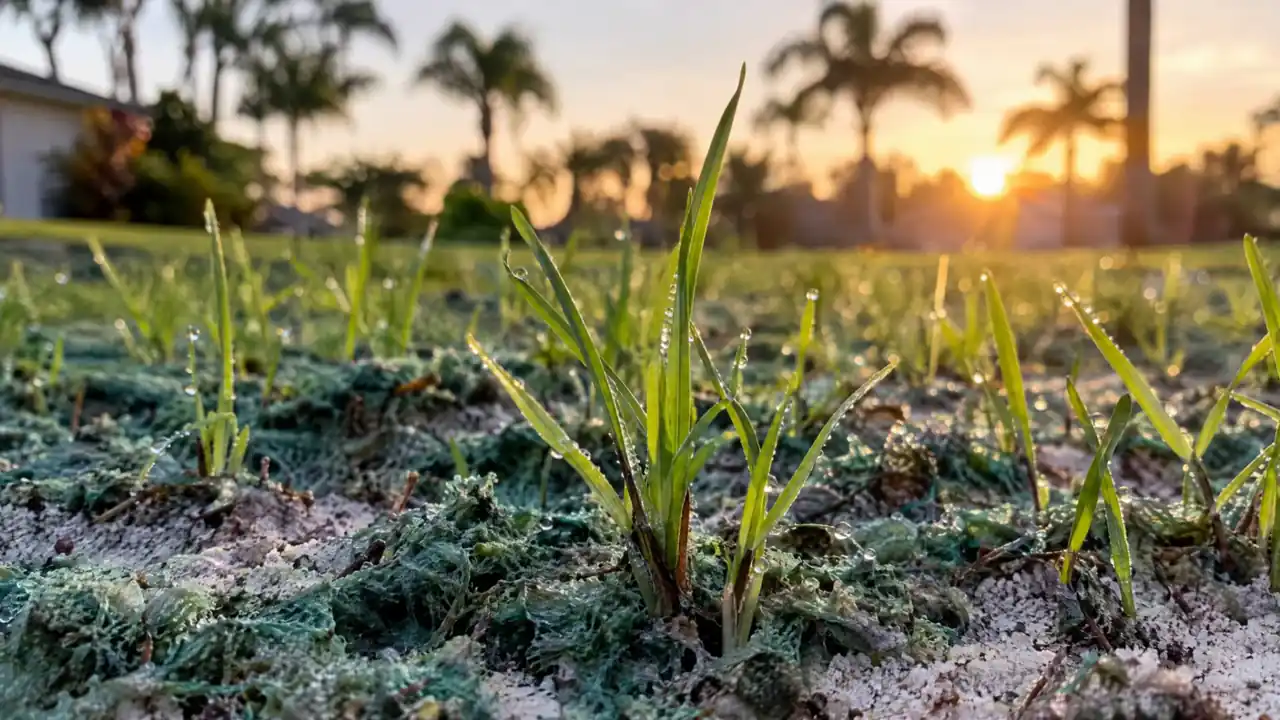
Hydroseed aftercare for Pensacola heat and sand
Light, frequent water for two weeks, then a slow taper to deep, infrequent irrigation. The details below are tuned for fast-draining local soil.
Water new hydroseed two or three times a day in small quantities for about two weeks, as UF/IFAS advises, keeping the mulch damp but never flooded. Then taper to fewer, longer cycles. Once established, apply ½ to ¾ inch per irrigation, about 1 inch a week, before dawn. Mow centipede at 1.5 to 2.5 inches and bahia at 3 to 4 inches.
- First two weeks
- 2 to 3 light waterings a day (UF/IFAS)
- Once established
- ½ to ¾ inch per irrigation
- Weekly target
- About 1 inch, before dawn
- Mow centipede
- 1.5 to 2.5 inches
- Mow bahia
- 3 to 4 inches
The first two weeks decide germination
UF/IFAS gives the core rule: "Supplying water two or three times a day in small quantities for approximately two weeks should provide adequate moisture for germination." UF/IFAS agent Whitney Elmore describes it as "brief applications of water in frequent, short 'bursts' throughout the day during the first few weeks."
That matters more in Pensacola than in most places. Lakeland sand, common across the county, is excessively drained with very low water-holding capacity, per the USDA soil survey, and a seedbed can dry out within hours on a June afternoon. Watch the mulch: when it turns pale, it is time to water. Stop each cycle before water puddles or runs off, which moves seed. More on local ground in our sandy soil guide.
| Period | Watering | Goal |
|---|---|---|
| Days 1 to 14 | 2 to 4 short cycles a day; UF/IFAS advises two or three small waterings a day | Keep the mulch and seed surface moist, never flooded |
| Days 15 to 28 | 1 to 2 longer cycles a day | Move moisture deeper as roots form |
| Weeks 5 to 8 | Deep watering 2 to 3 times a week | Train roots down into the sand |
| After establishment | ½ to ¾ inch per irrigation, about 1 inch a week, before dawn (UF/IFAS Santa Rosa) | Drought-ready lawn with less water |
Tapering water as roots go down
Once seedlings are up, the goal shifts from keeping the surface wet to pulling roots deeper into the sand. The schedule in the table on this page is our company guidance, built around the UF/IFAS figures at each end; adjust it for your grass, sun exposure and the weather.
Grass speed matters. UF/IFAS says centipede can take up to 2 to 3 weeks to germinate and 6 to 8 more to establish, and bahia germinates slowly. Do not taper on the calendar alone; taper when you see an even stand of seedlings.
Skip a cycle after a real soaking rain. Pensacola's June to September rains often do the job, while May, the driest month at 3.90 inches, rarely does.
Watering after establishment
UF/IFAS Extension Santa Rosa County (May 2026) recommends applying ½ to ¾ inch per irrigation, about 1 inch a week in one or two waterings, and watering before dawn. It also notes that sandy soils hold less water, so heavier single applications simply drain past the roots.
Our rule of thumb after establishment is to water the lawn, not the calendar: let the surface dry between irrigations so roots keep reaching down, and skip a cycle after a real rain. Before setting a permanent schedule, check any watering-day rules from your water provider.
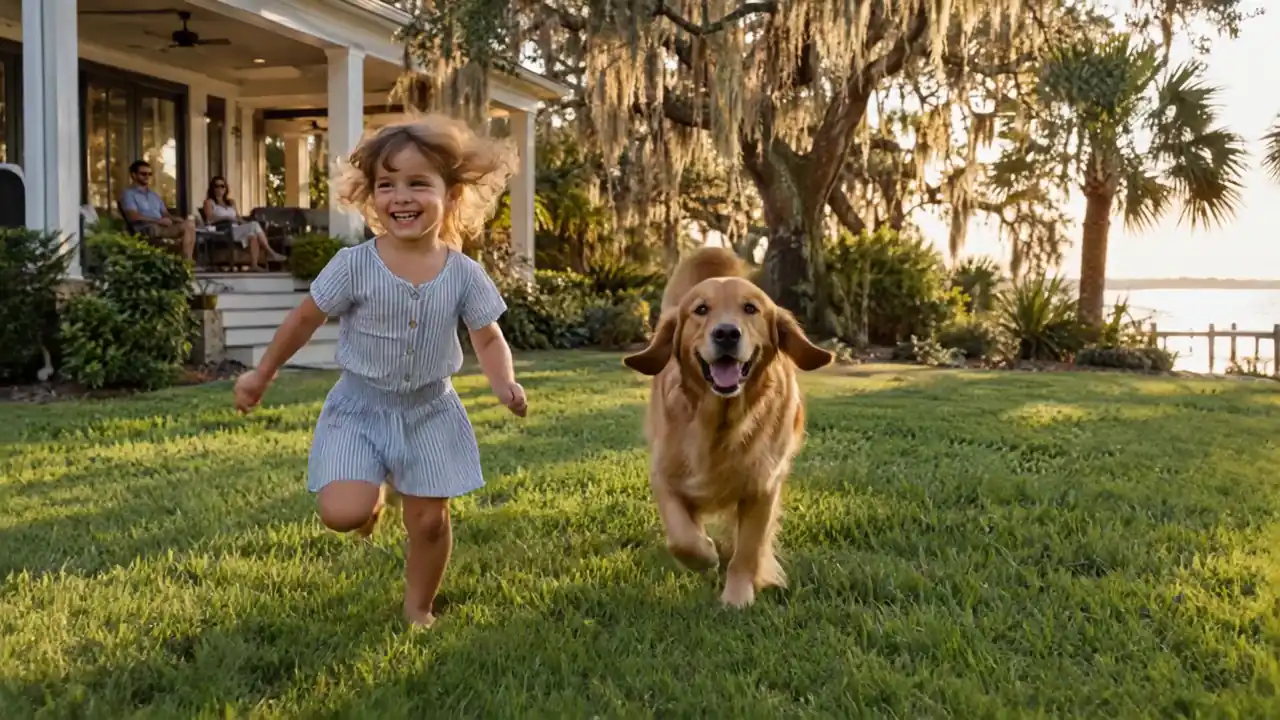
Keep feet, paws and tires off for now
Seedlings in loose sand pull out easily. Keep foot traffic, pets and vehicles off new hydroseed until roots hold firm and the lawn has been mowed a few times.
First mowing and mowing heights
Generic hydroseed guides suggest a first mow at about 3 to 6 weeks for fast grasses. Bahia and centipede in Northwest Florida usually take longer, so mow when the grass reaches about a third above its target height and the soil is dry enough not to rut.
- Centipedegrass: 1.5 to 2.5 inches, per UF/IFAS
- Bahiagrass: 3 to 4 inches, per UF/IFAS; regular summer mowing keeps seed heads down
Use a sharp blade on a light mower for the first cuts. Compare grasses in the Pensacola grass guide.
Checking coverage and fixing thin spots
Around the fourth to sixth week, walk the lawn in low morning light, when gaps show best. Some unevenness is normal, especially with bahia, which UF/IFAS notes takes longer to form a uniform cover. Look for patterns: streaks running downhill point to washout, dry rings between sprinkler heads point to uneven coverage, and pale patches in an otherwise green stand can point to pH.
For reference, FDOT does not accept turf on its projects until no bare spot exceeds 1 sq ft and no more than 1 percent of any 1,000 sq ft is bare. A home lawn does not need to meet that bar, but it is a useful yardstick before calling a lawn finished.
Fertilizer, pests and yellowing
More fertilizer is not better on these grasses. UF/IFAS warns, "Do not overfertilize centipedegrass with nitrogen"; too much causes centipede decline. Bahia is also a low-fertility grass. Fertilizer leaches quickly through sand, so follow a soil test rather than a bag label.
Escambia County requires lawn services that apply fertilizer to hold an applicator license, and local ordinances typically set prohibited application periods, so check current rules before a feeding.
Two problems to watch: mole crickets, a known bahia pest per UF/IFAS, and yellowing from iron chlorosis, which strikes bahia above pH 7.0 and centipede above roughly 6.5 to 7.0. For thin spots after heavy rain, see residential hydroseeding or the FAQ.
Common questions about hydroseed aftercare: watering and mowing
Short, sourced answers to what people ask us most. If your site has a wrinkle these do not cover, send it through the quote form below and we will talk it through with you.
How often should I water hydroseed in a Florida summer?
For the first two weeks, UF/IFAS advises watering two or three times a day in small quantities so the seedbed stays moist. On hot, sandy Pensacola lots, a fourth short cycle on the hottest afternoons can help. Then taper to fewer, longer cycles as seedlings establish, and skip cycles after a soaking rain.
When can I mow new hydroseed?
Generic guides suggest 3 to 6 weeks for fast grasses, but bahia and centipede in Northwest Florida usually take longer. Wait until the grass is clearly above its target height and the soil is firm. Mow centipede at 1.5 to 2.5 inches and bahia at 3 to 4 inches, per UF/IFAS, with a sharp blade.
When can I walk on hydroseed?
Keep off it as much as possible until the grass has rooted and been mowed a few times. Seedlings in loose, sandy soil pull out easily, and footprints in wet mulch leave bare spots. Keep pets and vehicles off too. Walk only when needed to move hoses or sprinklers.
What happens if it rains hard right after hydroseeding?
On flat ground, a properly applied hydromulch usually holds. On slopes and in channels, heavy rain can wash out fresh seed, which is why those areas get bonded fiber matrix or erosion blankets. Pensacola averages 68.31 inches of rain a year. After a downpour, check for thin streaks and reseed them early.
Why is my new grass turning yellow?
Common causes include drought stress on fast-draining sand, overwatering that leaches nutrients, and high soil pH. UF/IFAS notes bahia develops iron chlorosis above pH 7.0 and centipede above about 6.5 to 7.0. Too much nitrogen also causes centipede decline. A $10 UF/IFAS soil test helps sort out the cause.
What time of day should I water new hydroseed?
During the first two weeks, new seed needs several light waterings spread through the day, so midday cycles are fine and often necessary on hot sand. Once the lawn is established, UF/IFAS Extension Santa Rosa County recommends watering before dawn, applying ½ to ¾ inch per irrigation and about 1 inch a week.
Keep reading
Related guides and services for sandy soil, heavy rain and the grasses that hold on the Gulf Coast, each written for Escambia and Santa Rosa county sites.
Hydroseeding guides
Plan the project, choose grass and care for new growth.
Open
When to hydroseed: seeding calendar
April through early July is prime time for warm-season grass. The rest of the year calls for different seed, more protection or temporary cover.
OpenDoes hydroseeding work in sandy soil? Pensacola guide
Yes, when moisture and pH are managed. Local sands drain fast and hold little water or nutrient, so prep and early watering carry extra weight.
Open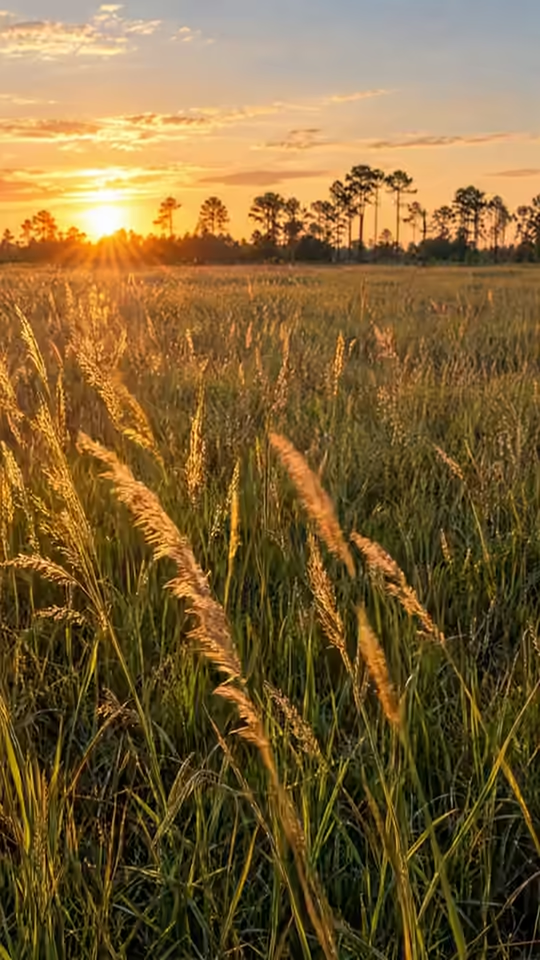
Best grass for Pensacola: hydroseeding grass guide
Seven turf grasses and two temporary covers, compared on the traits that matter in Escambia and Santa Rosa sand, salt and summer heat.
Open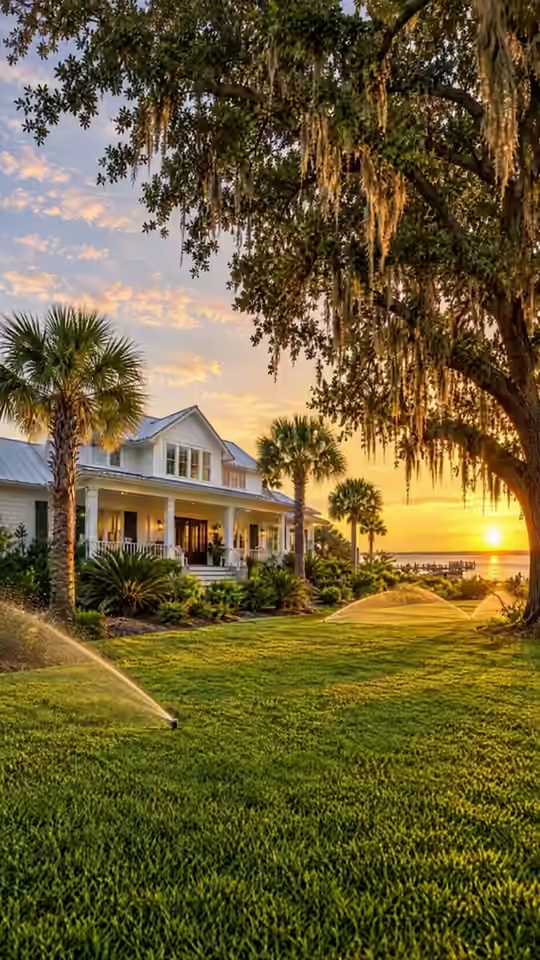
Residential Hydroseeding
New-build lots and thinning lawns, seeded with a grass that suits deep Panhandle sand, in the months when it will actually take.
OpenQuestions
Straight answers on cost, timing, grass, watering and permits.
OpenSources
Facts on this page come from public sources, mostly UF/IFAS Extension, the Florida Department of Environmental Protection, FDOT and NOAA. We recheck them whenever we update the page.
- UF/IFAS EDIS LH013, Establishing Your Florida Lawn
- UF/IFAS News: Summer sodding and lawn preparation (2020)
- UF/IFAS Extension Santa Rosa County: Irrigating Your Landscape (2026)
- UF/IFAS EDIS LH009, Centipedegrass for Florida Lawns
- UF/IFAS ENH6, Bahiagrass for Florida Lawns
- FDOT Standard Specifications Section 570, Performance Turf
- USDA-NRCS Map Unit Description, Escambia County FL
- UF/IFAS Extension Escambia: New Fertilizer Regulations
Tell us about the ground
Send the address and what you are trying to grow or hold in place. We look at the site, the soil and the slope, then quote the mix and the method that fit it.