Erosion control in Pensacola and the western Panhandle
Hydromulch, bonded fiber matrix, blankets and temporary grass for slopes, ditches and bare ground in one of the rainiest cities in the country.

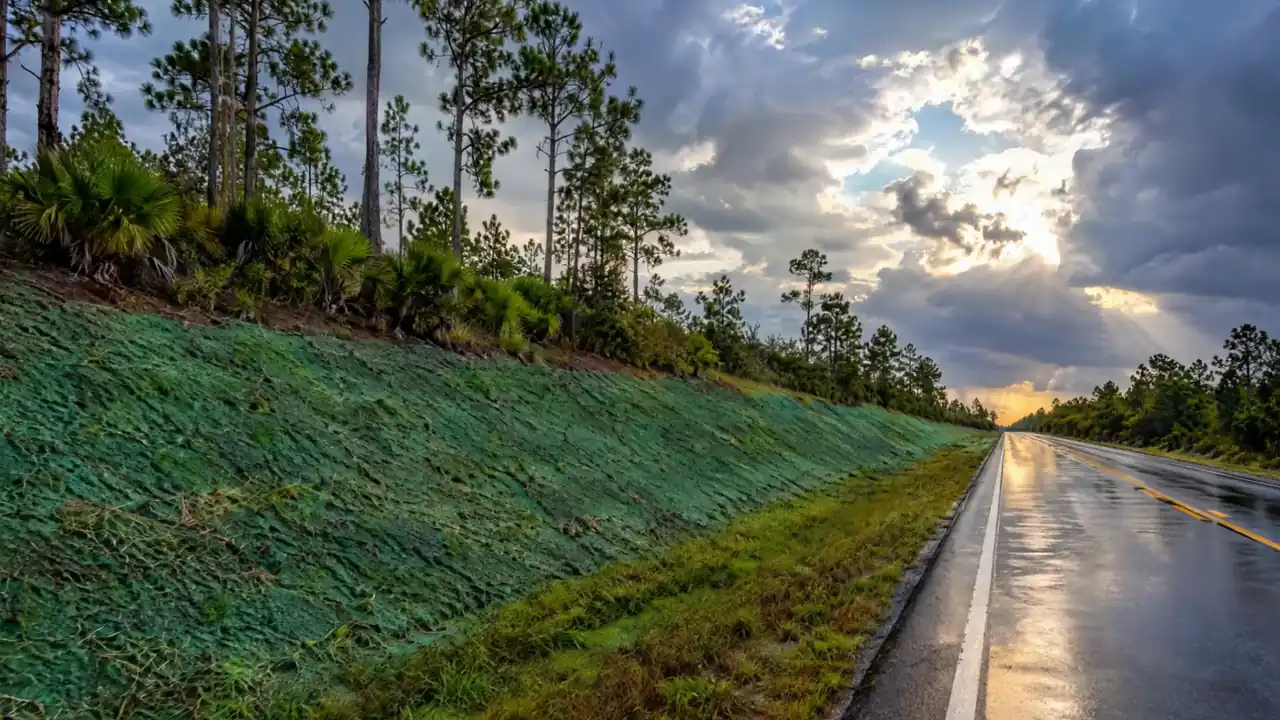
Erosion control in Pensacola means covering bare sand before the next storm moves it. We use hydroseed and hydromulch on gentle ground, bonded fiber matrix on steeper stable slopes, staked blankets in ditches and channels, and browntop millet or annual ryegrass as temporary cover outside the seeding window. The right mix depends on slope, water flow and season.
- Annual rainfall (1991–2020)
- 68.31 in at Pensacola airport
- Wettest months
- June to September
- Temporary cover
- Browntop millet or annual ryegrass
- Santa Rosa guidance
- Temporary cover after 7 idle days
- BFM coverage (FDOT)
- 100%, no gaps
Why Pensacola ground moves
Pensacola Regional Airport averages 68.31 inches of rain a year on the 1991 to 2020 normals, and June through September brings about 29 inches of it, with July the peak at 7.89. That rain lands on deep sand. The county soil survey maps Lakeland, Troup, Kureb and similar sands that are excessively drained and low in organic matter, and it includes a unit called Troup and Perdido soils, 8 to 35 percent slopes, severely eroded.
Loose sand with no roots and no cover is easy for sheet flow to pick up, and it does not take a hurricane. A typical summer thunderstorm on a freshly graded lot can cut rills down a slope and fill the street inlet by evening. Erosion control is about getting something on the surface quickly and getting roots in behind it.
The damage compounds. Every inch of sand that leaves a slope steepens the cut above it, exposes less fertile subsoil, and lands somewhere it causes a second problem: a clogged inlet, a silted pond, a turbid creek. Fixing a gully after three storms costs far more than covering the slope before the first one.
| Method | Best fit | Notes |
|---|---|---|
| Hydroseed | Flat to moderate grades with irrigation | Mulch protects at once; grass gives permanent cover |
| Hydromulch only | Short-term cover, off-season | Temporary; reseed in the next window |
| Bonded fiber matrix | Steeper, geotechnically stable slopes | FDOT requires 100% coverage, no re-wetting breakdown |
| Erosion control blankets | Ditches, channels, outfalls | Staked mats; straw, wood fiber or coir |
| Temporary grass | Outside the April to early July window | Millet spring and summer, ryegrass fall and winter |
The tools we use
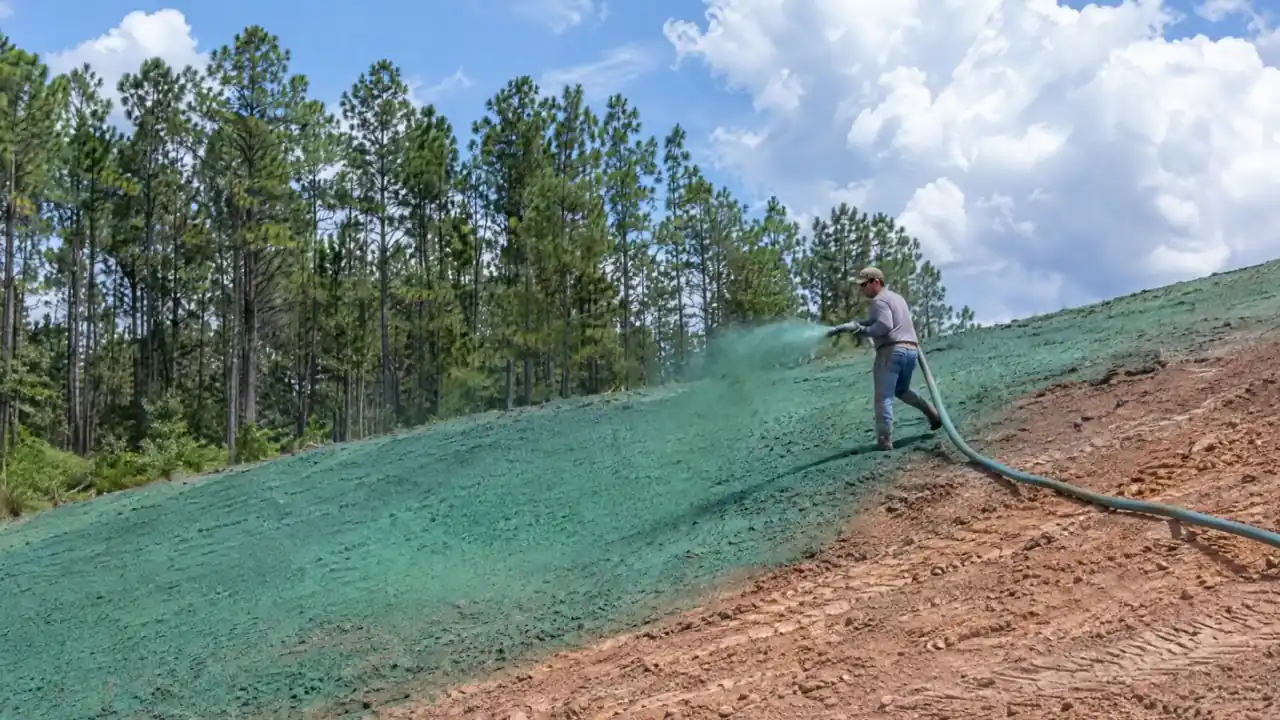
- Hydroseed: seed, wood-fiber mulch, tackifier and tracer dye sprayed in one pass. It protects the surface from day one, and the grass provides permanent cover.
- Hydromulch: the same hydraulic mulch with or without seed, used to protect exposed soil temporarily.
- Bonded fiber matrix (BFM): a continuous fiber layer held together by a water-resistant bonding agent, for steeper but geotechnically stable slopes. Details are on our BFM page.
- Erosion control blankets: rolled straw, wood-fiber or coir mats staked over seed, mostly for channels and concentrated flow.
- Temporary cover: browntop millet in spring and summer and annual ryegrass in fall and winter, used by FDOT to hold soil until permanent grass takes over.
Silt fence and sediment traps catch soil after it moves; cover keeps it from moving in the first place. Most sites need both, and the permanent fix is always established vegetation.
Matching the method to the ground
Flat lots and gentle grades usually need only hydroseed. As slopes steepen, we add more mulch, move to BFM, or lay blankets. Where water concentrates, in ditch inverts, swale bottoms and outfalls, we lean toward staked blankets because a sprayed layer has nothing mechanically holding it against moving water. Retention-pond banks get their own treatment, covered on our pond bank page.
Season matters as much as slope. The UF/FDOT roadside guide advises against seeding most warm-season grasses after early July, so late-summer and fall work leans on temporary grasses, hydromulch or BFM to carry a site to spring. Our seeding calendar shows the windows.
Sediment that leaves a site ends up in the bay
USGS names sedimentation from tributary loads as a core problem in the Pensacola Bay system, and Escambia Bay has the highest turbidity in the region.
Local waters and local rules
Runoff from Pensacola construction reaches some sensitive water. In Bayou Texar, urbanization has caused severe erosion along Carpenter Creek, five outfalls discharge untreated stormwater from 40 acres, and the City received $5.95 million in RESTORE funding for sediment-trapping outfall units. The Perdido River on the county's western edge is a designated Outstanding Florida Water. Santa Rosa County's environmental department says sedimentation is a major contributor to turbidity and nutrient loading in Northwest Florida waterbodies.
The rules reflect that. Escambia County requires a land disturbance permit before clearing, filling or grading, and may require stabilization of disturbed areas with grass. Santa Rosa County calls for temporary cover after 7 days of no activity and lists hydroseeding as an accepted practice. Sites of an acre or more also fall under the state permit; see final stabilization. For City of Pensacola projects, check the current text of Land Development Code Chapter 12-8.
Common questions about erosion control
Short, sourced answers to what people ask us most. If your site has a wrinkle these do not cover, send it through the quote form below and we will talk it through with you.
Will hydroseed wash away in a heavy Pensacola rain?
It can on slopes or in channels if the wrong product is used. Pensacola averages about 68 inches of rain a year, with June through September the wettest. On steeper stable slopes we use bonded fiber matrix, which FDOT requires to give 100 percent coverage and not dissolve when re-wetted, and staked blankets where water concentrates.
What is the cheapest way to stop erosion on bare ground?
On flat or gently sloped ground, hydroseeding is usually the most economical permanent cover, because it protects the surface immediately and establishes grass. Outside the seeding window, a temporary grass like browntop millet or annual ryegrass is a low-cost holding measure. Steep slopes and channels cost more because they need BFM or blankets.
Can you hydroseed for erosion control in the winter?
Not for permanent warm-season grass. UF/IFAS calls fall centipede seeding undesirable, and late seedlings risk winter-kill in north Florida. Annual ryegrass seeded in October or early November gives temporary cover, and hydromulch or bonded fiber matrix can protect bare soil until the spring seeding window opens.
Do I need a permit for erosion control work in Escambia County?
The erosion control itself usually rides on the project's permit. Escambia County requires a land disturbance permit before clearing, filling or grading, and may require silt fence, sediment traps and stabilization with grass. Sites disturbing an acre or more also need coverage under Florida DEP's Construction Generic Permit.
What is the difference between hydroseed and hydromulch?
Hydroseed is a slurry of seed, mulch, tackifier and dye that grows permanent grass. Hydromulch is hydraulic mulch, with or without seed, used to protect exposed soil temporarily. Hydromulch alone buys time; the site still needs a permanent vegetative cover or another permanent measure later.
How do I stop erosion on a sandy slope in my yard?
Fill rills and restore an even grade first, then cover the slope. On gentle slopes, hydroseed with bahia, centipede or bermuda in the April to early July window and keep it moist. On steeper but stable slopes, bonded fiber matrix holds better. Redirect roof and driveway runoff so it does not sheet straight down the face.
Keep reading
Related guides and services for sandy soil, heavy rain and the grasses that hold on the Gulf Coast, each written for Escambia and Santa Rosa county sites.
Bonded Fiber Matrix and Hydromulch
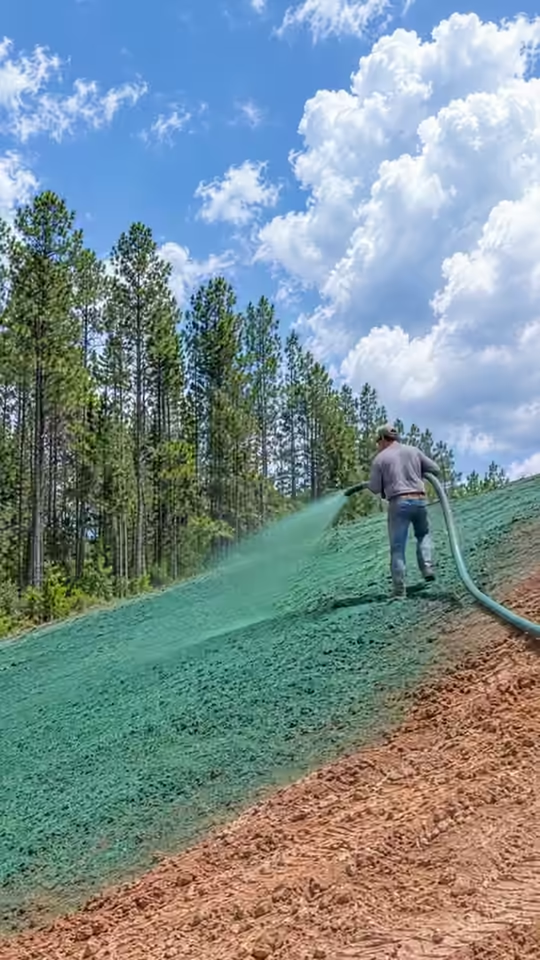
Sprayed erosion protection for slopes and bare ground: what BFM and hydromulch are, what FDOT requires of them, and when blankets are the better call.
Open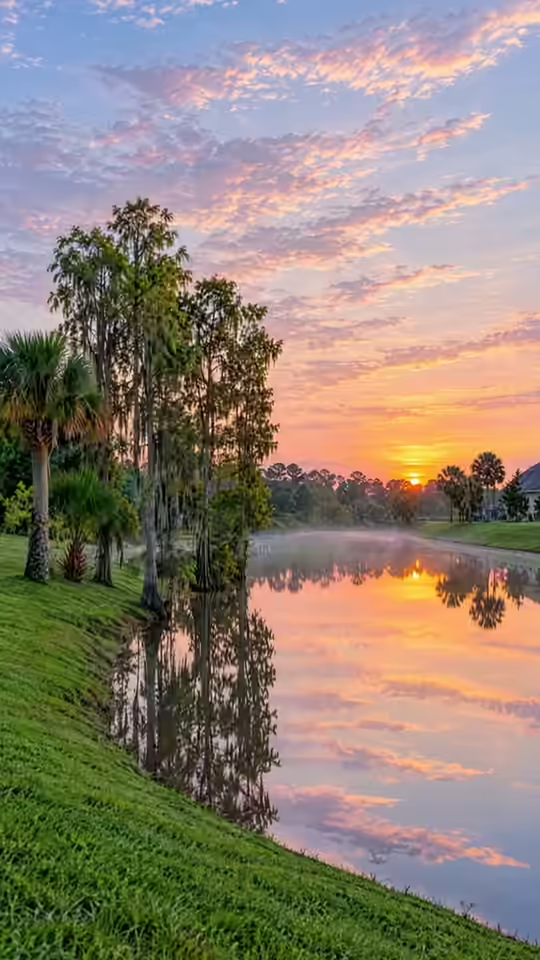
Pond Bank and Retention Pond Hydroseeding
Retention and detention pond banks, roadside ditches and swales, regraded where needed and seeded with grass that fits wet toes and dry crests.
Open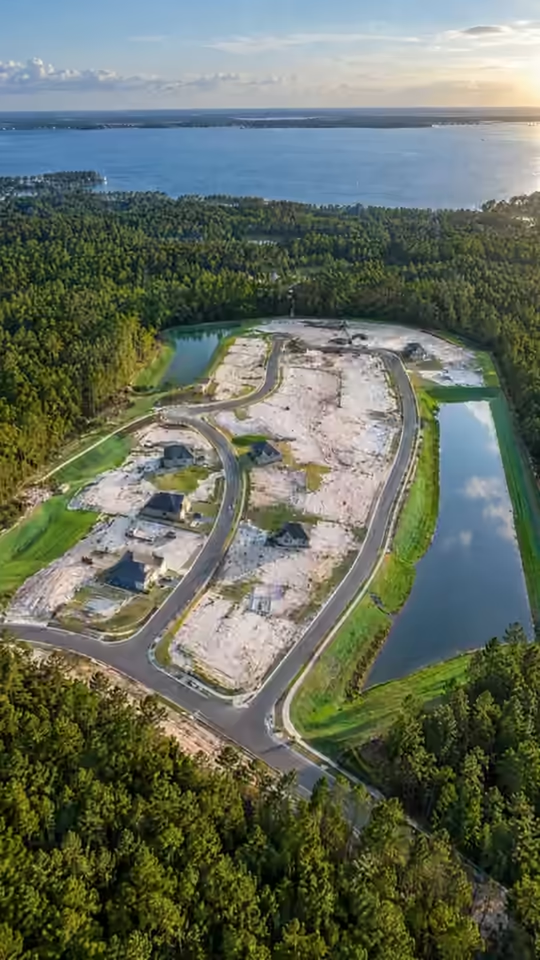
Final Stabilization and 70% Cover in Florida
Getting a permitted site to 70 percent uniform perennial cover so the Notice of Termination can be filed, with seed mixes timed to the season.
Open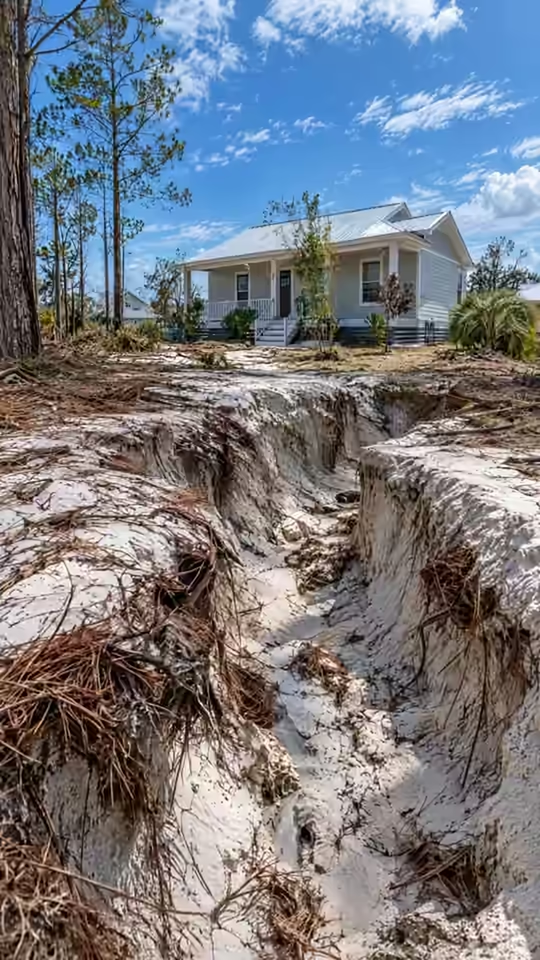
Storm Damage Lawn Restoration
After a hurricane or flash flood, we regrade washouts, cover bare sand before the next storm, and reseed permanent grass when the season allows.
Open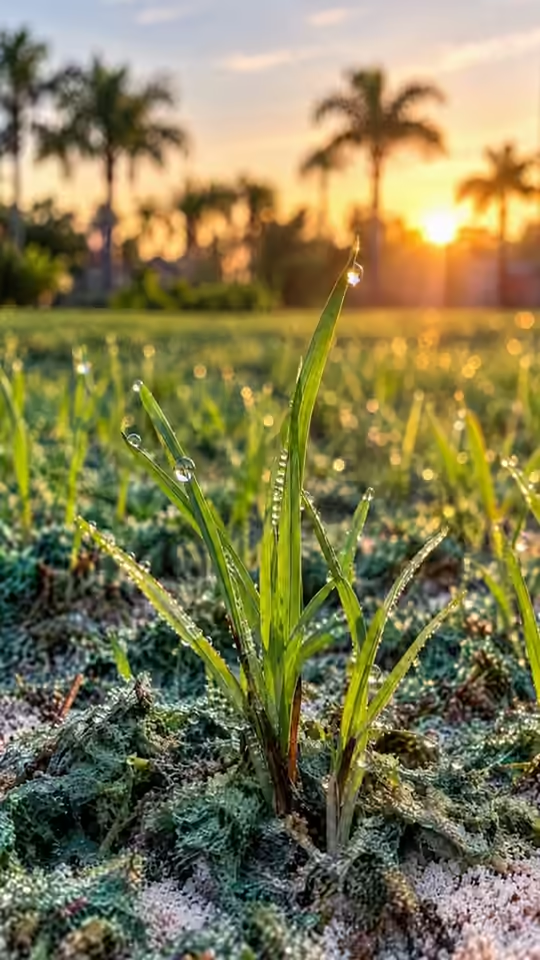
When to hydroseed: seeding calendar
April through early July is prime time for warm-season grass. The rest of the year calls for different seed, more protection or temporary cover.
OpenSources
Facts on this page come from public sources, mostly UF/IFAS Extension, the Florida Department of Environmental Protection, FDOT and NOAA. We recheck them whenever we update the page.
- Florida Climate Center (FSU): Pensacola 1991–2020 Normals
- USDA-NRCS Map Unit Description (Brief), Escambia County FL
- UF/FDOT, A Guide for Roadside Vegetation Management (2012)
- FDOT Standard Specifications Section 570, Performance Turf
- USGS SIR 2006-5287: Pensacola Bay
- City of Pensacola: RESTORE funding for Bayou Texar
- Santa Rosa County Environmental Dept.: Erosion & Sediment Control brochure
- Escambia County: Land Disturbance Permit
Tell us about the ground
Send the address and what you are trying to grow or hold in place. We look at the site, the soil and the slope, then quote the mix and the method that fit it.