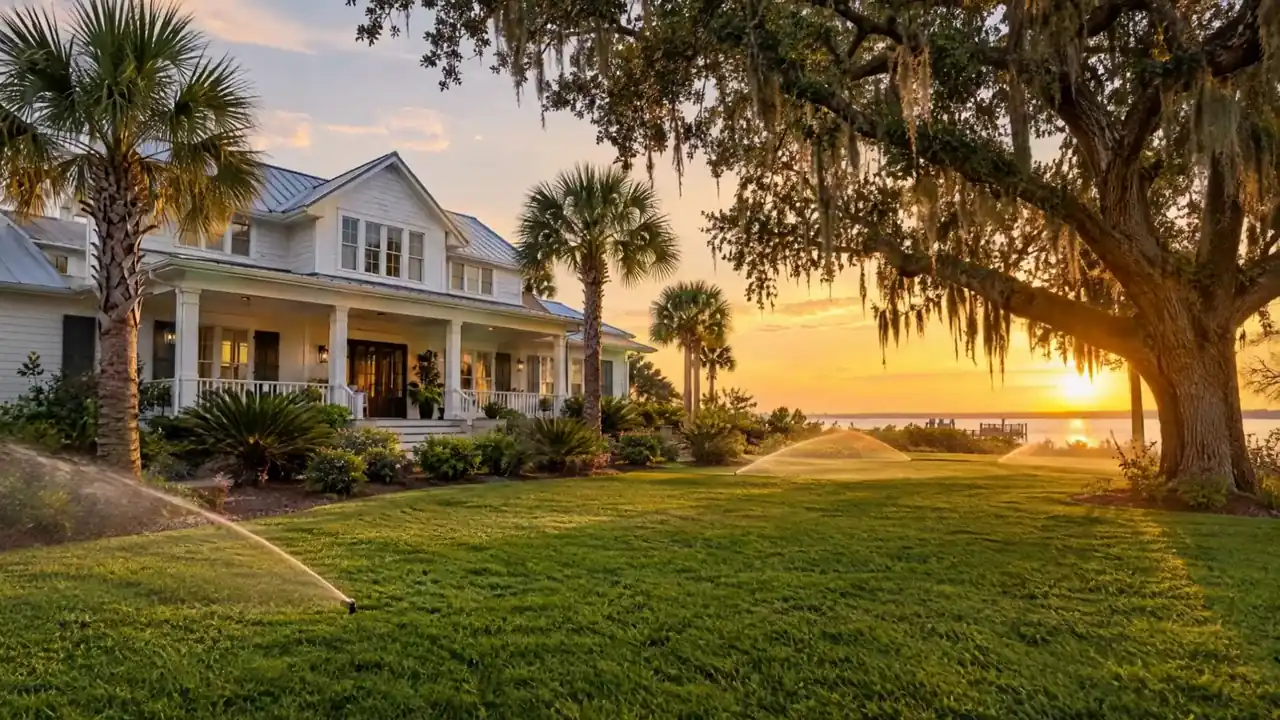
Residential hydroseeding in Pensacola
New-build lots and thinning lawns, seeded with a grass that suits deep Panhandle sand, in the months when it will actually take.
Residential hydroseeding sprays seed, wood-fiber mulch, tackifier and, where allowed, fertilizer onto a prepared yard in one even coat. In Pensacola it works best with bahia, centipede or common bermuda seeded from April to early July. St. Augustine cannot be grown from seed. Expect several weeks to full cover and light watering two or three times a day at first.
- Best seeding window
- April to early July
- Seedable lawn grasses
- Bahia, centipede, common bermuda
- Sod or plugs only
- St. Augustine, seashore paspalum
- Common local soil
- Lakeland sand, about 1% organic matter
- Early watering (UF/IFAS)
- 2 to 3 light cycles a day, ~2 weeks
- Pensacola market range
- $0.13 to $0.18 per sq ft (Homeyou)
How we approach a residential lawn
Most residential work in Escambia and Santa Rosa counties falls into two groups: bare builder lots where the house is done and the yard is graded fill, and older lawns that have thinned to sand, weeds and bare patches. The approach is the same. We clear debris and construction litter, correct grade so water moves away from the slab, loosen compacted ground, and then spray one even coat of seed, wood-fiber mulch and tackifier, tinted with a green tracer dye so coverage is easy to see.
Before we settle on a mix we want to know the soil. UF/IFAS Extension Escambia County in Cantonment sells a $10 routine soil test covering pH, phosphorus, potassium, calcium and magnesium, with results in about two weeks. That pH number matters: bahia and centipede both yellow from iron chlorosis when pH runs high, which happens on some fill dirt and near the coast. Fertilizer goes into the slurry only where the soil test and local fertilizer rules support it. Our guide to hydroseeding sandy soil goes deeper on reading local ground.
Bahia, centipede or bermuda
Three permanent grasses can be hydroseeded for a Pensacola lawn, and each suits a different yard.
- Bahiagrass is the low-input choice for big, sunny lots. 'Pensacola' bahia was selected in Pensacola in 1935, per UF/IFAS, and it has an extensive root system and excellent drought tolerance. It also throws tall seed heads, draws mole crickets and handles shade and salt poorly. See Pensacola bahiagrass.
- Centipedegrass is, per UF/IFAS, the most common home lawn grass in the Florida Panhandle. It prefers acidic soil around pH 5.0 to 5.5, wants little nitrogen and is mowed at 1.5 to 2.5 inches.
- Common bermudagrass takes full sun, traffic and some salt, but needs more mowing and feeding. Hybrid bermudas come only as sod or sprigs.
St. Augustinegrass is not on the list. UF/IFAS says it is not available as seed, and in testing the best germination reached was about 40 percent, with every seedling lost to disease. Our St. Augustine explainer covers the details.
Lakeland sand and new seed
The Escambia County soil survey maps much of the inland county as Lakeland, Troup, Kureb, Resota and Foxworth sands. Lakeland is described as excessively drained, with very low available water and about 1 percent organic matter in the surface layer. The official series description puts the sand at more than 80 inches deep and very strongly to moderately acid unless it has been limed.
For a new lawn, that means a seedbed that can dry out within hours on a June afternoon and fertilizer that leaches quickly. The hydromulch layer helps by shading the surface, holding moisture against the seed and keeping it from blowing or washing off. It cannot replace water. UF/IFAS recommends watering two or three times a day in small amounts for about two weeks to get germination, then tapering to deeper, less frequent watering. We leave every homeowner with a schedule, and the full routine is in our aftercare guide.
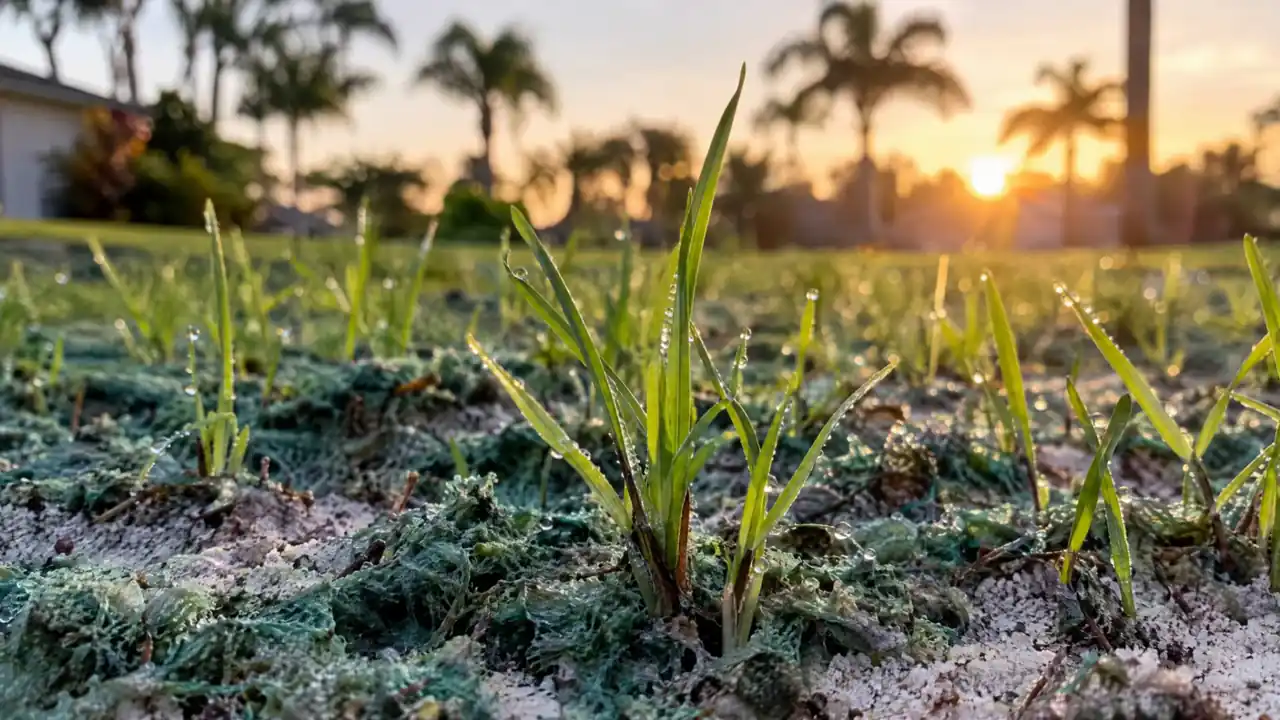
Good lawns start with good ground
UF/IFAS turf specialist Laurie Trenholm puts it plainly: the most important factor is how well the ground is prepped before seeding.
Coastal yards in Gulf Breeze, Navarre and the beaches
Salt changes the grass list. UF/IFAS rates bahiagrass salt tolerance as very poor and centipede as poor, and notes that bahia does not grow well in the high-pH soils found in coastal areas. On salt-exposed lots on Pensacola Beach, Perdido Key or the waterfront in Gulf Breeze and Navarre, we will not promise a bahia or centipede lawn.
For coastal home lawns, UF/IFAS names St. Augustine and zoysia as the best choices, and both are usually sodded. Where a seeded coastal area makes sense, such as a utility strip or side yard, common bermuda is the seedable grass that tolerates sandy, saline soil. Dunes are a separate matter. Planting seaward of the Coastal Construction Control Line can require a DEP permit and calls for native plants such as sea oats, not turf, so we do not hydroseed dunes.
Timing and cost
The prime window for warm-season seed in Pensacola is April to early July. UF/IFAS recommends seeding centipede April through July and calls fall seeding undesirable, and the UF/FDOT roadside guide advises against seeding most warm-season grasses later than early July. If a lot cannot wait for spring, a temporary cover of browntop millet in summer or annual ryegrass in fall holds the soil until the permanent seeding. Our seeding calendar lays out the months.
On cost, a Pensacola cost guide from Homeyou reports about $0.15 to $0.18 per square foot for 2,000 to 10,000 square feet and $0.13 to $0.15 for larger areas, or about $990 for a 5,500 square foot lawn. Grading, soil amendments and slopes move that number. We quote each yard after a site visit and explain exactly what drives the price on your lot.
Common questions about residential hydroseeding
Short, sourced answers to what people ask us most. If your site has a wrinkle these do not cover, send it through the quote form below and we will talk it through with you.
Does hydroseeding work in Pensacola sandy soil?
Yes, if moisture is managed. Lakeland sand, common across Escambia County, is excessively drained with very low water-holding capacity and about 1 percent organic matter. The hydromulch layer holds moisture and seed in place, but frequent light watering for the first two weeks is still essential, as UF/IFAS recommends for any new seeding.
How long does a hydroseeded lawn take to grow in Pensacola?
It depends on the grass. UF/IFAS says centipede can take up to two to three weeks to germinate and another six to eight weeks to establish. Bahia germinates slowly, and UF/IFAS recommends scarified seed to speed it up. Common bermuda is usually the quickest in warm soil. Plan on weeks of care, not days.
Is hydroseeding cheaper than sod for a new home?
Usually. HomeAdvisor puts hydroseeding at about $0.06 to $0.20 per square foot nationally, versus about $0.35 to $0.85 for installed sod. A Pensacola cost guide reports $0.13 to $0.18 per square foot locally. Sod gives instant cover, while hydroseed takes weeks to fill in. We quote each site after seeing it.
What is the best grass to hydroseed in Pensacola?
For most inland yards, centipede or bahia. Centipede is the most common Panhandle lawn grass and likes acidic sand. Bahia is the toughest low-input option for large, sunny lots. Common bermuda suits full sun, heavy wear and some salt. Near the beach, bahia and centipede are poor choices because of their low salt tolerance.
Can you hydroseed St. Augustine grass?
No. UF/IFAS says St. Augustinegrass is not available as seed and must be planted as sod, plugs or sprigs. In testing reported by UF/IFAS Okaloosa County Extension, the best germination was about 40 percent and all of those seedlings died of disease. If you want St. Augustine, plan on sod.
Keep reading
Related guides and services for sandy soil, heavy rain and the grasses that hold on the Gulf Coast, each written for Escambia and Santa Rosa county sites.
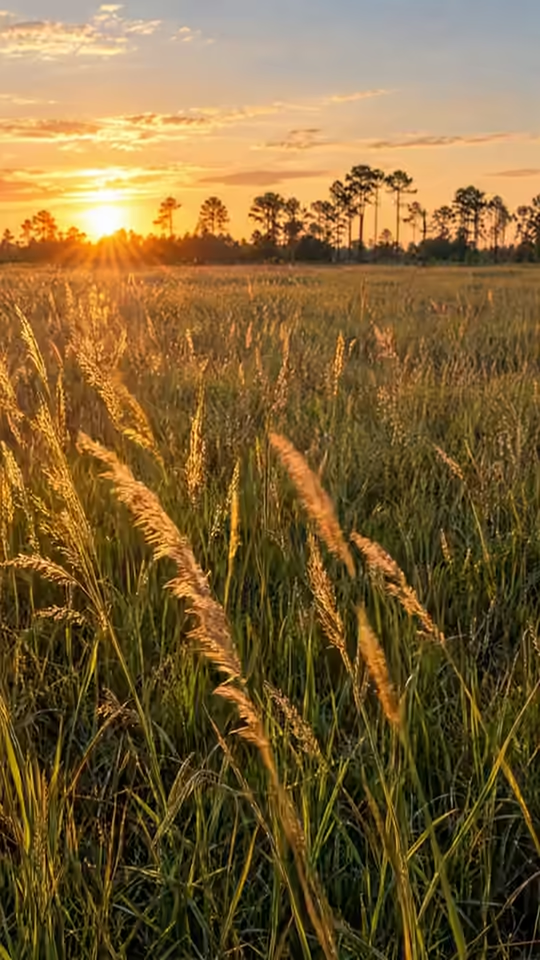
Best grass for Pensacola: hydroseeding grass guide
Seven turf grasses and two temporary covers, compared on the traits that matter in Escambia and Santa Rosa sand, salt and summer heat.
Open
Hydroseeding vs. sod: an honest comparison
Seed costs less and suits big, open or sloped ground. Sod is instant and the only route to St. Augustine. Here is how to decide on local sites.
Open
When to hydroseed: seeding calendar
April through early July is prime time for warm-season grass. The rest of the year calls for different seed, more protection or temporary cover.
OpenHydroseed aftercare: watering and mowing
Light, frequent water for two weeks, then a slow taper to deep, infrequent irrigation. The details below are tuned for fast-draining local soil.
Open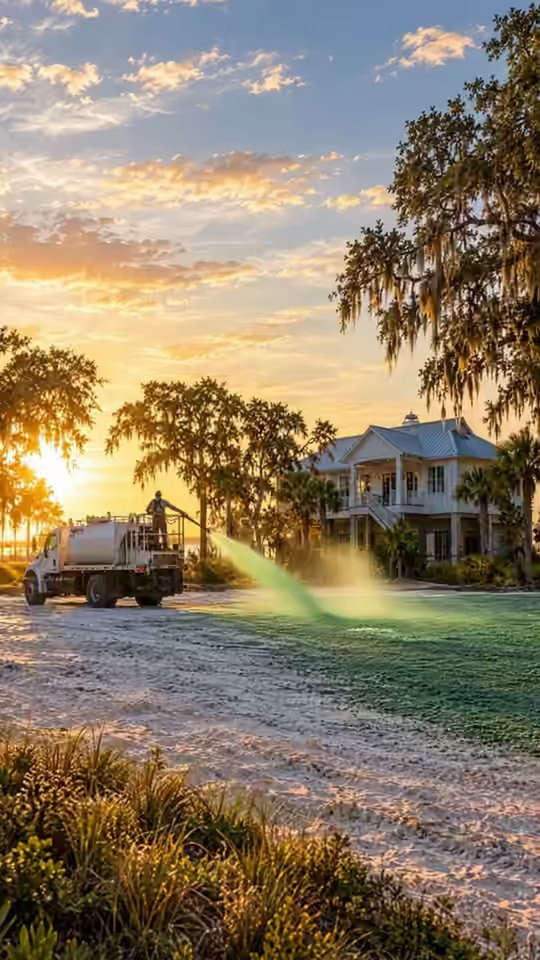
Hydroseeding cost: price ranges
Published local and national ranges, what they leave out, and the site conditions that push a Pensacola job up or down the scale.
OpenSources
Facts on this page come from public sources, mostly UF/IFAS Extension, the Florida Department of Environmental Protection, FDOT and NOAA. We recheck them whenever we update the page.
- UF/IFAS EDIS LH005, Selecting a Turfgrass for Florida Lawns
- UF/IFAS ENH6, Bahiagrass for Florida Lawns
- UF/IFAS EDIS LH009, Centipedegrass for Florida Lawns
- Larry Williams, UF/IFAS Okaloosa: St. Augustinegrass seed is not reliable
- USDA-NRCS Map Unit Description (Brief), Escambia County FL
- UF/IFAS EDIS LH013, Establishing Your Florida Lawn
- UF/IFAS Gardening Solutions: Salt-Tolerant Lawngrasses
- Homeyou: Hydroseeding in Pensacola, FL costs
Tell us about the ground
Send the address and what you are trying to grow or hold in place. We look at the site, the soil and the slope, then quote the mix and the method that fit it.