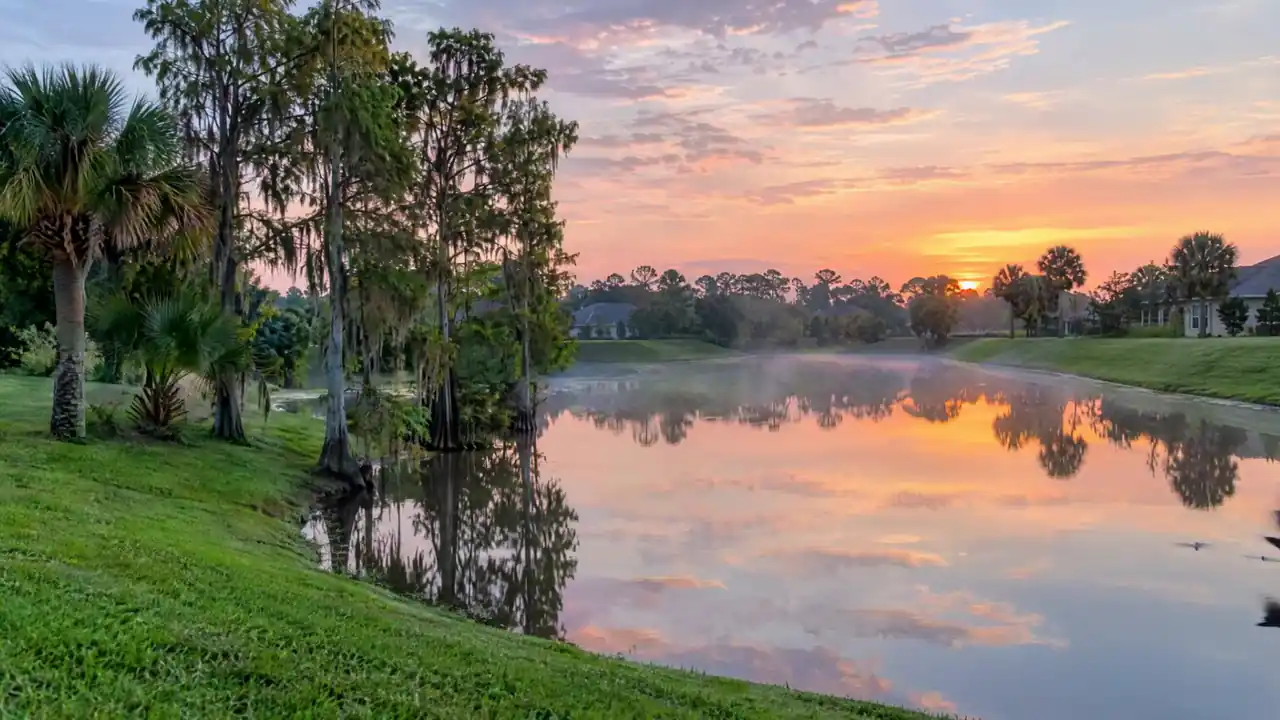
Pond bank, ditch and swale stabilization
Retention and detention pond banks, roadside ditches and swales, regraded where needed and seeded with grass that fits wet toes and dry crests.

Eroding retention-pond banks in Pensacola are usually fixed by regrading the washed areas, then hydroseeding with bahiagrass on the drier upper bank and carpetgrass where the toe stays wet. Steeper stable banks get bonded fiber matrix, and channels or outfalls get staked blankets. Seeding between April and early July gives roots time before storm season.
- Upper bank grass
- Bahiagrass
- Wet toe and low ditches
- Carpetgrass
- Steeper stable banks
- Bonded fiber matrix
- Concentrated flow
- Staked erosion blankets
- Prime seeding window
- April to early July
Why pond banks fail here
Retention and detention ponds collect the runoff from Pensacola's 68 inches of annual rain, and their banks take the brunt of it. Water sheets over the crest from parking lots and lawns, the pond level rises and falls against the toe, and mowers scalp the slope. On the deep, excessively drained sands common in Escambia and Santa Rosa counties, once turf thins the sand moves fast. Rills start at the crest, widen into gullies, and dump sediment into the pond, which reduces its storage and sends turbidity downstream.
Fixing a bank means fixing the cause as well as the cover. We look at where water enters, whether inflow pipes and spillways are scouring, how wet the toe stays, and how steep the slope really is. Then we regrade the damaged areas and choose a cover for each zone. HOA and commercial owners often pair this with broader erosion control on the property.
Grass for wet toes and dry crests
A pond bank is two environments. The crest and upper slope are dry, sunny sand. The toe sits damp or wet much of the year.
- Bahiagrass is the standard for the upper bank. UF/IFAS lists it as a fit for pond banks, roadsides and large acreage on sandy upland soil, with excellent drought tolerance and low maintenance. 'Pensacola' bahia is the variety FDOT uses most for roadside utility turf. More on it at Pensacola bahiagrass.
- Carpetgrass handles the wet zone. UF/IFAS describes it as suited to wet ditches and low areas in acidic soil, established from seed or sprigs.
- Common bermuda can join the mix on sunny banks that take traffic.
Spring and summer seedings often include browntop millet as a nurse crop, kept at low rates so it does not shade out the permanent grass.
BFM and blankets on steeper banks
Standard hydroseed works on gentle banks. Steeper slopes need more. Bonded fiber matrix forms a continuous fiber layer that FDOT requires to cover 100 percent of the surface with no gaps, resist breaking down when re-wetted and form no water-repelling crust. FDOT allows it only on geotechnically stable slopes, so a bank that is slumping needs to be regraded or reinforced first.
Where flow concentrates, at inflow pipes, spillways and the bottoms of swales, we use staked erosion control blankets of straw, wood fiber or coir over seed. A sprayed layer protects the surface from rain; a staked blanket holds against moving water.
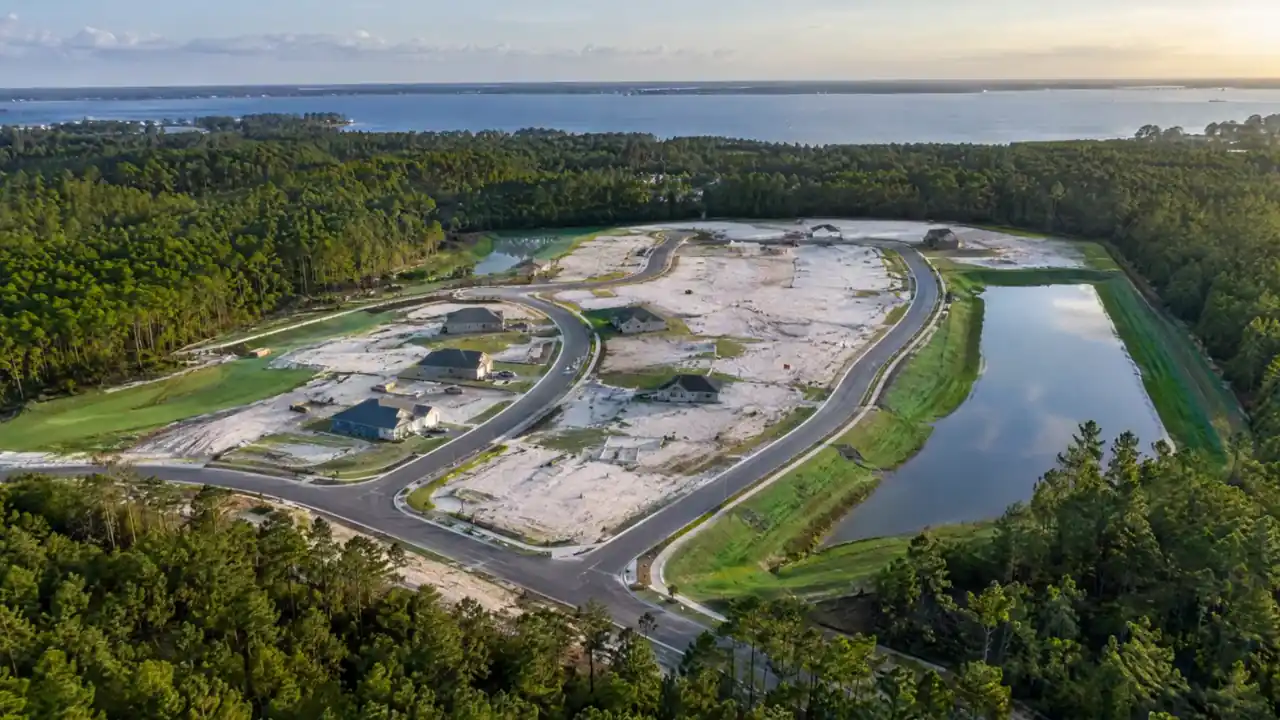
Every bank is two problems
Dry sand at the crest and wet soil at the toe need different grasses, and the cover has to match each zone.
Ditches and swales
Roadside ditches and grassed swales carry water from subdivisions and commercial sites to the ponds. Their side slopes behave like pond banks, while the inverts behave like small channels. We seed side slopes with bahia or a bahia and bermuda mix, put carpetgrass in the wetter bottoms, and blanket inverts that carry steady flow. On new subdivisions, these areas are part of the site's stabilization under Florida DEP's permit, so they count toward the 70 percent cover needed for final stabilization.
Mowing height matters on these slopes too. Bahia is mowed at 3 to 4 inches, per UF/IFAS, and scalping a ditch bank lower than that thins the turf and reopens the sand. On HOA and commercial properties we flag steep or wet areas that mowing crews should treat differently, because a reseeded bank only stays closed if it is maintained.
Timing around storm season
The best time to reseed a pond bank is April to early July, so roots develop before the wettest months and the September peak of hurricane season. The UF/FDOT roadside guide advises against seeding most warm-season grasses later than early July. When a bank fails in late summer or fall, we stabilize it with BFM, blankets or annual ryegrass and come back for permanent seeding in spring. Regular irrigation is rarely available on pond banks, which is another reason the drought-tolerant bahia is the backbone of most mixes. For pricing, see hydroseeding cost; we quote each pond after walking it.
Common questions about pond bank and retention pond hydroseeding
Short, sourced answers to what people ask us most. If your site has a wrinkle these do not cover, send it through the quote form below and we will talk it through with you.
What is the best grass for a retention pond bank in Florida?
For the dry upper bank in Northwest Florida, bahiagrass is the usual choice: drought tolerant, low maintenance and suited to acidic sandy soil, per UF/IFAS. For the wet toe and low ditch bottoms, carpetgrass is better suited, since UF/IFAS lists it for wet, acidic areas. Common bermuda can be added on sunny banks.
How do you fix an eroding pond bank?
Find and correct the source of the water first, such as scouring pipes or sheet flow over the crest. Then regrade washed-out areas, hydroseed with grasses suited to the dry and wet zones, use bonded fiber matrix on steeper stable slopes, and stake blankets where flow concentrates. Seed in spring when possible.
Can you hydroseed a pond bank without irrigation?
Often, yes, but timing matters. Seeding in late spring or early summer lets the summer rains water the seed, and bahiagrass tolerates drought well once established. The hydromulch layer helps hold moisture. Germination is slower and less certain without irrigation, especially in the dry month of May.
When should I reseed a pond bank in Pensacola?
April to early July is the best window for permanent warm-season grasses, giving roots time before the wettest months and peak hurricane season around September 10. If a bank fails in fall, stabilize it temporarily with blankets, bonded fiber matrix or annual ryegrass, then seed permanent grass in spring.
Is sod or hydroseed better for a pond bank?
Both work. Sod gives instant cover but is heavy to place on a slope and needs water to root, which is hard on a bank without irrigation. Hydroseed covers irregular banks in one pass, costs less per square foot, and can be paired with bonded fiber matrix or blankets on steep or wet sections. Bahia is available as either.
Keep reading
Related guides and services for sandy soil, heavy rain and the grasses that hold on the Gulf Coast, each written for Escambia and Santa Rosa county sites.
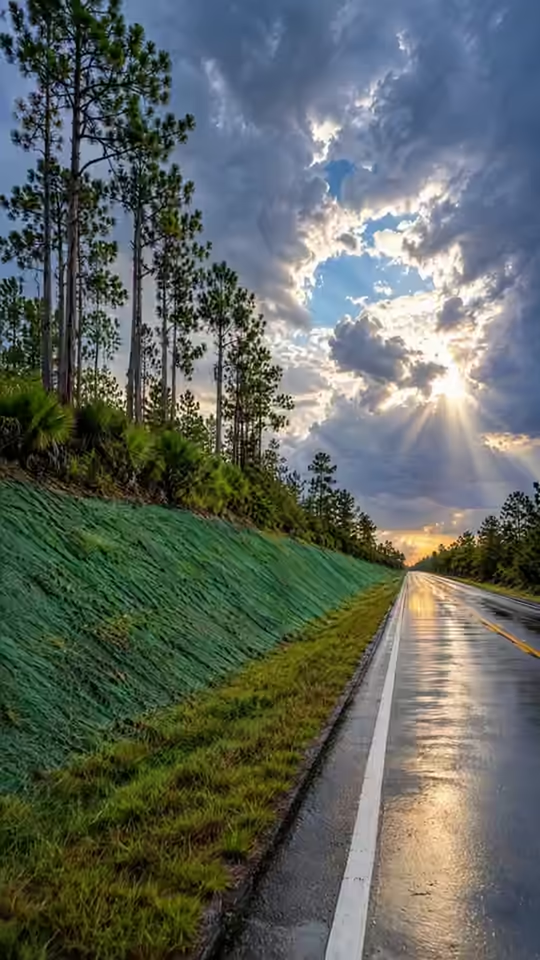
Erosion Control
Hydromulch, bonded fiber matrix, blankets and temporary grass for slopes, ditches and bare ground in one of the rainiest cities in the country.
Open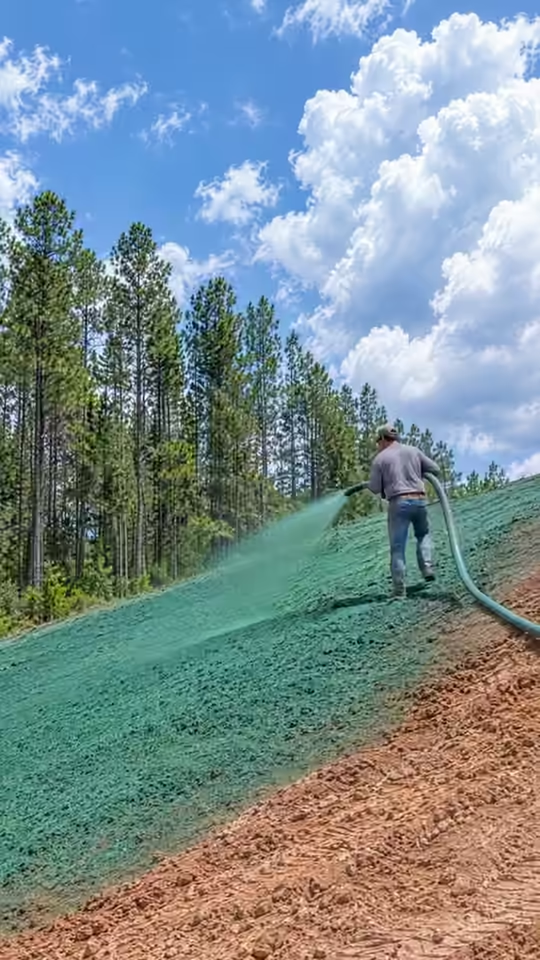
Bonded Fiber Matrix and Hydromulch
Sprayed erosion protection for slopes and bare ground: what BFM and hydromulch are, what FDOT requires of them, and when blankets are the better call.
Open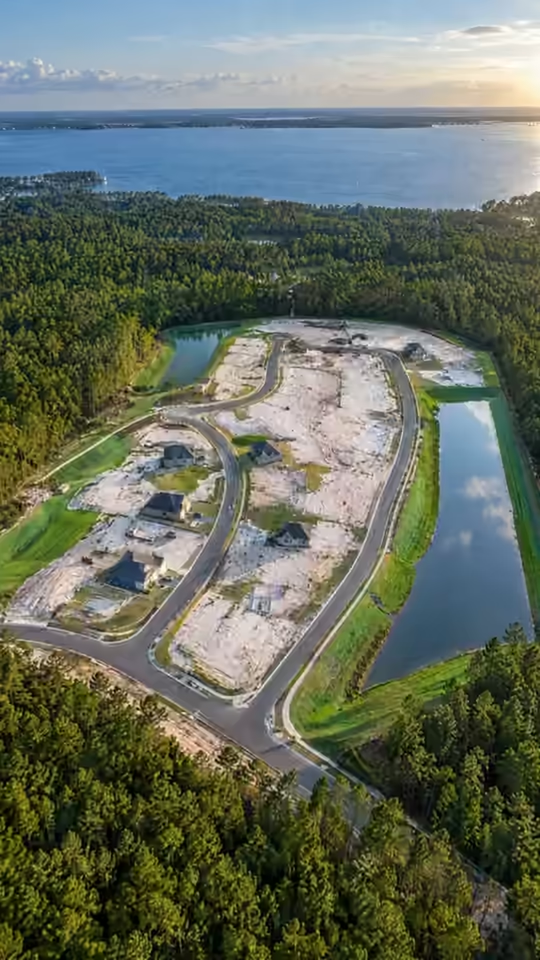
Commercial Hydroseeding and NW Florida
Subdivisions, commercial pads, HOA common areas, solar fields and right-of-way, with the planting scope coordinated around site conditions, access and the project schedule.
Open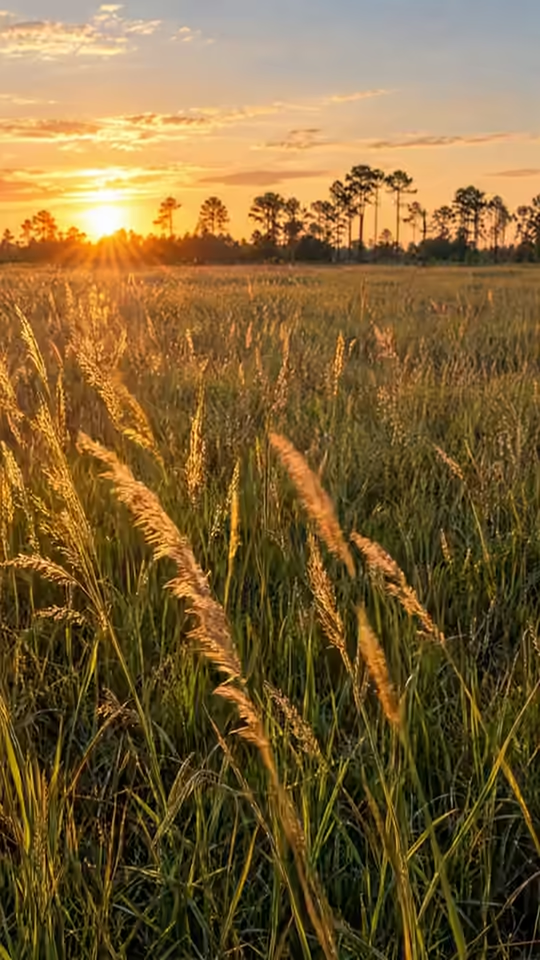
Pensacola bahiagrass: history, seeding and care
Found near the Pensacola docks and now planted across millions of Southeastern acres, it remains the toughest low-input grass for local sandy ground.
Open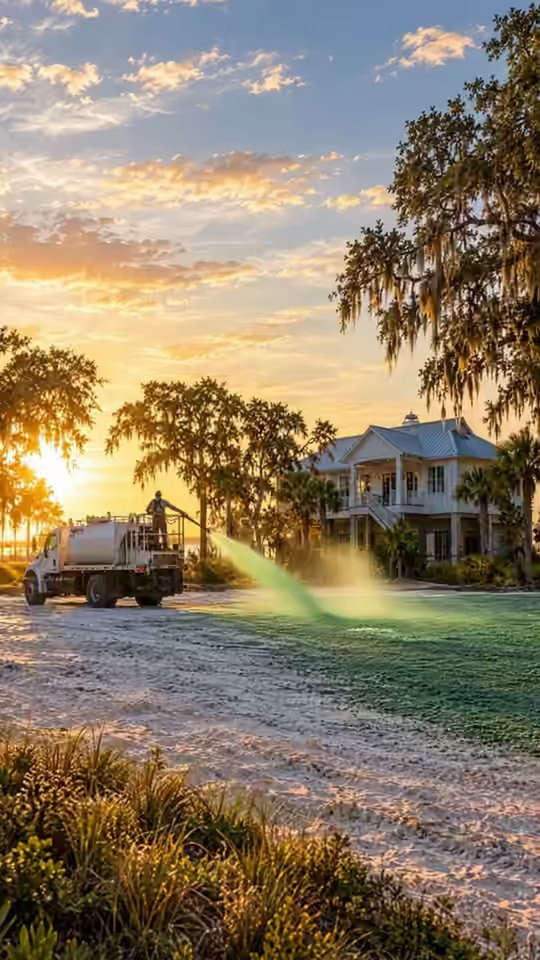
Hydroseeding cost: price ranges
Published local and national ranges, what they leave out, and the site conditions that push a Pensacola job up or down the scale.
OpenSources
Facts on this page come from public sources, mostly UF/IFAS Extension, the Florida Department of Environmental Protection, FDOT and NOAA. We recheck them whenever we update the page.
- UF/IFAS EDIS LH005, Selecting a Turfgrass for Florida Lawns
- UF/IFAS ENH6, Bahiagrass for Florida Lawns
- UF/FDOT, A Guide for Roadside Vegetation Management (2012)
- FDOT Standard Specifications Section 570, Performance Turf
- Florida Climate Center (FSU): Pensacola 1991–2020 Normals
- NOAA NESDIS: Atlantic hurricane season hits its peak
- Florida DEP NPDES Construction Generic Permit, 62-621.300(4)(a)
Tell us about the ground
Send the address and what you are trying to grow or hold in place. We look at the site, the soil and the slope, then quote the mix and the method that fit it.