Pensacola grass guide: what grows here and what can be hydroseeded
Seven turf grasses and two temporary covers, compared on the traits that matter in Escambia and Santa Rosa sand, salt and summer heat.
For hydroseeding in Pensacola, the proven permanent grasses are bahiagrass, centipedegrass and common bermudagrass, with carpetgrass for wet ground. Annual ryegrass and browntop millet serve as temporary cover. St. Augustinegrass and seashore paspalum cannot be seeded, and zoysia is usually sodded. On salt-exposed coastal sites, bermuda is the seeded option, since bahia and centipede tolerate salt poorly.
- Most common Panhandle lawn
- Centipedegrass (UF/IFAS)
- Seeded permanent grasses
- Bahia, centipede, common bermuda
- Sod, sprigs or plugs only
- St. Augustine, seashore paspalum
- Seeded option near salt
- Common bermudagrass
- Temporary cover
- Browntop millet, annual ryegrass
The three seeded workhorses
Bahiagrass is the low-input choice for acidic upland sand. UF/IFAS rates its drought tolerance excellent and its salt tolerance very poor. It survives drought by going dormant, should be mowed at 3 to 4 inches, and yellows from iron chlorosis above pH 7.0. The 'Pensacola' cultivar was selected right here; read its story in our Pensacola bahiagrass guide.
Centipedegrass is, per UF/IFAS, "the most common home lawn grass in the Florida Panhandle." It prefers pH around 5.0 to 5.5, is seeded at about 4 oz per 1,000 sq ft from April to July, and is mowed at 1.5 to 2.5 inches. UF/IFAS warns: "Do not overfertilize centipedegrass with nitrogen."
Common bermudagrass brings good salt tolerance, excellent drought tolerance and fast recovery from wear, but poor shade tolerance and higher upkeep. UF/IFAS lists "some seed" for bermuda; the hybrid types are sod or sprigs only.
| Grass | Can it be hydroseeded? | Salt | Drought | Shade | Soil pH | Best local use |
|---|---|---|---|---|---|---|
| Bahiagrass | Yes | Very poor | Excellent | Fair | Acidic | Low-input lawns, roadsides, pond banks, large acreage |
| Centipedegrass | Yes | Poor | Good | Fair | Acidic, best near 5.0 to 5.5 | Inland home lawns |
| Common bermudagrass | Yes (hybrids are sod or sprigs only) | Good | Excellent | Poor | Wide range | Sunny, high-traffic and coastal utility turf |
| Carpetgrass | Yes | Poor | Poor | Fair | Acidic, wet | Wet ditches and low areas |
| Zoysiagrass | Rarely; usually sodded | Good | Excellent | Good to excellent | Wide range | Coastal lawns |
| St. Augustinegrass | No | Good | Good | Good to excellent | Wide range | Coastal and shady lawns, by sod |
| Seashore paspalum | No | Excellent | Good | Poor | Wide range | Salt-affected sites, not home lawns |
Grasses that need sod, sprigs or plugs
Three popular grasses do not belong in a hydroseed tank:
- St. Augustinegrass is "not available in seed," per UF/IFAS, and goes in only as sod, plugs or sprigs. See why St. Augustine cannot be hydroseeded.
- Seashore paspalum has excellent salt tolerance but establishes only from sod, sprigs or plugs, and UF/IFAS says it needs too much maintenance for most home lawns.
- Zoysiagrass is listed by UF/IFAS as "sod, sprigs, plugs, some seed." Seeded zoysia is uncommon and slow, so it is usually sodded.
Coastal lots versus inland lots
Salt divides the region. UF/IFAS rates salt tolerance as very poor for bahia, poor for centipede, good for St. Augustine, zoysia and bermuda, and excellent for seashore paspalum. UF/IFAS also notes bahia "does not grow well in high-pH soils, such as those found in coastal areas."
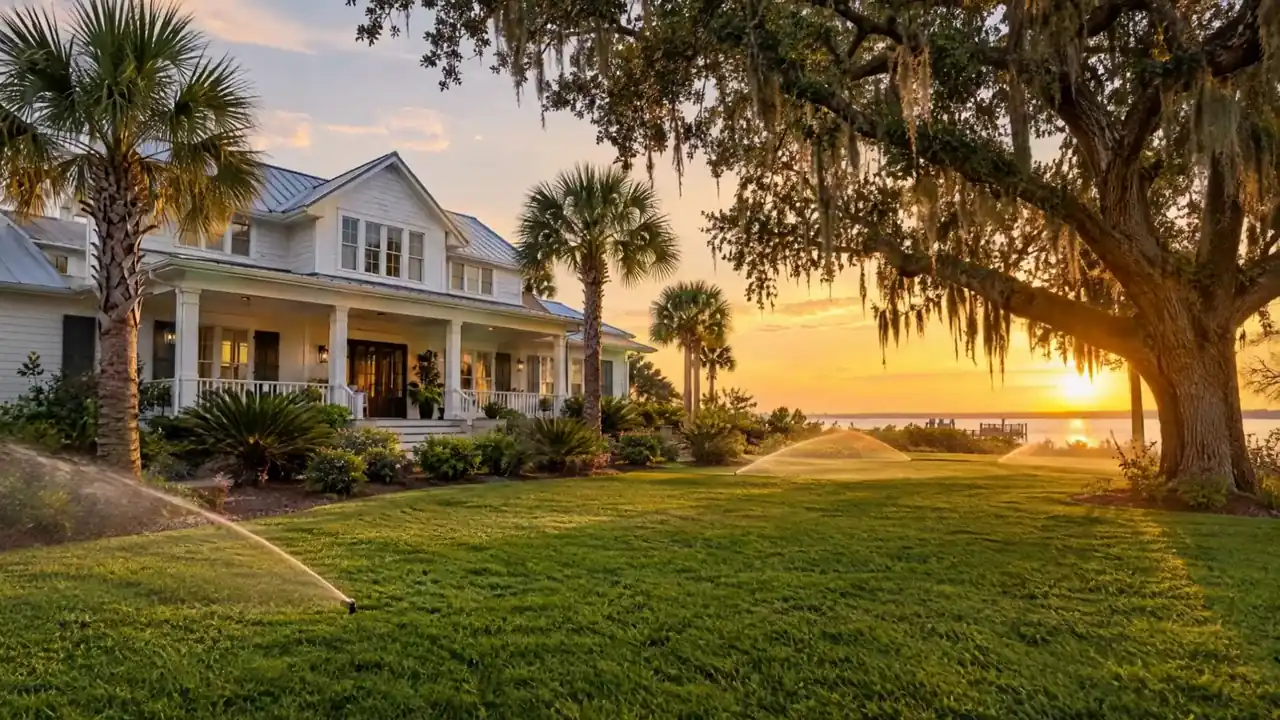
On Pensacola Beach, Perdido Key, Gulf Breeze and Navarre, UF/IFAS Gardening Solutions names St. Augustine and zoysia as the best home-lawn choices, both usually sodded, and reminds owners that salt-tolerant grasses still "can't be irrigated with saltwater." For seeded coastal utility areas, the UF/FDOT roadside guide recommends bermudagrass for sandy, saline soils. We do not promise bahia or centipede on salt-exposed beachfront.
Dunes are a separate job. Planting seaward of the Coastal Construction Control Line may need a DEP permit, and dunes are restored with native plants such as sea oats, not turf.
Inland, across Cantonment, Pace, Milton and most of mainland Pensacola, the acidic Lakeland and Troup sands suit bahia and centipede well.
Wet ground has its own grass
Carpetgrass seeds into acidic, wet soil and suits ditches, swales and low spots around retention ponds, where upland lawn grasses struggle.
Temporary cover: browntop millet and annual ryegrass
The UF/FDOT roadside guide calls browntop millet and annual ryegrass "the two temporary grasses used by the FDOT." They hold soil until the permanent grass establishes, then die out.
- Browntop millet is a warm-season grass for spring and summer. It grows lower than other millets and shades young permanent seedlings. The guide warns that other millets are "too competitive" and that exceeding recommended rates shades out the permanent grass. USDA-NRCS drops its rate to 5 to 10 lb per acre when it is used as a nurse crop.
- Annual ryegrass is a cool-season grass for fall and winter that dies in spring heat. UF/IFAS gives October to early November as the north Florida overseeding window.
On erosion and roadside work, spring and summer mixes commonly pair bahia with common bermuda and a light rate of browntop millet, while fall and winter mixes pair bahia with annual ryegrass. Our Pensacola seeding calendar shows when each one fits.
Shade, traffic and upkeep
Shade narrows the field fast. UF/IFAS rates St. Augustine and zoysia good to excellent in shade, bahia, centipede and carpetgrass fair, and bermuda poor. For heavy play or sports areas in full sun, bermuda recovers best. For low mowing and fertilizer budgets, bahia and centipede lead. UF/IFAS rates bahia, centipede and carpetgrass low maintenance, zoysia medium and common bermuda medium to high. If nobody wants to mow twice a week in July, that rating matters as much as color.
UF/IFAS Florida-Friendly Landscaping starts with "right plant, right place," which on most local lots means matching grass to sun, salt and soil pH before choosing on looks. A $10 soil test, covered in our sandy soil guide, settles the pH question. For new lawns, see residential hydroseeding.
Common questions about best grass for pensacola: hydroseeding grass guide
Short, sourced answers to what people ask us most. If your site has a wrinkle these do not cover, send it through the quote form below and we will talk it through with you.
What is the best grass seed for Pensacola?
For most inland Pensacola lots, centipedegrass or bahiagrass. Both suit acidic, sandy soil and need little fertilizer. Centipede is the most common home lawn grass in the Florida Panhandle, per UF/IFAS, while bahia is tougher in drought and better for large areas. For sunny, salt-exposed or high-traffic ground, common bermudagrass is the seeded choice.
What grass grows best near the beach in Pensacola, Gulf Breeze or Navarre?
For home lawns, UF/IFAS recommends salt-tolerant St. Augustine or zoysia, both usually installed as sod. For seeded coastal utility areas, the UF/FDOT roadside guide recommends bermudagrass because it tolerates sandy, saline soils. Bahia and centipede have poor salt tolerance and are a risky choice next to the beach.
Can zoysia grass be hydroseeded?
Technically some zoysia is sold as seed, and UF/IFAS lists it as sod, sprigs, plugs and some seed. In practice, seeded zoysia is uncommon and slow to fill in, so Pensacola zoysia lawns are almost always sodded. If you want a seeded lawn with good salt tolerance, common bermuda is the more reliable option.
What grass grows in shade in Pensacola?
St. Augustine and zoysia have the best shade tolerance, rated good to excellent by UF/IFAS, but neither is practical to seed. Among seeded grasses, bahia, centipede and carpetgrass rate only fair in shade and bermuda rates poor. For a shady yard, sod or plugs of St. Augustine usually outperform any hydroseed mix.
What grass should go on a pond bank or ditch?
Bahiagrass suits upland pond banks and roadside slopes on sandy soil because of its deep, extensive root system and drought tolerance. Carpetgrass handles wet, acidic ditch bottoms and low areas. On steep or frequently flooded banks, the seed usually goes down with bonded fiber matrix or erosion blankets to hold it through heavy rain.
Is centipede or bahia better for a Pensacola lawn?
Centipede gives a finer, denser lawn and is the most common home lawn grass in the Panhandle, per UF/IFAS, but it wants pH near 5.0 to 5.5 and little nitrogen. Bahia is coarser and sends up tall summer seed heads, but it is tougher in drought and better for large or low-maintenance areas. Both tolerate salt poorly.
Keep reading
Related guides and services for sandy soil, heavy rain and the grasses that hold on the Gulf Coast, each written for Escambia and Santa Rosa county sites.
Hydroseeding guides
Plan the project, choose grass and care for new growth.
Open
Pensacola bahiagrass: history, seeding and care
Found near the Pensacola docks and now planted across millions of Southeastern acres, it remains the toughest low-input grass for local sandy ground.
Open
Can you hydroseed St. Augustine grass? The science
No. The seed is not commercially available, and seedlings die in testing. Here is the UF/IFAS science and the realistic options for a Pensacola lawn.
Open
When to hydroseed: seeding calendar
April through early July is prime time for warm-season grass. The rest of the year calls for different seed, more protection or temporary cover.
Open
Residential Hydroseeding
New-build lots and thinning lawns, seeded with a grass that suits deep Panhandle sand, in the months when it will actually take.
Open
Pond Bank and Retention Pond Hydroseeding
Retention and detention pond banks, roadside ditches and swales, regraded where needed and seeded with grass that fits wet toes and dry crests.
OpenSources
Facts on this page come from public sources, mostly UF/IFAS Extension, the Florida Department of Environmental Protection, FDOT and NOAA. We recheck them whenever we update the page.
- UF/IFAS EDIS LH005, Selecting a Turfgrass for Florida Lawns
- UF/IFAS EDIS LH009, Centipedegrass for Florida Lawns
- UF/IFAS EDIS LH006, Bahiagrass for Florida Lawns
- UF/IFAS ENH6, Bahiagrass for Florida Lawns
- UF/FDOT, A Guide for Roadside Vegetation Management (2012)
- UF/IFAS Gardening Solutions: Salt-Tolerant Lawngrasses
- Florida DEP: CCCL Dune Planting Recommendations
- UF/IFAS ENH14, Overseeding Florida Lawns for Winter Color
Tell us about the ground
Send the address and what you are trying to grow or hold in place. We look at the site, the soil and the slope, then quote the mix and the method that fit it.