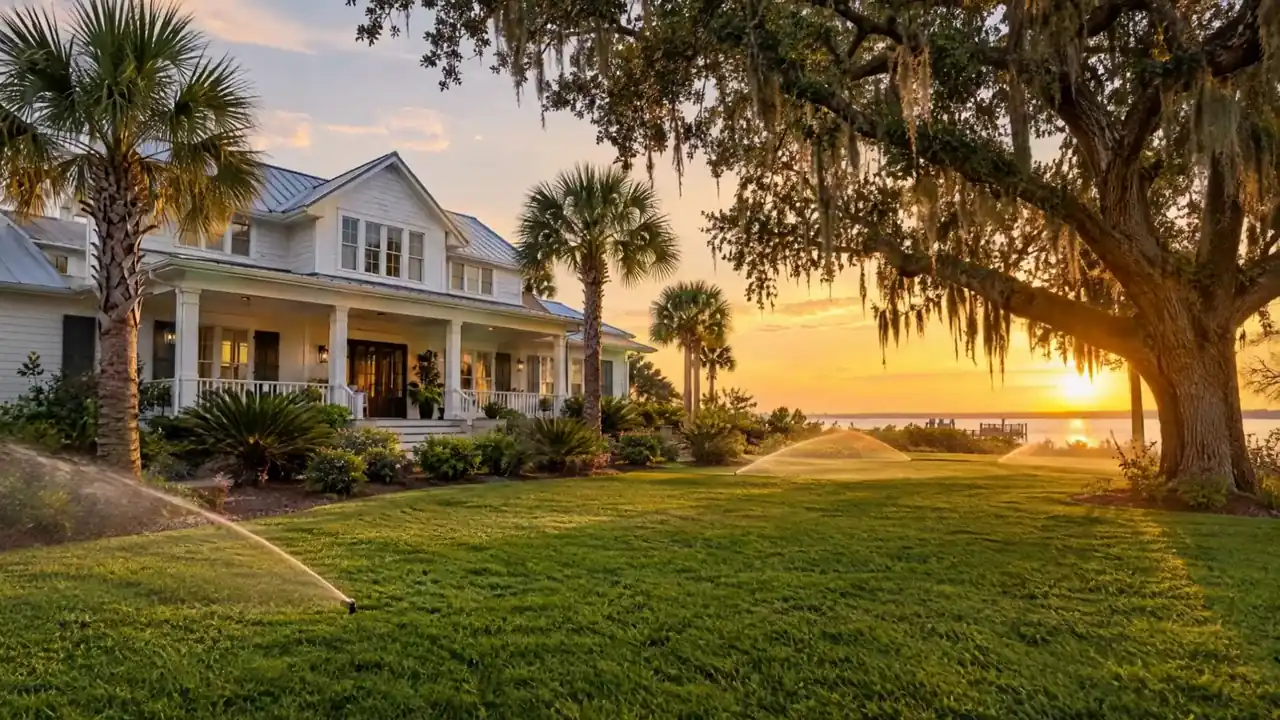
Hydroseeding vs. sod: which fits your Pensacola lot?
Seed costs less and suits big, open or sloped ground. Sod is instant and the only route to St. Augustine. Here is how to decide on local sites.

Hydroseeding usually costs a fraction of installed sod, with published ranges of about $0.06 to $0.20 per square foot against $0.35 to $0.85 or more for sod. Sod gives immediate ground cover; St. Augustine lawns can also be established with plugs. Hydroseed suits large areas, slopes and bahia, centipede or bermuda lawns.
- Hydroseed, national range
- $0.06 to $0.20 per sq ft
- Installed sod, national range
- $0.35 to $0.85+ per sq ft
- Centipede from seed
- 2 to 3 weeks to germinate (UF/IFAS)
- Sod or plugs only
- St. Augustine, seashore paspalum
Cost: what the published ranges show
HomeAdvisor puts hydroseeding at about $0.06 to $0.20 per square foot nationally and installed sod at about $0.35 to $0.85. A Pensacola cost guide from Homeyou reports $0.15 to $0.18 per square foot for 2,000 to 10,000 sq ft of hydroseed. Other recent guides cite installed sod well above $1.00 per square foot, so the gap depends on which figure you trust.
Sod material alone, before delivery and labor, runs per square foot in Florida roughly as follows, according to SodCalculator:
- Bahia: $0.30 to $0.60
- St. Augustine: $0.50 to $0.90
- Centipede: $0.50 to $0.95
- Zoysia: $0.55 to $0.90
- Bermuda: $0.65 to $0.85
On a half-acre lot, that difference is real money. On a 600 sq ft strip by the driveway, it may not matter. Our Pensacola hydroseeding cost guide breaks down what moves the price.
| Factor | Hydroseeding | Sod |
|---|---|---|
| Published cost | About $0.06 to $0.20 per sq ft nationally (HomeAdvisor); $0.13 to $0.18 in a Pensacola cost guide (Homeyou) | About $0.35 to $0.85 per sq ft installed (HomeAdvisor); other guides report more |
| Time to cover | Weeks; centipede takes 2 to 3 weeks to germinate and 6 to 8 more to establish (UF/IFAS) | Immediate surface cover; rooting takes weeks |
| Grass options | Bahia, centipede, common bermuda, carpetgrass; ryegrass and browntop millet as temporary cover | Any turf grass, including St. Augustine, zoysia and seashore paspalum |
| Slopes and channels | Sprayed from the truck; bonded fiber matrix or blankets on steep or wet ground | Needs staking on steep slopes; heavy to carry in |
| Early watering | Two or three light waterings a day for about two weeks (UF/IFAS) | Frequent watering until rooted |
| Best fit | Large lots, roadsides, pond banks, septic mounds, budget lawns | Coastal and shady lawns, instant use, late-season planting |
Time to a usable lawn
UF/IFAS calls seeding "the easiest and most economical way to establish a lawn," but notes it takes longer to reach full cover. Centipedegrass can take "up to 2–3 weeks to germinate and an additional 6–8 weeks to establish," per UF/IFAS. Bahiagrass germinates slowly; UF/IFAS recommends scarified seed to speed it up.
Sod covers the soil the day it goes down, though it still needs weeks of watering to root into the sand. If you need a finished-looking yard for a closing, an event or a listing photo next week, sod wins. If you can wait a season, seed gets you to the same place for less.
For a sense of the finish line, FDOT does not accept turf as "established" on its projects until roots hold, no bare spot exceeds 1 sq ft and no more than 1 percent of any 1,000 sq ft is bare. Seeded areas reach that point over a growing season; sod starts close to it on day one. Our hydroseed aftercare guide covers the waiting period.
Grass choice settles it for many lawns
Some of the most popular Florida lawn grasses simply cannot be seeded. UF/IFAS says St. Augustinegrass is "not available in seed," and seashore paspalum goes in only as sod, sprigs or plugs. Zoysia has limited seeded options and is usually sodded.
That matters most near the water. For coastal homeowners, UF/IFAS Gardening Solutions names St. Augustine and zoysia as "the best choices." Inland, the picture flips: centipede, which UF/IFAS calls "the most common home lawn grass in the Florida Panhandle," and bahia both seed well into acidic sand.
See why St. Augustine cannot be hydroseeded and the full Pensacola grass guide.
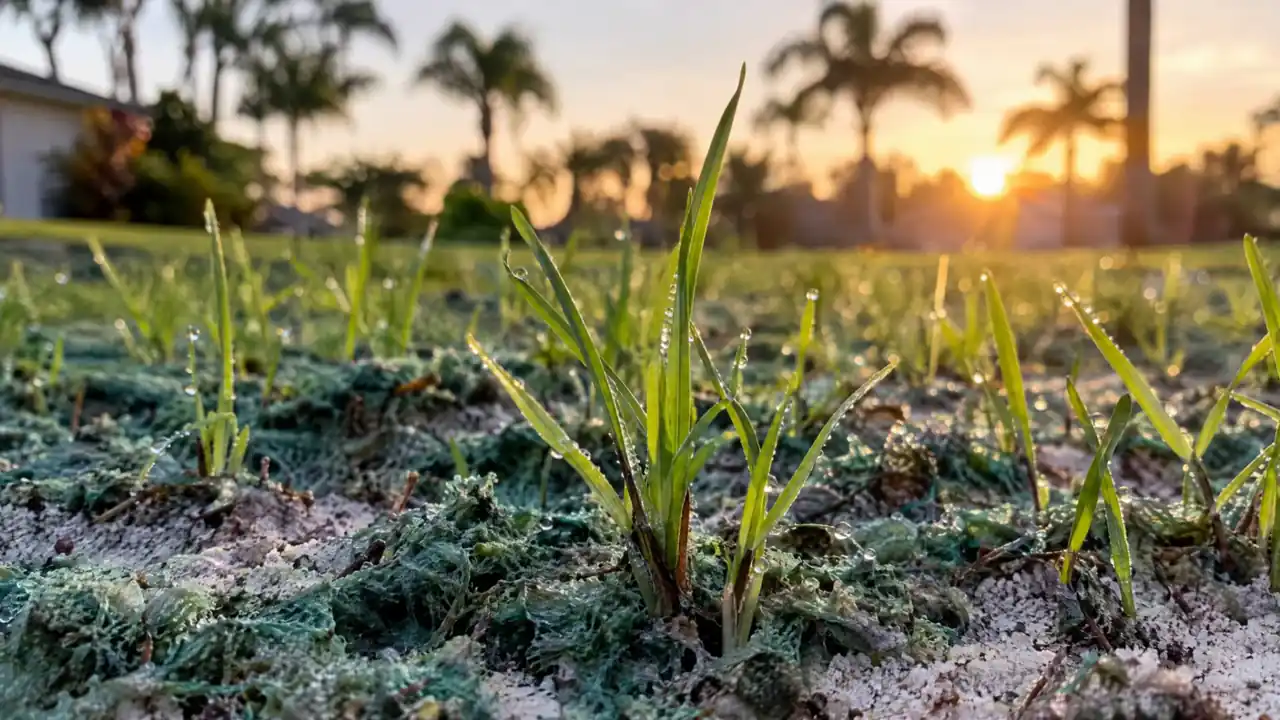
Slopes favor the spray
A hydroseed rig reaches banks and ditches from the road and lays seed and mulch in one pass. Steep or wet ground gets bonded fiber matrix instead of rolled turf.
Erosion, rain and storm season
Pensacola averages 68.31 inches of rain a year, per the Florida Climate Center. Hydromulch protects the surface as soon as it is sprayed, and roots follow as the grass establishes. Sod armors a small area instantly, but on steep banks it must be staked and can slide before it roots.
FDOT treats both as legitimate: its Section 570 specification says to use "seed, hydroseed, bonded fiber matrix, or sod" outside areas designated for sod. For channels, pond banks and long slopes, hydraulic products usually cover more ground per dollar. Our erosion control page explains the options.
When sod is the better choice
We would rather point you to sod than sell a lawn that will not take. Sod is usually the better call when:
- You want St. Augustine, seashore paspalum or most zoysia
- The lawn sits in salt spray on Pensacola Beach, Perdido Key or the sound side of Gulf Breeze
- The area is in heavy shade, where seeded grasses rate only fair or poor
- You need a usable lawn within days
- It is late fall or winter and you want permanent grass now; UF/IFAS calls fall centipede seeding "undesirable"
- Nobody can water two or three times a day for the first two weeks
Hydroseed is the better fit for large lots, slopes, pond banks, roadsides and budget-minded new builds. Florida's septic rule even names it: mound slopes steeper than 5:1 "shall be sodded or hydroseeded." See septic mound hydroseeding.
Common questions about hydroseeding vs. sod: an honest comparison
Short, sourced answers to what people ask us most. If your site has a wrinkle these do not cover, send it through the quote form below and we will talk it through with you.
Does hydroseed look as good as sod once it grows in?
A well-established seeded lawn can be as dense and even as sod of the same grass. The difference is the grass itself: hydroseed limits you to species that grow from seed, such as bahia, centipede and common bermuda. If you want the look of St. Augustine or zoysia, sod is the practical route.
Is hydroseed or sod better for erosion control?
Both are accepted by FDOT, whose Section 570 lists seed, hydroseed, bonded fiber matrix and sod. Sod covers a small area instantly. Hydroseed and bonded fiber matrix protect the surface as soon as they are sprayed and reach long slopes, ditches and pond banks that are hard to sod, usually at lower cost per area.
Can I hydroseed St. Augustine instead of buying sod?
No. UF/IFAS says St. Augustinegrass is not available in seed and must be planted as sod, plugs or sprigs. In testing described by UF/IFAS Okaloosa County Extension, the best germination was about 40 percent and every seedling died of disease. Choose sod or plugs for St. Augustine, or hydroseed a different grass.
How long until hydroseed looks like a lawn in Pensacola?
It depends on the grass and the season. UF/IFAS says centipede can take up to 2 to 3 weeks to germinate and another 6 to 8 weeks to establish. Bahia germinates slowly, and scarified seed helps. Seeding between April and early July gives the grass the warm, long days it needs to fill in quickly.
Which needs more water, hydroseed or sod?
Both need frequent water at first. UF/IFAS advises watering new seed two or three times a day in small quantities for about two weeks. New sod needs regular, deeper watering until it roots. A UF/IFAS agent calls establishing new turf the single largest use of water in a home landscape, whichever method you choose.
How big is the cost gap between hydroseed and sod on a large lot?
It grows with area. HomeAdvisor lists hydroseeding at about $2,600 to $8,700 per acre. At its installed sod range of $0.35 to $0.85 per square foot, an acre of sod works out to roughly $15,000 to $37,000. On acreage, pond banks and roadsides, that difference usually decides the method.
Keep reading
Related guides and services for sandy soil, heavy rain and the grasses that hold on the Gulf Coast, each written for Escambia and Santa Rosa county sites.
Hydroseeding guides
Plan the project, choose grass and care for new growth.
Open
Hydroseeding cost: price ranges
Published local and national ranges, what they leave out, and the site conditions that push a Pensacola job up or down the scale.
Open
Can you hydroseed St. Augustine grass? The science
No. The seed is not commercially available, and seedlings die in testing. Here is the UF/IFAS science and the realistic options for a Pensacola lawn.
Open
Best grass for Pensacola: hydroseeding grass guide
Seven turf grasses and two temporary covers, compared on the traits that matter in Escambia and Santa Rosa sand, salt and summer heat.
Open
Residential Hydroseeding
New-build lots and thinning lawns, seeded with a grass that suits deep Panhandle sand, in the months when it will actually take.
Open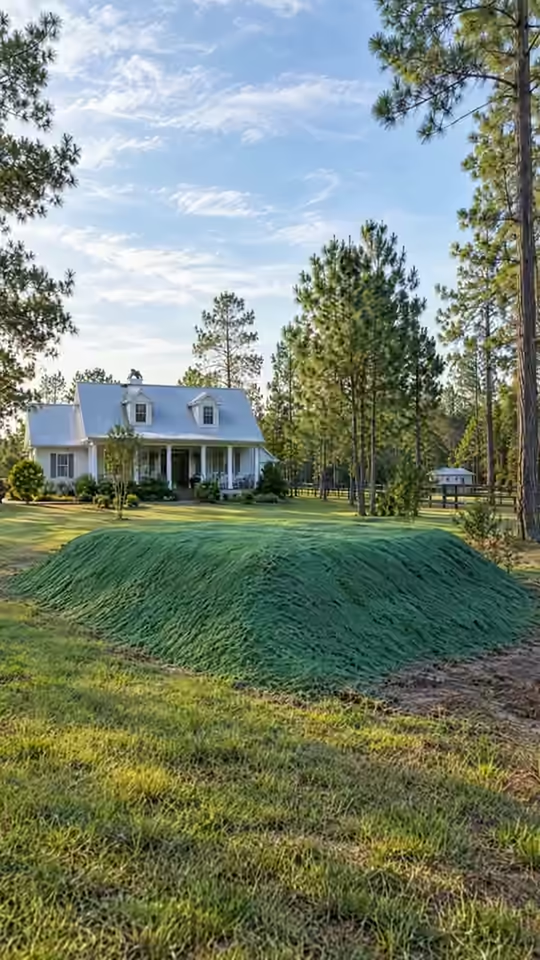
Septic Mound Hydroseeding
Florida will not give a mound system final approval until it is stabilized. We hydroseed mounds, shoulders and caps for installers and homeowners.
OpenSources
Facts on this page come from public sources, mostly UF/IFAS Extension, the Florida Department of Environmental Protection, FDOT and NOAA. We recheck them whenever we update the page.
- HomeAdvisor: Hydroseeding prices
- Homeyou: Hydroseeding in Pensacola, FL costs
- SodCalculator: Florida sod cost
- UF/IFAS EDIS LH005, Selecting a Turfgrass for Florida Lawns
- UF/IFAS EDIS LH009, Centipedegrass for Florida Lawns
- UF/IFAS EDIS LH013, Establishing Your Florida Lawn
- UF/IFAS Gardening Solutions: Salt-Tolerant Lawngrasses
- FDOT Standard Specifications Section 570, Performance Turf
Tell us about the ground
Send the address and what you are trying to grow or hold in place. We look at the site, the soil and the slope, then quote the mix and the method that fit it.