Pensacola HydroseedGet a quote
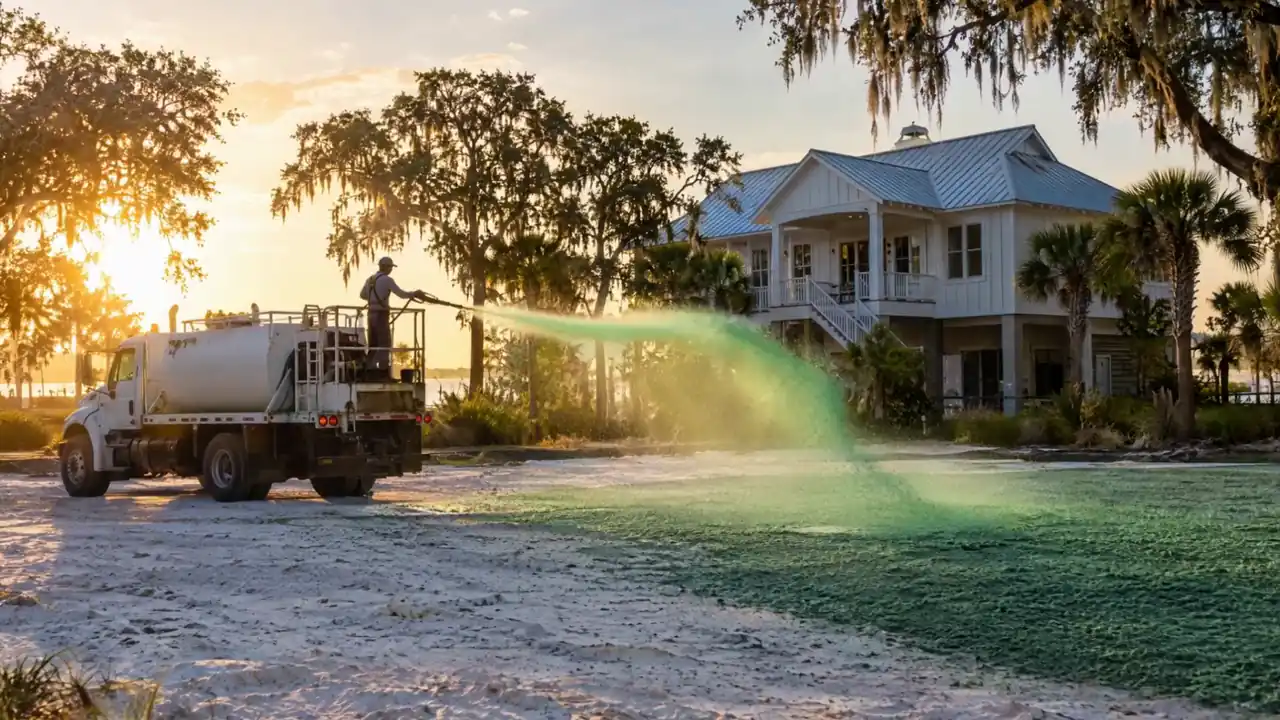
A hydroseed crew spraying green slurry across a white-sand lot beside a new Pensacola home under live oaks

Hydroseeding and erosion control, Pensacola FL

Grass that holds on Gulf Coast sand

Seed, mulch and tackifier sprayed as one green coat that keeps moisture on sandy soil and stays put through a summer storm. Escambia and Santa Rosa counties.

Rain on Pensacola in an average year
68.31 inches

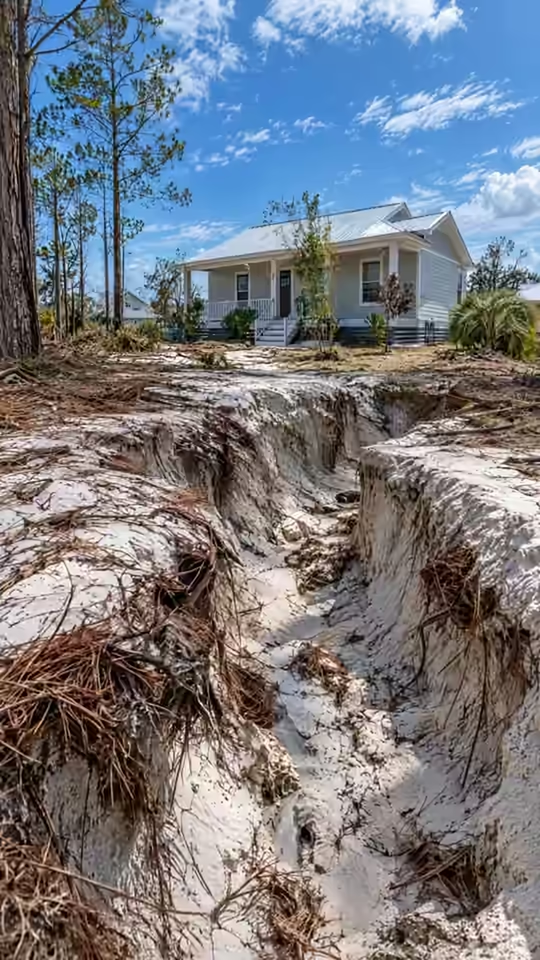
That is more than Seattle. Bare sand does not survive it. A bonded layer of mulch, and then roots, does.

Young grass breaking through hydromulch on sandy soil at sunrise

Week two on Lakeland sand

What is hydroseeding?

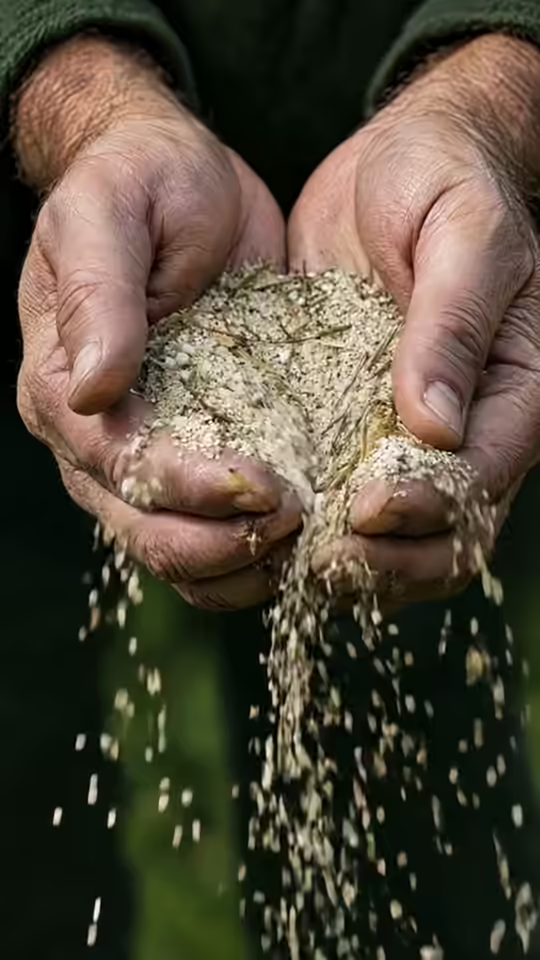
Hydroseeding is a way of planting grass by spraying a slurry of seed, wood-fiber mulch, fertilizer, tackifier and water onto prepared soil. The mulch holds moisture and the tackifier binds it to the ground, so seed germinates evenly and stays in place on sand, slopes and open sites.

It costs a fraction of installed sod, covers large or awkward ground in a day, and lets you choose the grass rather than take what a sod farm has cut. The trade is time: sod is a lawn the day it goes down, while hydroseed takes weeks to fill in. On the Gulf Coast it is also the fastest way to get erosion protection onto bare ground before the next storm.

  • Seed matched to the site: bahia, centipede or common bermuda for permanent cover, annual ryegrass or browntop millet for temporary cover.
  • Wood-fiber mulch that holds water against the seed and shades it from the July sun.
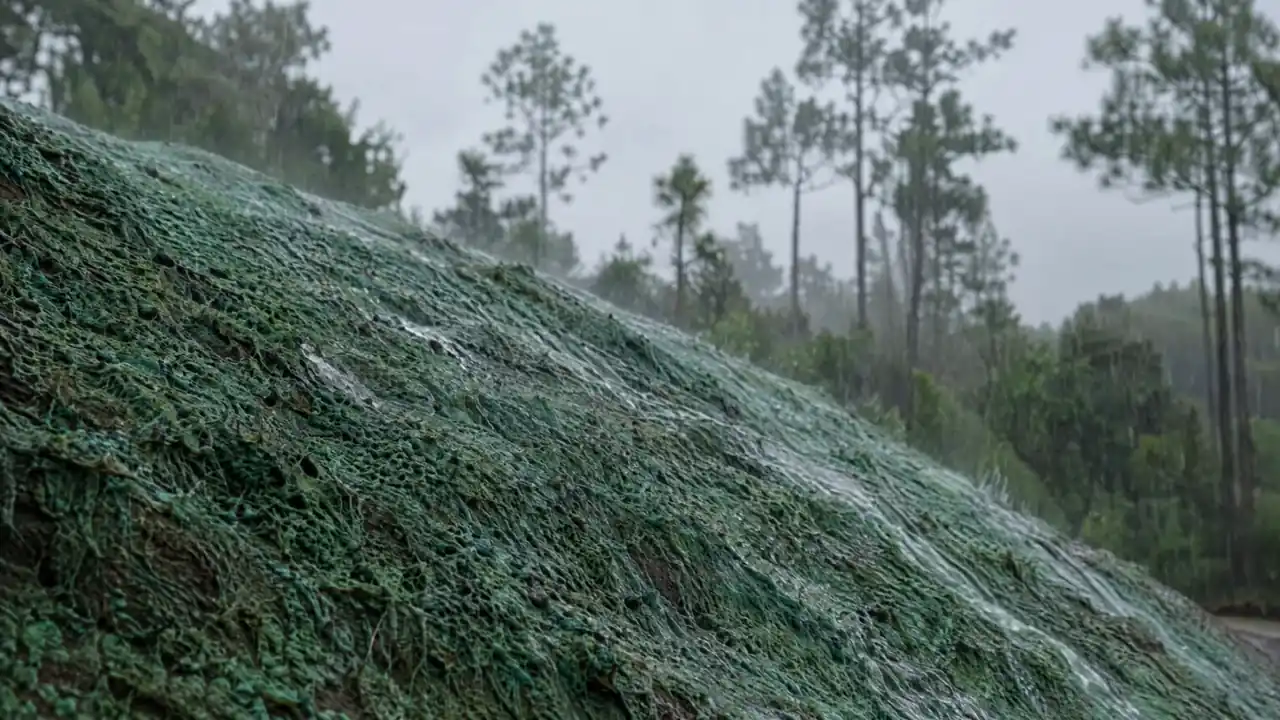
  • Tackifier that glues fiber and seed to the surface so rain and wind do not move them.
  • Starter fertilizer at a rate suited to the grass and the local rules.
  • Green tracer dye so coverage is even and visible, then fades within days.
Prime seeding window
April to early July
Typical local price
$0.13 to $0.18 per square foot
Grass named for the city
Pensacola bahia, 1935
Final stabilization rule
70 percent cover

From bare sand to a lawn that holds

Every job runs the same way, tuned to the site. Grade the ground, spray one even coat, keep the seedbed wet while it sprouts, and let roots take over from the mulch before storm season peaks.

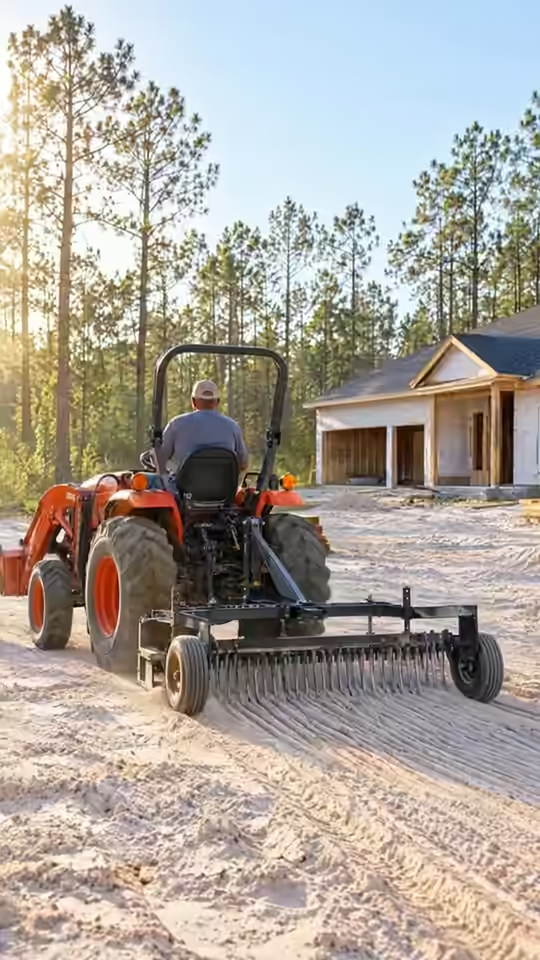
A compact tractor raking a white-sand lot before seeding
Graded

Bare sand, graded and ready

Every job starts with the ground. We grade, loosen and clear the surface so seed meets soil, not crust or debris.
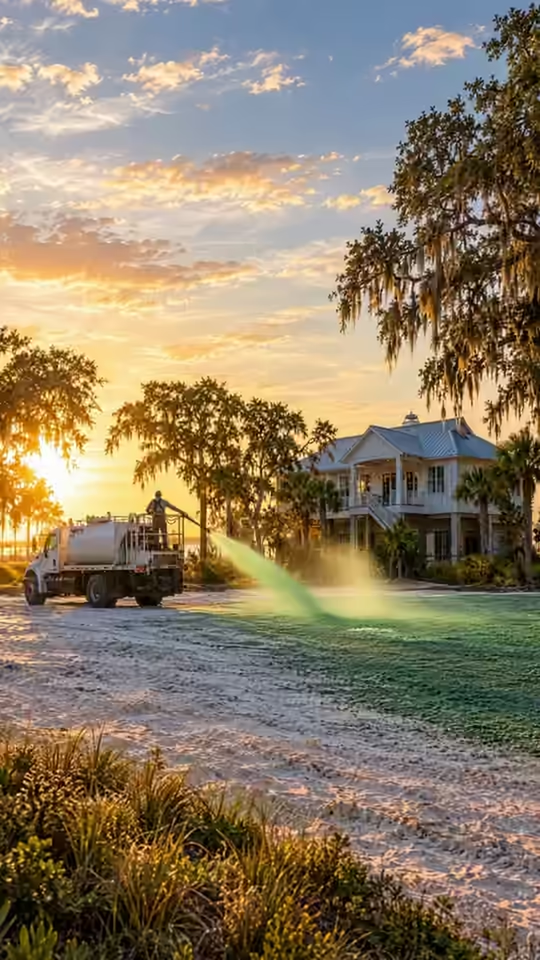
A hydroseed crew spraying green slurry across a white-sand lot beside a new Pensacola home under live oaks
Sprayed

One even green coat

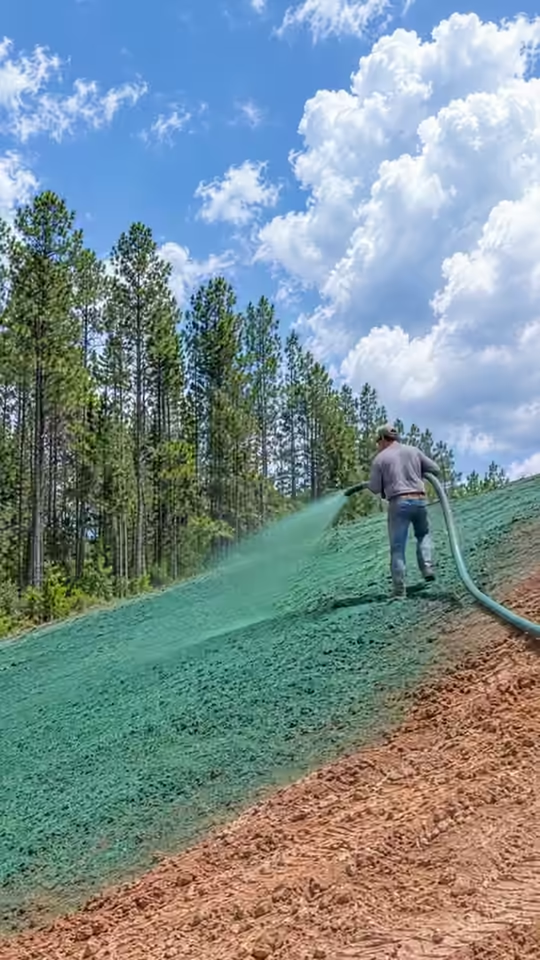
Seed, wood-fiber mulch, starter fertilizer and tackifier go down together in a single pass. The green dye shows exactly where it landed.
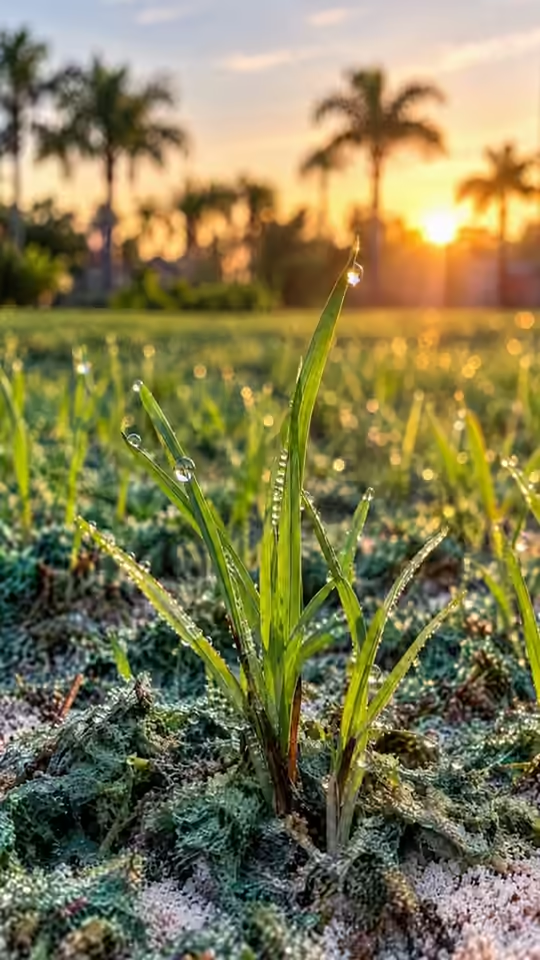
Young grass breaking through hydromulch on sandy soil at sunrise
Sprouting

First blades through the mulch

The mulch holds moisture against the seed on sand that would otherwise dry out within hours of a summer sunrise.
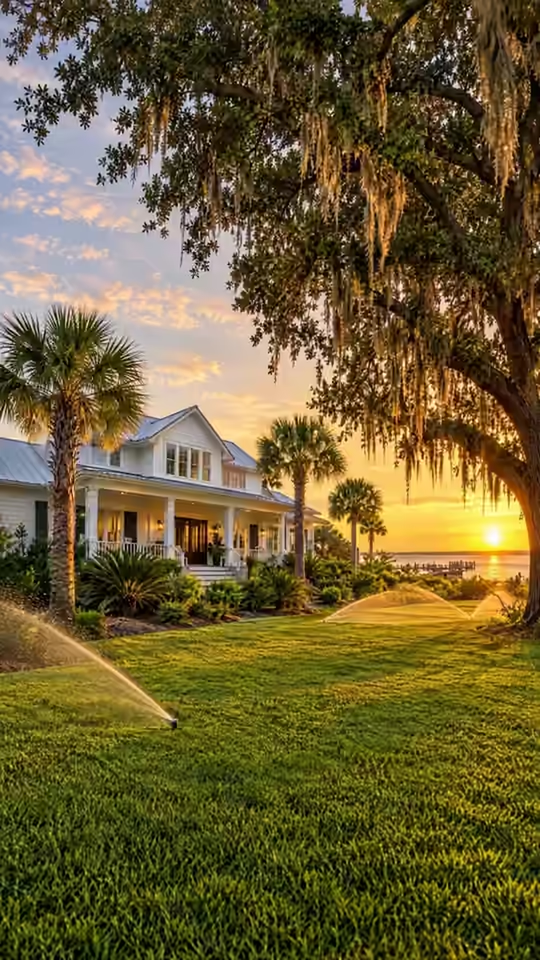
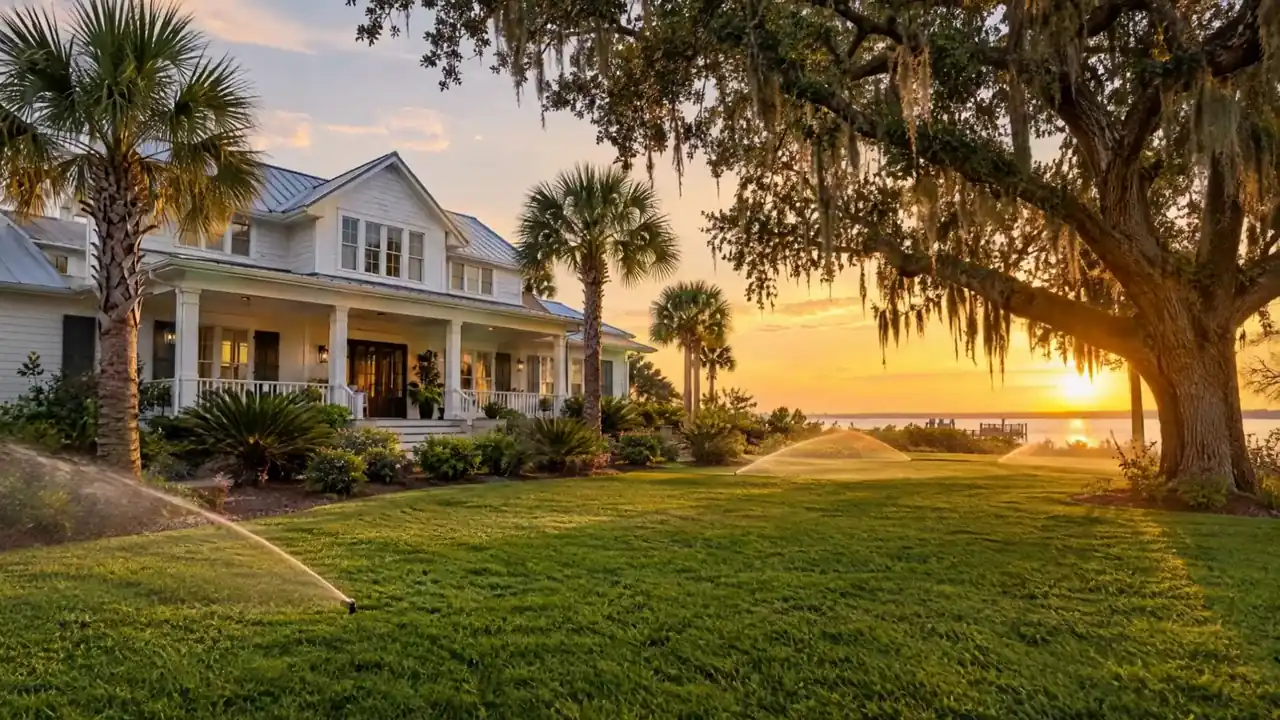
A thick new lawn in front of a Gulf Coast home with sprinklers at sunset
Established

Roots that hold the ground

By the end of the season the cover is grass, not mulch, and the roots are what keep the soil where it belongs.
What we hydroseed in Escambia and Santa Rosa counties

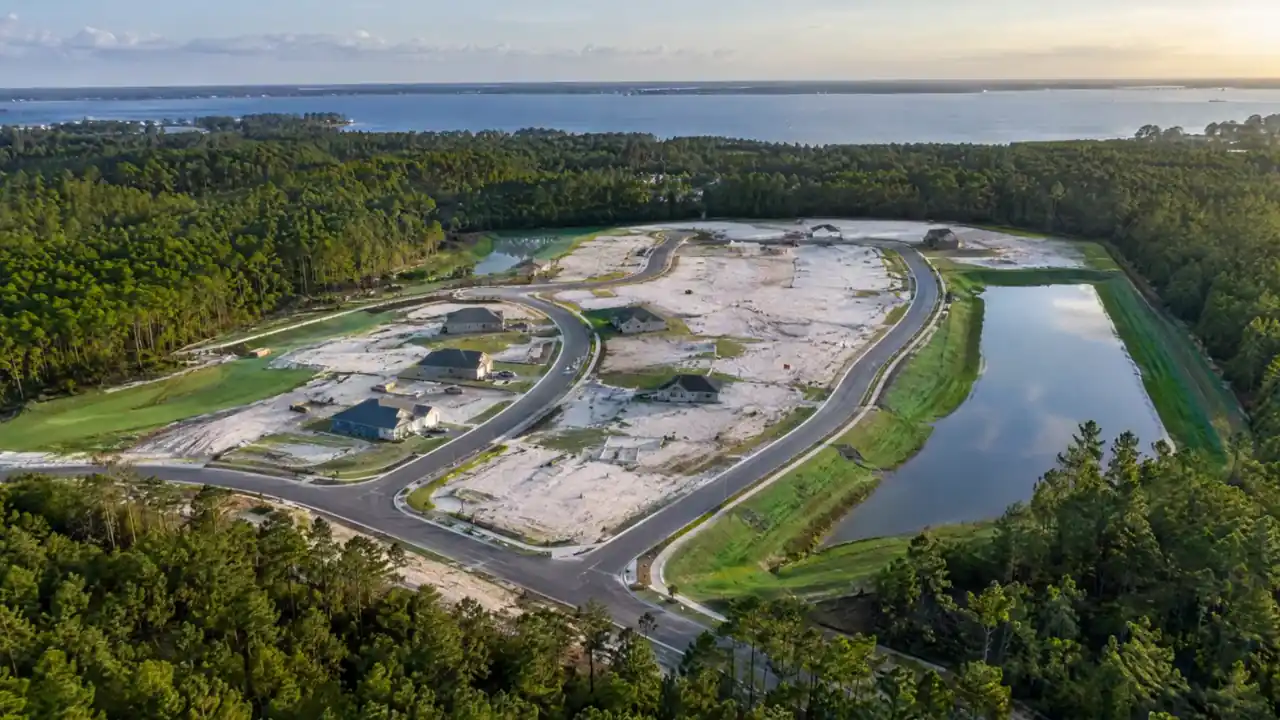
Homeowners, builders, HOAs, septic installers and site contractors call us for the same reason: bare ground that needs to become stable ground, at a fair price, before the weather decides for them.

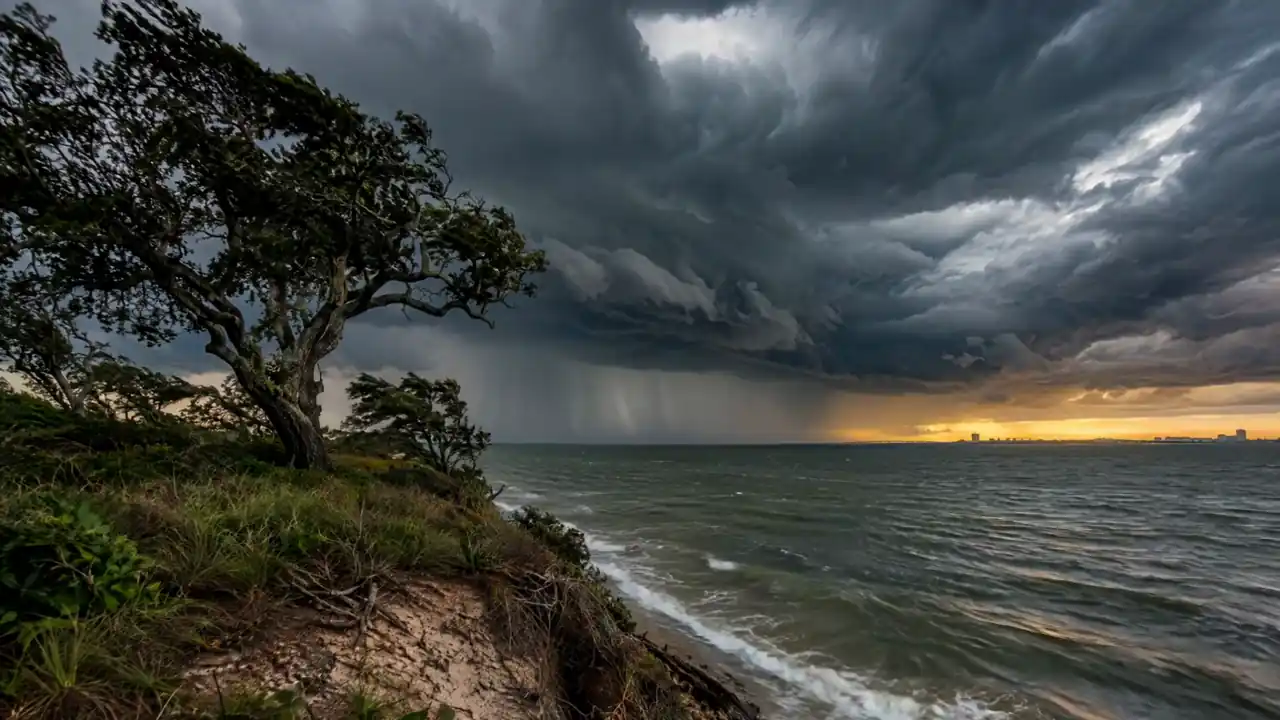
Storm clouds and rain rolling over Pensacola Bay past a live oak on a sandy bluff

On April 29, 2014, Pensacola got 15.55 inches of rain in one day

Hurricane Sally dropped 24.8 inches in 2020. Bare sand does not survive weather like that. A bonded layer of mulch, and then roots, does. That is the whole job, and it is why we plan every site around the next storm.

Why does hydroseed work on sandy soil?

Most of Escambia County sits on deep, excessively drained sands such as Lakeland, Troup and Kureb. The USDA soil survey rates Lakeland sand as very low in available water, with about 1 percent organic matter. Dry seed broadcast onto that surface bakes or blows away. A hydroseed slurry fixes the three things sand gets wrong:

  • The mulch holds water at the surface, right where the seed sits.
  • The tackifier stops wind and the first hard rain from sorting seed into the low spots.
  • The fiber shades the seedbed through a July afternoon when highs average 91.6 degrees.

Sand is also naturally acidic, which suits bahia and centipede. We recommend a $10 soil test through UF/IFAS Extension Escambia County before any new lawn, because both grasses yellow in high-pH soil.

Hydroseeding vs sod for a Pensacola yard

Sod gives you a lawn today. Hydroseed gives you a lawn for a fraction of the cost and lets you pick the grass. Here is how the two compare on the things that matter on the Gulf Coast. The full breakdown is in our hydroseed vs sod guide.

Hydroseed and sod compared for Northwest Florida
FactorHydroseedSod
Installed costAbout $0.06 to $0.20 per square foot nationally; $0.13 to $0.18 in Pensacola cost-guide dataAbout $0.35 to $0.85 per square foot or more, installed
Time to full coverWeeks to a season, depending on grass and timingImmediate
Grass optionsBahia, centipede, common bermuda, temporary rye or milletAdds St. Augustine, zoysia and seashore paspalum, which cannot be seeded
Slopes and channelsStrong, especially with bonded fiber matrixNeeds staking on steep ground
Best windowApril to early July for permanent grassMost of the year with irrigation

Which grass should you plant in Pensacola?

The right grass depends on salt, shade, traffic and how much care you want to give it. Our Pensacola grass guide covers every option. The short version:

  • Pensacola bahia, selected in Pensacola in 1935 per UF/IFAS, for low-input lawns, large lots, roadsides and pond banks.
  • Centipede, which UF/IFAS calls the most common home lawn grass in the Florida Panhandle.
  • Common bermuda for full sun, heavy traffic and salty coastal ground.
  • St. Augustine and zoysia for shady or beachfront lawns, planted as sod, because St. Augustine cannot be hydroseeded.

Watch bare ground turn into a lawn

A short film of the whole process, from graded sand to the spray, the first blades through the mulch and a finished lawn. Captions are on by default for viewers who keep the sound off.

When is the best time to hydroseed in Pensacola?

April through early July is the prime window for permanent warm-season grass, according to UF/IFAS and the UF and FDOT roadside vegetation guide. Seeding later runs into peak hurricane season, which crests around September 10, and late seedlings risk winter-kill in north Florida. Our seeding calendar breaks the year down month by month.

  • Mid-March to April: common bermuda once soil reaches 65 to 70 degrees, plus early bahia.
  • April to early July: bahia, centipede and bermuda, with browntop millet as a nurse crop where needed.
  • July to September: temporary cover and bonded fiber matrix to hold ground through the wettest months.
  • October to early November: annual ryegrass for winter cover and permit compliance.

Once it is down, watering decides the result. Our watering and aftercare guide covers the first eight weeks on sandy soil.

Building on an acre or more?

7 days. 70 percent.

Florida's construction permit requires stabilization to start within 7 days after work stops and defines final stabilization as 70 percent uniform perennial cover.

Where we hydroseed around Pensacola

We work across Escambia and Santa Rosa counties and into western Okaloosa County, from beachfront lots on Perdido Key to new subdivisions in Pace and rural acreage north of Cantonment. Across the bay, see hydroseeding in Gulf Breeze, or every service area.

Hydroseeding questions, answered

The questions we hear most from Pensacola homeowners and builders, answered with sources from UF/IFAS, Florida DEP and FDOT. More answers live on our questions page and in the guide library.

How much does hydroseeding cost in Pensacola?

Cost-guide data for Pensacola puts hydroseeding at about $0.15 to $0.18 per square foot for 2,000 to 10,000 square feet, and about $0.13 to $0.15 for larger areas. Slope, soil prep, grass choice and erosion products such as bonded fiber matrix move the number. We quote each site after we see it.

How long does hydroseed take to grow in Northwest Florida?

It depends on the grass. UF/IFAS says centipede can take 2 to 3 weeks to germinate and another 6 to 8 weeks to establish. Bahia germinates slowly unless the seed is scarified, and common bermuda is fastest once soil is warm. Steady light watering in the first two weeks matters most.

When is the best time to hydroseed in Pensacola?

April through early July for permanent warm-season grass. UF/IFAS recommends seeding centipede from April to July, and the UF and FDOT roadside guide advises against seeding most warm-season grasses later than early July. Outside that window, annual ryegrass or browntop millet gives temporary cover.

Can St. Augustine grass be hydroseeded?

No. UF/IFAS lists St. Augustinegrass as not available in seed, so it goes in as sod, plugs or sprigs. In UF/IFAS testing the best germination reached about 40 percent and every seedling died of disease. Bahia, centipede and common bermuda are the grasses that seed well here.

Does hydroseeding work in sandy soil?

Yes, when moisture is managed. Lakeland sand, common across Escambia County, is excessively drained with about 1 percent organic matter. The wood-fiber mulch in hydroseed holds water against the seed and the tackifier keeps it in place, which is why the first two weeks of light, frequent watering decide the result.

Will hydroseed wash away in a heavy rain?

Fresh seed on a bare slope can move in a hard rain, and Pensacola averages 68.31 inches a year. On slopes and in channels we use bonded fiber matrix or erosion control blankets, which FDOT allows in place of standard seeding and which hold through repeated wetting.

A thick new lawn in front of a Gulf Coast home with sprinklers at sunset

Tell us about the ground

Send the address and what you are trying to grow or hold in place. We look at the site, the soil and the slope, then quote the mix and the method that fit it.

By sending this you agree to our Privacy Policy. We use these details only to prepare your quote.
PricingGet a quote