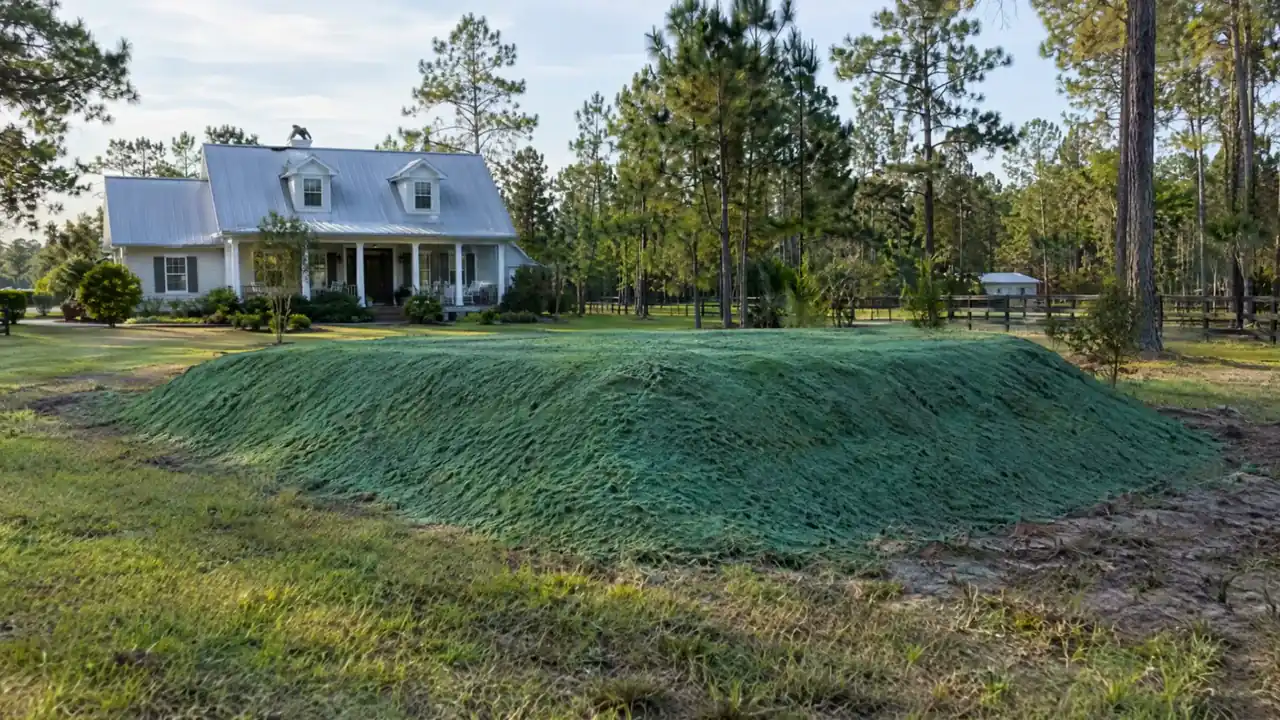
Septic mound and drainfield hydroseeding
Florida will not give a mound system final approval until it is stabilized. We hydroseed mounds, shoulders and caps for installers and homeowners.
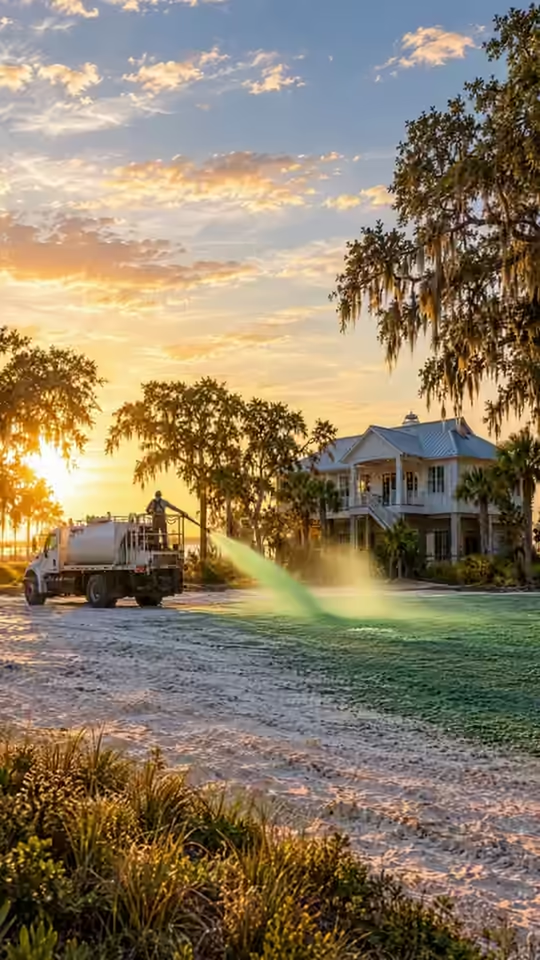
Yes, a septic mound can be hydroseeded in Florida, and on steep mounds the rule calls for it. Rule 62-6.009 of the Florida Administrative Code requires the whole mound to be stabilized with vegetation and says slopes steeper than 5:1 must be sodded or hydroseeded. Final installation approval is not granted until that stabilization is in place.
- Rule
- Rule 62-6.009 F.A.C.
- Slopes steeper than 5:1
- Must be sodded or hydroseeded
- Whole mound
- Slopes, shoulders and cap vegetated
- Final approval
- Waits on mound stabilization
- Common grasses
- Bahia or centipede
What the septic rule says
Florida's onsite sewage rules, Rule 62-6.009 of the Florida Administrative Code, are specific about mound systems. The entire mound, including slopes, shoulders and the soil cap, must be stabilized with vegetation. Slopes steeper than 5:1 must be sodded or hydroseeded. And final installation approval is not granted until sodding, hydroseeding, seeding and haying or other approved stabilization of the mound has occurred.
The current citation is Rule 62-6.009 under the Florida Department of Environmental Protection, formerly Rule 64E-6.009. Confirm the approved stabilization method and inspection requirements with the responsible installer and inspector for your particular permit.
Why installers call us
For a septic contractor, an unstabilized mound is an open job. The system is built and inspected, but the permit cannot close until the cover is down. Sod on a steep, freshly built mound is heavy to handle and can slide on fresh fill. Hydroseed goes on in one pass from the truck, covers slopes and shoulders evenly, and the mulch layer starts protecting the sand immediately.
We coordinate with installers so seeding follows final grading of the mound. On a new home, the mound is often seeded together with the yard as part of a residential hydroseeding job, so the two match.
When we arrive, we check the mound for settling and washouts since final grading, fill and smooth any rills, and confirm where inspection ports and lids sit so the slurry does not bury them. The slopes, shoulders and cap all get the same coat, because the rule asks for the entire mound to be vegetated, not just the steep faces. We leave the homeowner with a watering plan the same day.
Seeding a mound on deep sand
Mound fill in Escambia and Santa Rosa counties is usually sand, and it behaves like the local Lakeland and Troup soils: excessively drained, low in organic matter and quick to dry. On a raised mound the slopes dry even faster than flat ground. Two things carry the seed through: a full mulch rate that shades and holds moisture against the seed, and frequent light watering. UF/IFAS recommends watering new seed two or three times a day in small amounts for about two weeks.
Light, frequent watering also suits a drainfield, since it keeps the surface moist without soaking the system. Our aftercare guide covers the schedule week by week.
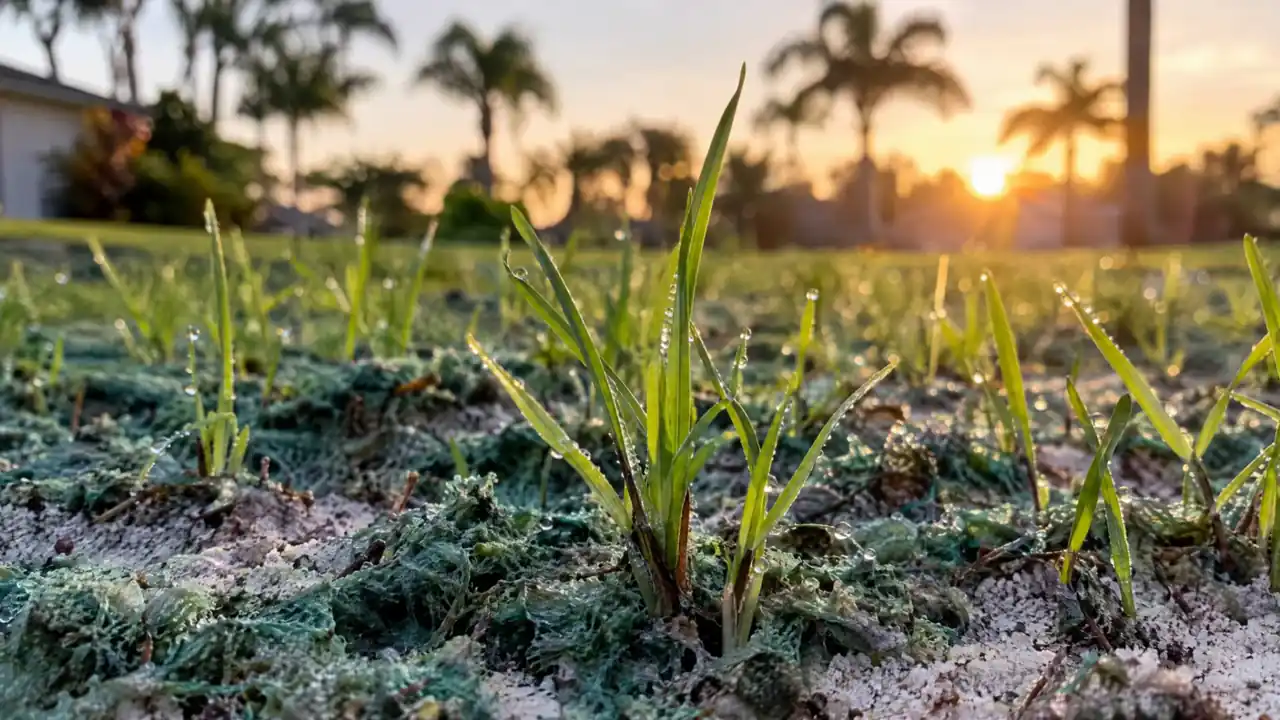
No grass, no final approval
Under Rule 62-6.009, a mound system's final installation approval waits until the mound has been sodded, hydroseeded or otherwise stabilized.
Choosing a grass for a drainfield
Low-input grasses suit a mound because they need little fertilizer and modest water once established. Centipede, the most common home lawn grass in the Panhandle per UF/IFAS, prefers acidic soil and should not be overfertilized with nitrogen. Bahiagrass is extremely drought tolerant and suits larger rural lots, though its tall seed heads are less tidy. Common bermuda handles full sun and wear but needs more feeding. Near salt water, bahia and centipede are poor choices. The grass guide compares them.
Before seeding a new mound, a soil test is worth the $10 charged by UF/IFAS Extension Escambia County. Imported mound fill can carry a different pH from the surrounding yard, and both centipede and bahia yellow from iron chlorosis when pH runs high.
Mounds built outside the seeding window
Septic systems get built all year, but warm-season grass seeds best from April to early July. For a mound finished in fall or winter, annual ryegrass seeded in October or early November gives a quick green cover, and hydromulch protects the surface. Whether a temporary cover satisfies final approval is up to the inspector, so confirm what they will accept before relying on it. The permanent grass can be seeded in spring; see when to hydroseed.
Common questions about septic mound hydroseeding
Short, sourced answers to what people ask us most. If your site has a wrinkle these do not cover, send it through the quote form below and we will talk it through with you.
Can a septic mound be hydroseeded in Florida?
Yes. Florida's septic rule, Rule 62-6.009 F.A.C., says the entire mound must be stabilized with vegetation and that slopes steeper than 5:1 must be sodded or hydroseeded. Hydroseeding is named directly in the rule as an accepted method, alongside sodding and seeding with hay.
Why is my septic final inspection waiting on grass?
Because the rule ties approval to stabilization. Rule 62-6.009 says final installation approval for a mound system is not granted until sodding, hydroseeding, seeding and haying or other approved stabilization of the mound has occurred. Stabilization is one approval requirement; the inspector determines whether the installation meets all applicable conditions.
What grass is best on a septic drainfield in Pensacola?
Low-input grasses that tolerate acidic sand work well. Centipede is the most common Panhandle lawn grass and needs little nitrogen. Bahiagrass is very drought tolerant and suits rural lots. Common bermuda works in full sun with heavier wear. St. Augustine cannot be hydroseeded and would need sod.
Which agency oversees septic rules in Florida now?
The Florida Department of Environmental Protection administers Rule 62-6.009 F.A.C., formerly Rule 64E-6.009. Ask your installer or inspector to confirm the requirements that apply to your permit.
How long does grass take to grow on a hydroseeded septic mound?
It depends on the grass and the weather. UF/IFAS says centipede can take two to three weeks to germinate and another six to eight weeks to establish, and bahia germinates slowly. The mulch layer protects the mound in the meantime. Frequent light watering for the first two weeks makes the biggest difference on sandy mound fill.
Can I hydroseed a septic mound in the winter?
Not with permanent warm-season grass, which seeds best from April to early July in Pensacola. Annual ryegrass seeded in October or early November gives quick temporary cover, and hydromulch protects the surface. Ask your inspector whether temporary cover meets the stabilization requirement for final approval before you rely on it.
Keep reading
Related guides and services for sandy soil, heavy rain and the grasses that hold on the Gulf Coast, each written for Escambia and Santa Rosa county sites.

Residential Hydroseeding
New-build lots and thinning lawns, seeded with a grass that suits deep Panhandle sand, in the months when it will actually take.
Open
Hydroseed aftercare: watering and mowing
Light, frequent water for two weeks, then a slow taper to deep, infrequent irrigation. The details below are tuned for fast-draining local soil.
Open
Best grass for Pensacola: hydroseeding grass guide
Seven turf grasses and two temporary covers, compared on the traits that matter in Escambia and Santa Rosa sand, salt and summer heat.
OpenWhen to hydroseed: seeding calendar
April through early July is prime time for warm-season grass. The rest of the year calls for different seed, more protection or temporary cover.
OpenSources
Facts on this page come from public sources, mostly UF/IFAS Extension, the Florida Department of Environmental Protection, FDOT and NOAA. We recheck them whenever we update the page.
- Florida Administrative Code: Rule 62-6.009, Alternative Systems
- UF/IFAS EDIS LH009, Centipedegrass for Florida Lawns
- UF/IFAS EDIS LH005, Selecting a Turfgrass for Florida Lawns
- UF/IFAS EDIS LH013, Establishing Your Florida Lawn
- UF/IFAS ENH14, Overseeding Florida Lawns for Winter Color
- USDA-NRCS Map Unit Description (Brief), Escambia County FL
- UF/IFAS Extension Escambia County: Forages / Soil Testing
- UF/IFAS ENH6, Bahiagrass for Florida Lawns

Tell us about the ground
Send the address and what you are trying to grow or hold in place. We look at the site, the soil and the slope, then quote the mix and the method that fit it.