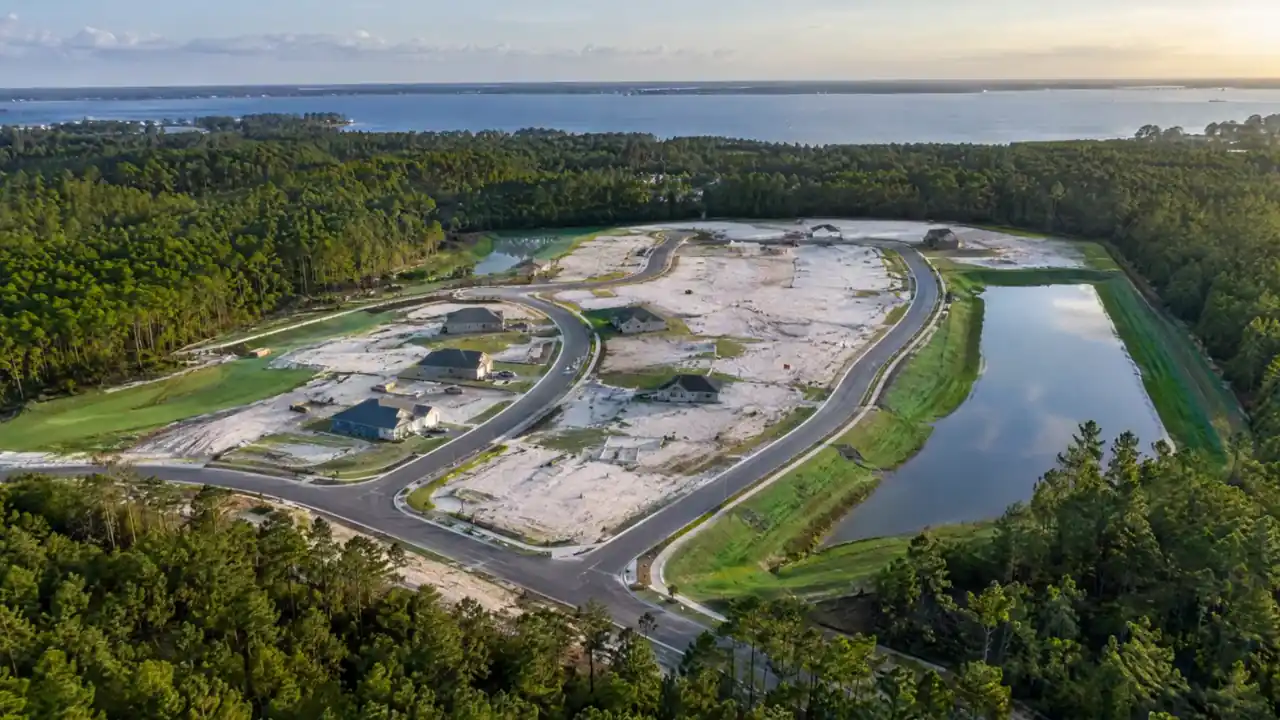
Final stabilization for Florida construction sites
Getting a permitted site to 70 percent uniform perennial cover so the Notice of Termination can be filed, with seed mixes timed to the season.
Under Florida DEP's Construction Generic Permit, final stabilization means all soil disturbance is complete and unpaved areas have a uniform perennial vegetative cover of at least 70 percent density, or equivalent permanent measures. Hydroseeding is a common way to get there: it covers large areas quickly, protects the soil from day one, and establishes permanent grass that counts toward the 70 percent.
- Permit applies at
- 1 acre disturbed, or common plan
- Start stabilization
- Within 7 calendar days
- Inspections
- Every 7 days and after 0.50 in rain
- Completion review
- Project-specific establishment criteria
- Notice of Termination
- Within 14 days of final stabilization
When the Construction Generic Permit applies
Florida DEP's NPDES Construction Generic Permit, Rule 62-621.300(4)(a), covers construction that disturbs 1 acre or more, or less than an acre that is part of a larger common plan of development, and discharges stormwater to surface waters or a municipal separate storm sewer system. Operators file a Notice of Intent at least 2 days before construction; DEP lists the fee as $250 for 1 to 5 acres and $400 above 5 acres, with a 5-year coverage term. A stormwater pollution prevention plan is required and must record grading dates, the dates work stops and the dates stabilization begins.
The version of the permit reviewed for this page carries a 2015 effective date. Check the current permit text on DEP's site before relying on any detail here.
| Milestone | Requirement |
|---|---|
| Coverage threshold | 1 acre or more disturbed, or part of a larger common plan |
| Notice of Intent | At least 2 days before construction |
| Stabilization start | Within 7 calendar days after work stops on any portion |
| Inspections | Every 7 days and within 24 hours of 0.50 in of rain |
| Final stabilization | Uniform perennial vegetative cover of at least 70% density |
| Notice of Termination | Within 14 calendar days of final stabilization |
The 7-day rule and inspections
The permit requires stabilization measures to begin within 7 calendar days after construction activities temporarily or permanently stop on any portion of the site. Accepted measures include temporary seeding, permanent seeding, mulching, geotextiles and sod. Santa Rosa County's environmental department gives similar local guidance: exposed soil should get temporary cover within 7 days of no activity.
Inspections must happen at least once every 7 calendar days and within 24 hours of a storm producing 0.50 inch of rain or more, performed by a qualified inspector. Florida DEP's Stormwater, Erosion and Sedimentation Control Inspector program trains and certifies inspectors who can perform these. In Pensacola's wettest months, June through September, that trigger is hit often, so bare areas show up on inspection reports quickly.
What 70 percent cover means
The permit defines final stabilization as the point when all soil-disturbing activities are complete and a uniform perennial vegetative cover with a density of at least 70 percent has been established on all unpaved areas not covered by permanent structures, or equivalent permanent stabilization measures such as geotextiles are in place. The word uniform matters: the permit describes it as evenly distributed, without large bare areas. A site that is 90 percent green on the flats and bare on the pond slopes does not meet it.
The cover also has to be perennial. Browntop millet and annual ryegrass are excellent temporary grasses but die out by design, so they hold a site while bahia or bermuda establishes. They do not count as the permanent cover on their own.
How hydroseeding gets a site to 70 percent
We plan final stabilization around the season. From April to early July, we hydroseed perennial mixes such as bahia and common bermuda, often with a light rate of browntop millet as a nurse crop. Outside that window we put down temporary grass or hydromulch to satisfy the 7-day rule, then return in spring for the perennial seeding. Steeper slopes get bonded fiber matrix, and channels get blankets, so the uniform requirement does not fail on the hardest ground.
Germination is only half the job. Perennial grass on Lakeland sand needs water and time to reach density, and bahia in particular germinates slowly. Where irrigation is available, we set a watering plan; where it is not, we time seeding to the summer rains. Retention ponds and swales are covered on our pond bank page.
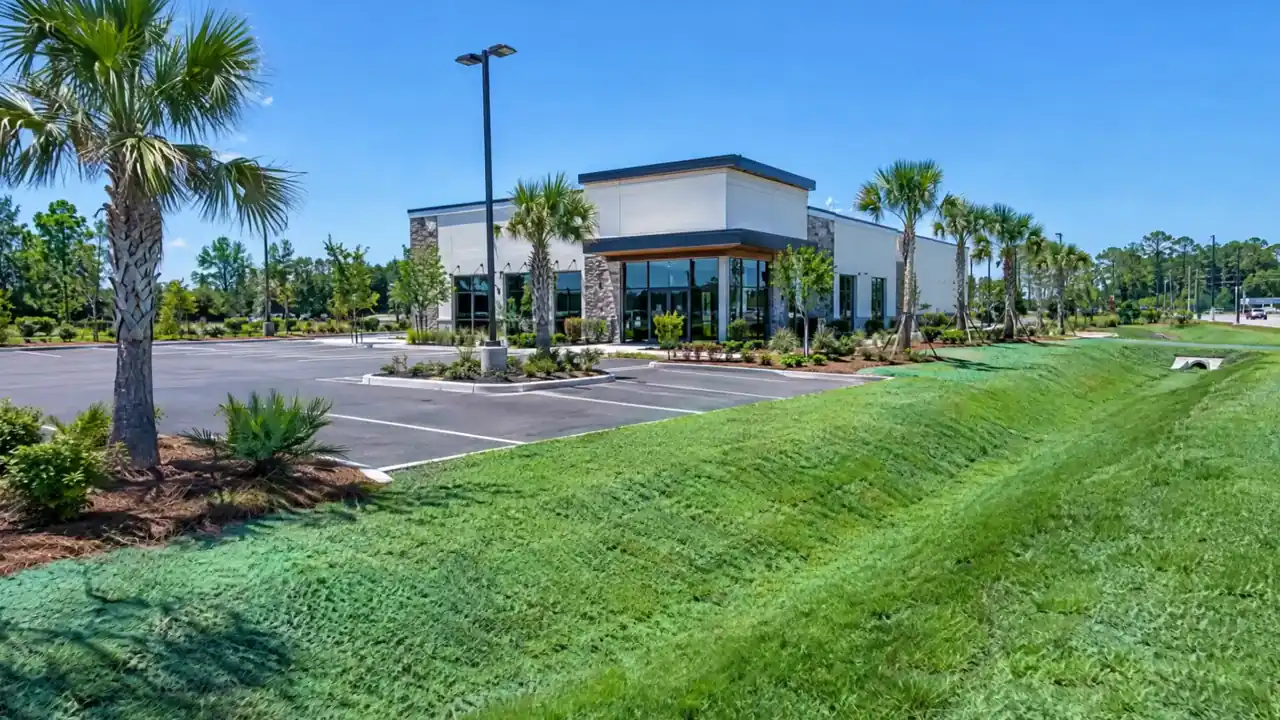
Seventy percent, evenly, on every unpaved acre
DEP's definition of final stabilization asks for uniform perennial cover without large bare areas, not an average across the site.
FDOT established turf and closing out
On FDOT and many municipal jobs the bar is the specification, not just the permit. FDOT Section 570 allows seed, hydroseed, bonded fiber matrix or sod outside areas designated for sod, and defines established turf as turf whose roots hold, so leaf blades break before the plant pulls out of the soil, with no bare spot larger than 1 square foot and no more than 1 percent bare in any 1,000 square feet. Check the current FDOT specification book for the version on your contract.
Once the site reaches final stabilization, the CGP requires the Notice of Termination within 14 calendar days. The NOT should not be filed early: until the 70 percent standard is actually met, the permit and its inspections stay in force. For the broader scope of site work, see commercial hydroseeding.
Common questions about final stabilization and 70% cover in florida
Short, sourced answers to what people ask us most. If your site has a wrinkle these do not cover, send it through the quote form below and we will talk it through with you.
What does 70 percent final stabilization mean in Florida?
Under Florida DEP's Construction Generic Permit, all soil disturbance must be finished and all unpaved areas not covered by structures must have a uniform, evenly distributed perennial vegetative cover with a density of at least 70 percent, or equivalent permanent measures such as geotextiles. Large bare areas mean the site does not qualify.
Does temporary ryegrass or millet count toward final stabilization?
Not on its own. The definition requires perennial vegetative cover. Browntop millet and annual ryegrass are temporary grasses that die out, so they protect the soil and satisfy the 7-day stabilization requirement while bahia or bermuda establishes, but the permanent grass has to reach the 70 percent density.
How often must a Florida construction site be inspected?
Under the Construction Generic Permit, at least once every 7 calendar days and within 24 hours after a storm event of 0.50 inch of rain or more. Inspections must be done by a qualified inspector, and Florida DEP runs a certification program that qualifies inspectors to perform them.
When can I file the Notice of Termination?
Within 14 calendar days after the site reaches final stabilization, meaning 70 percent uniform perennial cover on unpaved areas or equivalent permanent measures, and construction discharges have stopped. Filing before the cover meets the standard is not appropriate. Check the current permit text on Florida DEP's website.
Is hydroseeding accepted for final stabilization in Florida?
Yes. The Construction Generic Permit lists permanent seeding among stabilization measures, and FDOT Section 570 allows seed, hydroseed, bonded fiber matrix or sod outside areas designated for sod. What matters for final stabilization is the result: a uniform perennial cover of at least 70 percent density.
Keep reading
Related guides and services for sandy soil, heavy rain and the grasses that hold on the Gulf Coast, each written for Escambia and Santa Rosa county sites.
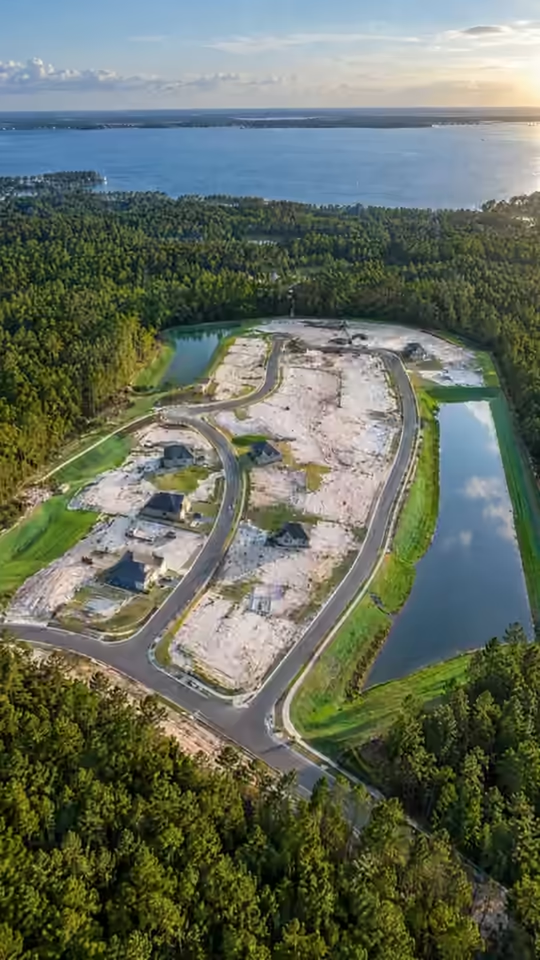
Commercial Hydroseeding and NW Florida
Subdivisions, commercial pads, HOA common areas, solar fields and right-of-way, with the planting scope coordinated around site conditions, access and the project schedule.
Open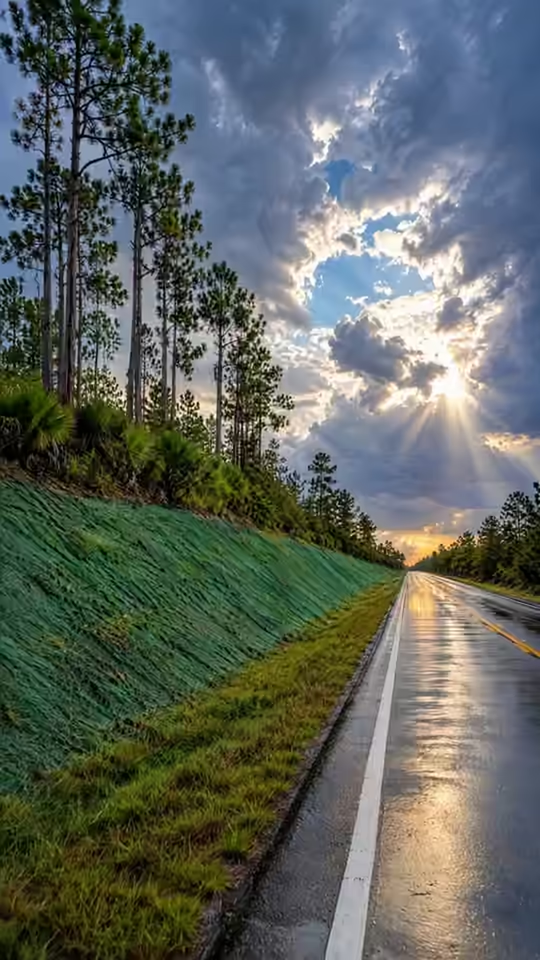
Erosion Control
Hydromulch, bonded fiber matrix, blankets and temporary grass for slopes, ditches and bare ground in one of the rainiest cities in the country.
Open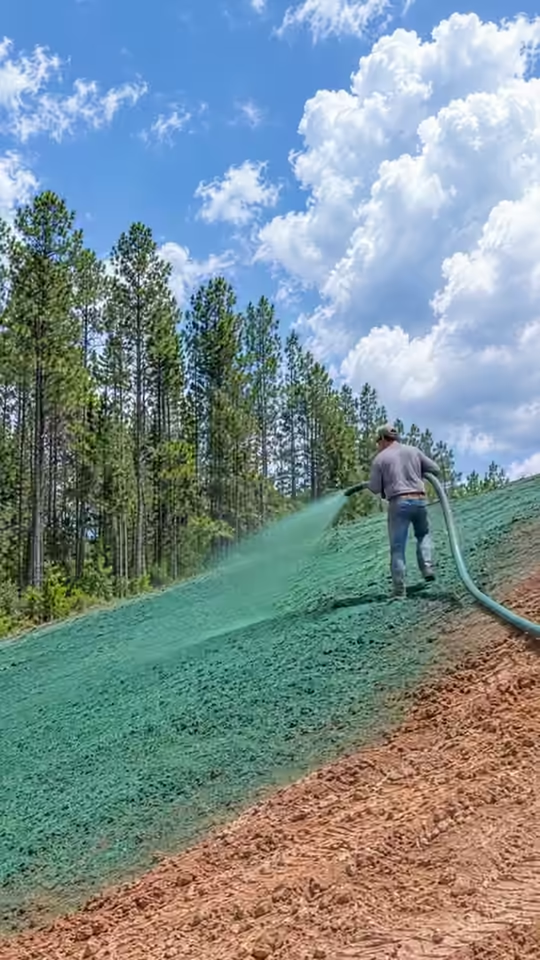
Bonded Fiber Matrix and Hydromulch
Sprayed erosion protection for slopes and bare ground: what BFM and hydromulch are, what FDOT requires of them, and when blankets are the better call.
Open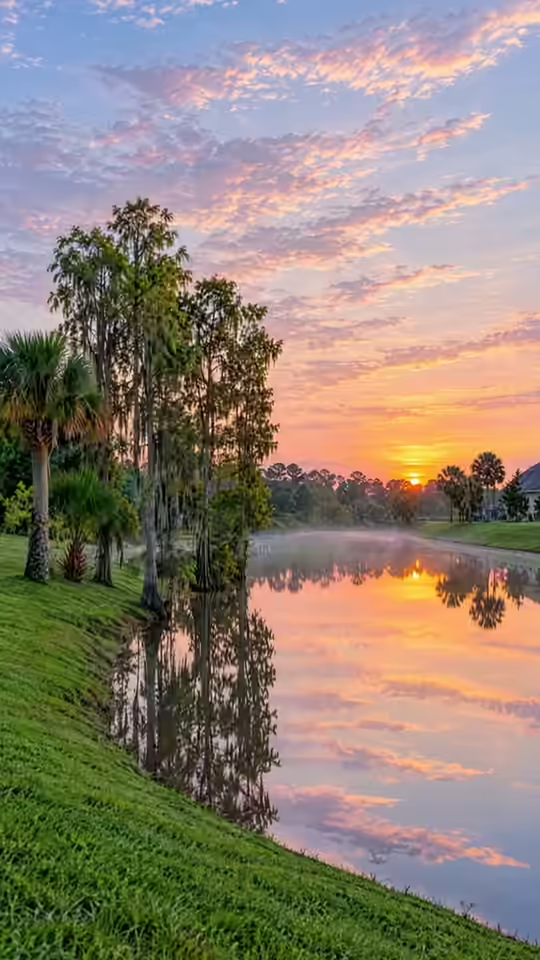
Pond Bank and Retention Pond Hydroseeding
Retention and detention pond banks, roadside ditches and swales, regraded where needed and seeded with grass that fits wet toes and dry crests.
Open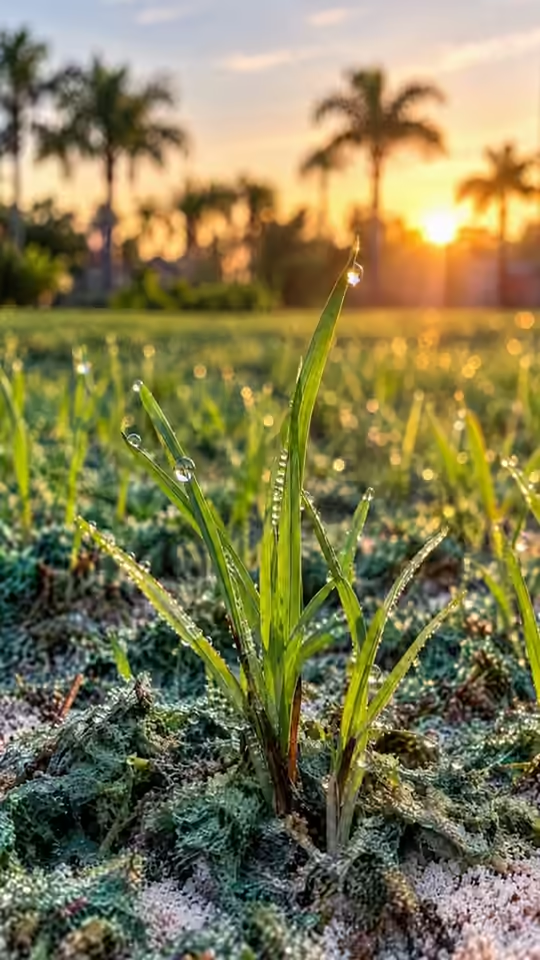
When to hydroseed: seeding calendar
April through early July is prime time for warm-season grass. The rest of the year calls for different seed, more protection or temporary cover.
OpenSources
Facts on this page come from public sources, mostly UF/IFAS Extension, the Florida Department of Environmental Protection, FDOT and NOAA. We recheck them whenever we update the page.
- Florida DEP NPDES Construction Generic Permit, 62-621.300(4)(a)
- Florida DEP: Construction Activity (stormwater)
- Florida DEP: FSESCI Training & Certification Program
- FDOT Standard Specifications Section 570, Performance Turf
- UF/FDOT, A Guide for Roadside Vegetation Management (2012)
- Santa Rosa County Environmental Dept.: Erosion & Sediment Control brochure
- Florida Climate Center (FSU): Pensacola 1991–2020 Normals
Tell us about the ground
Send the address and what you are trying to grow or hold in place. We look at the site, the soil and the slope, then quote the mix and the method that fit it.