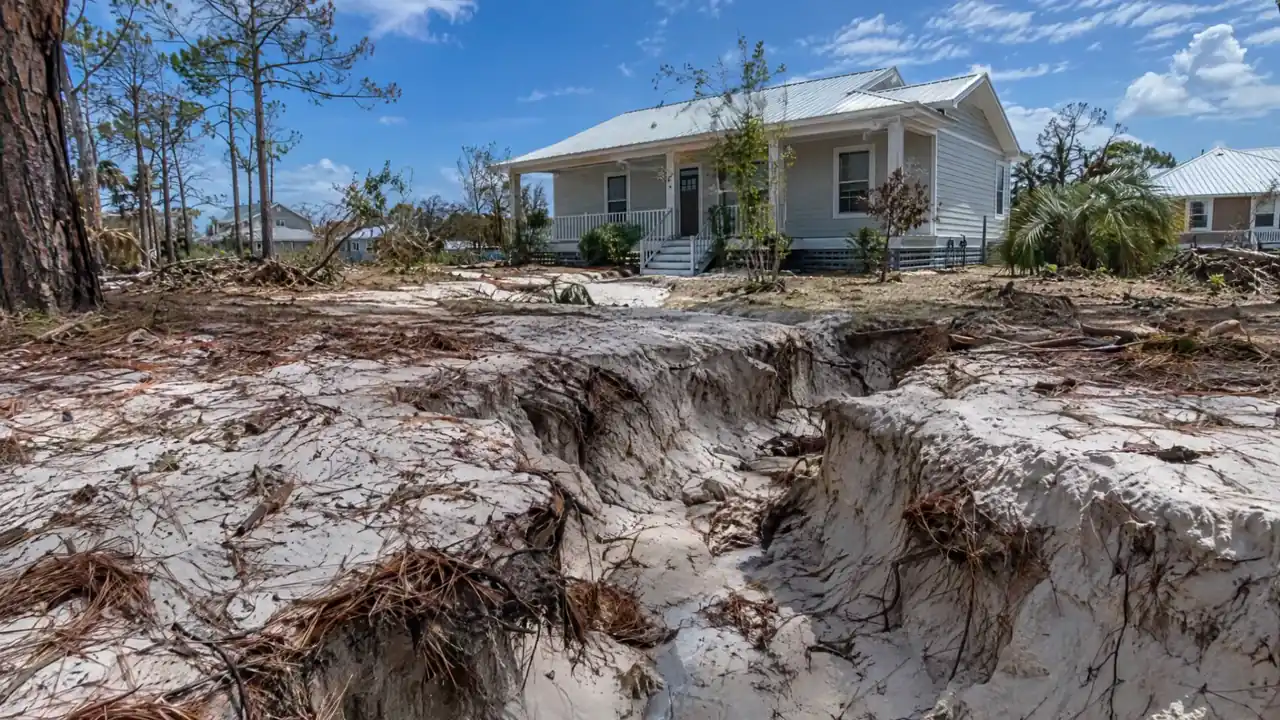
Storm damage restoration for lawns and sites
After a hurricane or flash flood, we regrade washouts, cover bare sand before the next storm, and reseed permanent grass when the season allows.

Storm damage restoration in Pensacola starts with regrading washouts and replacing lost soil, then covering bare ground quickly. If the storm hits between April and early July, we hydroseed permanent grass right away. Most hurricanes arrive later, so we usually stabilize with temporary grass, hydromulch or bonded fiber matrix first and seed bahia, centipede or bermuda the following spring.
- Hurricane Sally (2020) rain
- 24.80 in at Pensacola
- April 29, 2014
- 15.55 in in one day
- Hurricane season
- June 1 to Nov 30, peak ~Sept 10
- Permanent seeding window
- April to early July
- Fall temporary cover
- Annual ryegrass, Oct to early Nov
Pensacola storms on record
Local landscapes have taken repeated hits. Hurricane Ivan came ashore just west of Gulf Shores as a Category 3 storm on September 16, 2004, and the National Weather Service records 120 mph sustained winds and a historic storm surge that devastated Escambia and Santa Rosa counties. Hurricane Sally in September 2020 dropped 24.80 inches of rain on Pensacola over about three days, with a 5.6 foot surge recorded in the city and the greatest beach erosion in Escambia County, per Florida DEP's post-storm report.
Not every disaster is a hurricane. On April 29, 2014, Pensacola recorded 15.55 inches of rain in a single calendar day, the rainiest day in the city since at least 1880, including 5.68 inches in one hour before the gauge failed. The National Weather Service estimated the roughly 20.47 inches that fell over two days as a 1-in-100 to 1-in-200-year event.
What storms do to a yard or site
On deep Panhandle sand, storm damage follows a familiar pattern. Sheet flow strips the top layer from slopes and leaves rills and gullies. Low spots collect silt and debris that smother turf. Swales and ditch banks wash out, pond banks slump, and lawns sit under standing water long enough to thin. Surge and salt water add another problem near the bay and the beaches. Each of these needs to be repaired before seed goes down, or the next heavy rain undoes the work. Where erosion is ongoing, our erosion control page covers the products for slopes and channels.
Flood silt and surge deposits also change the soil. Sediment from a ditch or bay can carry a different pH and texture from the sand it buried, and centipede and bahia both yellow from iron chlorosis when pH runs high. On badly silted or salt-flooded yards, a routine soil test before reseeding tells us whether the ground needs amending or a different grass.
Regrade first, then reseed
We start by clearing storm debris and deposited silt, then restoring grade so water drains away from structures and toward swales and inlets. Washed-out areas get fill, and compacted or silted ground gets loosened so roots can take hold. On slopes that lost a lot of material, we confirm the slope is stable before any cover goes on, since bonded fiber matrix and similar products are meant for geotechnically stable ground.
With the grade restored, the cover matches the season and the slope: hydroseed on gentle ground in the growing season, bonded fiber matrix or blankets where water concentrates or slopes are steep, and temporary grass when permanent seeding has to wait.
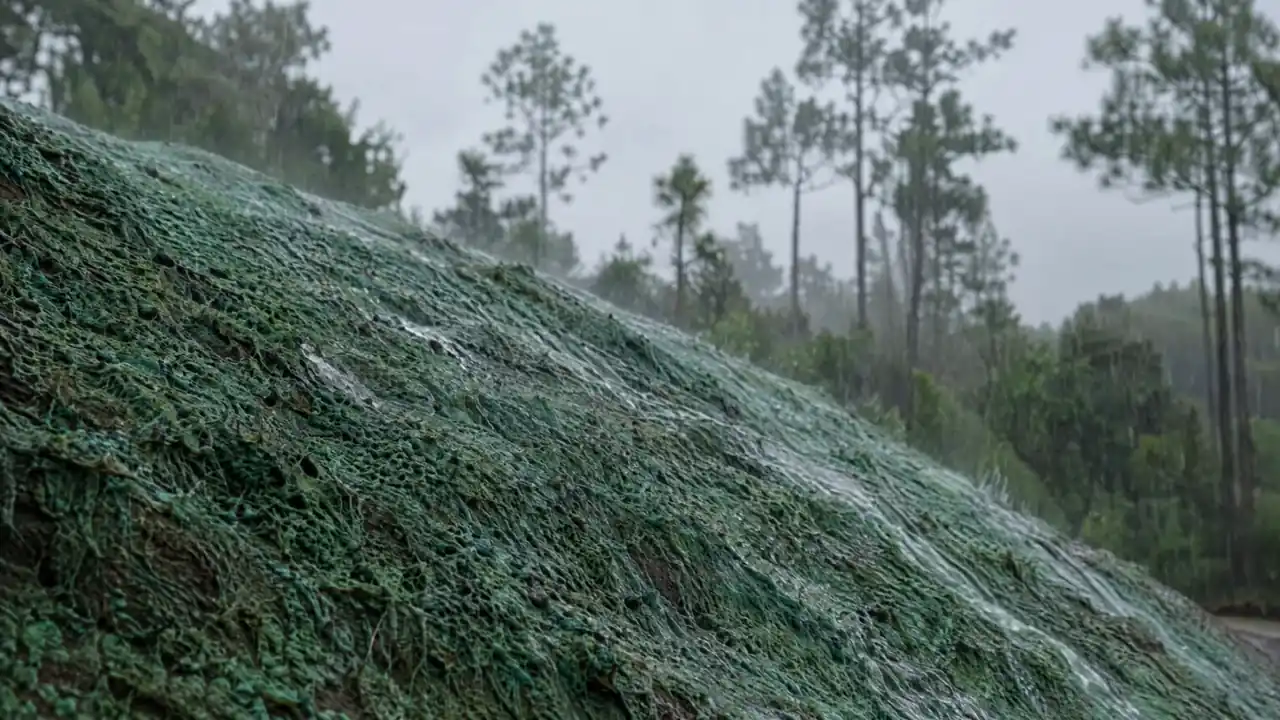
Cover the ground now, seed the lawn in spring
Hurricane season peaks around September 10, after the window for warm-season seed has closed, so most storm repairs happen in two stages.
Timing repairs to the season
Atlantic hurricane season runs June 1 to November 30 and peaks around September 10, per NOAA. The UF/FDOT roadside guide advises against seeding most warm-season grasses later than early July, and UF/IFAS warns that late seedlings can winter-kill in north Florida. That means a September storm usually lands outside the permanent seeding window.
- Late summer: browntop millet or hydromulch for quick temporary cover, with millet kept to recommended rates so it does not shade out later seedings.
- October to early November: annual ryegrass, which UF/IFAS recommends for north Florida in that period.
- Winter: mulch, BFM or blankets, or sod where a permanent lawn is needed right away.
- April to early July: permanent bahia, centipede or bermuda by hydroseed.
Our seeding calendar lays this out month by month.
Coastal and dune damage
Beachfront and bayfront yards need different grasses after a storm. Bahia and centipede tolerate salt poorly, so we do not promise them on salt-exposed lots; common bermuda is the seedable option there, and St. Augustine or zoysia lawns are restored with sod. Dunes are not turf. Florida DEP notes that planting seaward of the Coastal Construction Control Line can require a permit and that dunes are restored with native plants such as sea oats. We limit our work to stabilization landward of the dune.
Salt-tolerant grasses have limits too. UF/IFAS notes that even salt-tolerant lawn grasses cannot be irrigated with saltwater, so watering after a surge has to come from a fresh source.
Common questions about storm damage lawn restoration
Short, sourced answers to what people ask us most. If your site has a wrinkle these do not cover, send it through the quote form below and we will talk it through with you.
How soon after a hurricane can I reseed my lawn in Pensacola?
As soon as debris is cleared and grade is repaired, if it is April to early July. Most hurricanes arrive in August through October, outside the warm-season window, so the usual plan is temporary cover first, such as browntop millet, annual ryegrass or hydromulch, and permanent seeding the next spring.
Can hydroseeding fix storm erosion on a slope?
Yes, once the slope has been regraded and is stable. Hydroseed suits gentle slopes. Steeper stable slopes do better with bonded fiber matrix, which FDOT requires to cover 100 percent of the surface and hold together when re-wetted. Where water concentrates, staked erosion blankets are the better choice.
How much rain did Hurricane Sally drop on Pensacola?
About 24.80 inches over roughly three days in September 2020, according to Florida DEP's post-storm report, with a 5.6 foot surge recorded in Pensacola. Beach erosion was greatest in Escambia County, and 292 major structures in the Perdido Key and Pensacola Beach coastal building zone had major damage.
Can you hydroseed a damaged dune after a storm?
No, not with turf. Florida DEP says planting seaward of the Coastal Construction Control Line can require a permit, and dunes are restored with native plants such as sea oats, bitter panicum and railroad vine. We can stabilize disturbed ground landward of the dune.
What grass should I use to repair a storm-damaged yard near the beach?
Avoid bahia and centipede, which have poor salt tolerance per UF/IFAS. Common bermuda is the seedable choice for salt-exposed areas. For a coastal home lawn, UF/IFAS names St. Augustine and zoysia as the best choices, and both are usually installed as sod.
Keep reading
Related guides and services for sandy soil, heavy rain and the grasses that hold on the Gulf Coast, each written for Escambia and Santa Rosa county sites.
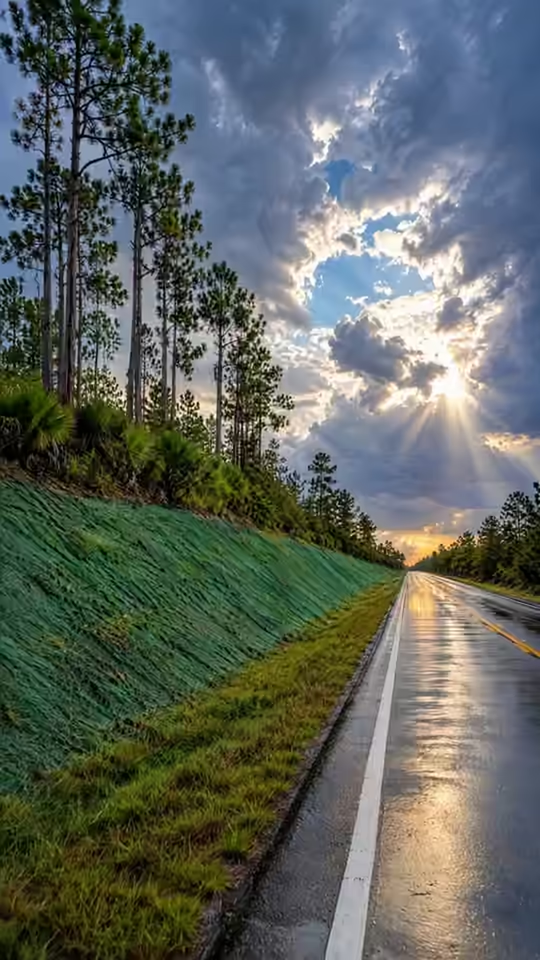
Erosion Control
Hydromulch, bonded fiber matrix, blankets and temporary grass for slopes, ditches and bare ground in one of the rainiest cities in the country.
Open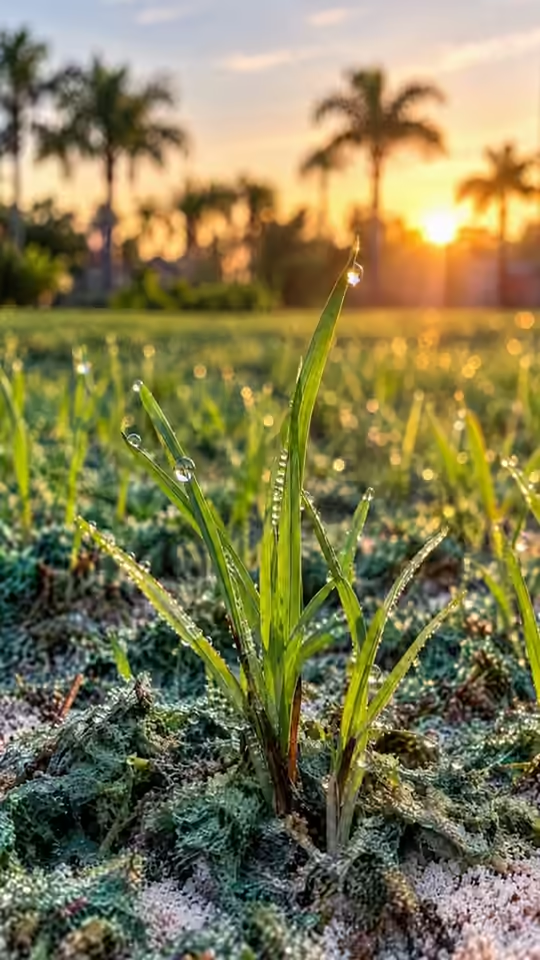
When to hydroseed: seeding calendar
April through early July is prime time for warm-season grass. The rest of the year calls for different seed, more protection or temporary cover.
Open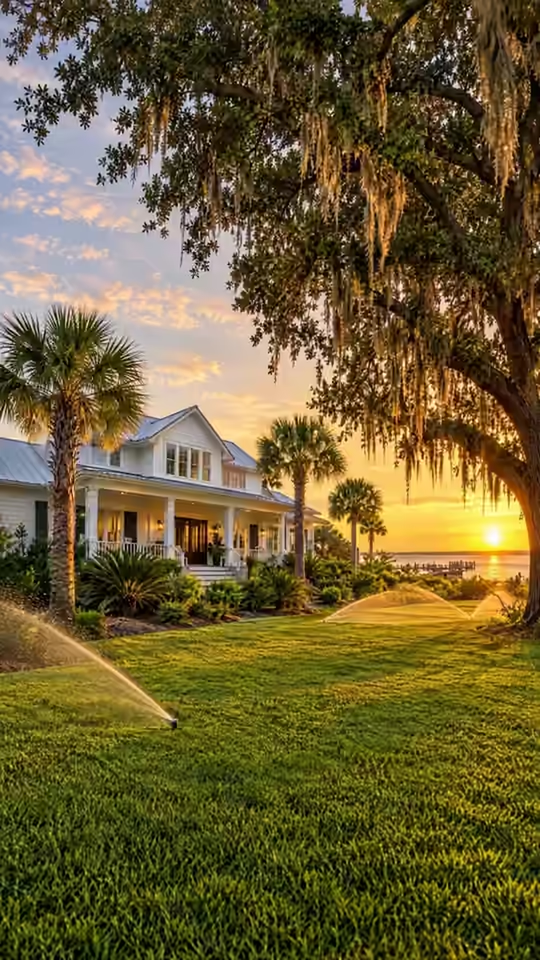
Residential Hydroseeding
New-build lots and thinning lawns, seeded with a grass that suits deep Panhandle sand, in the months when it will actually take.
Open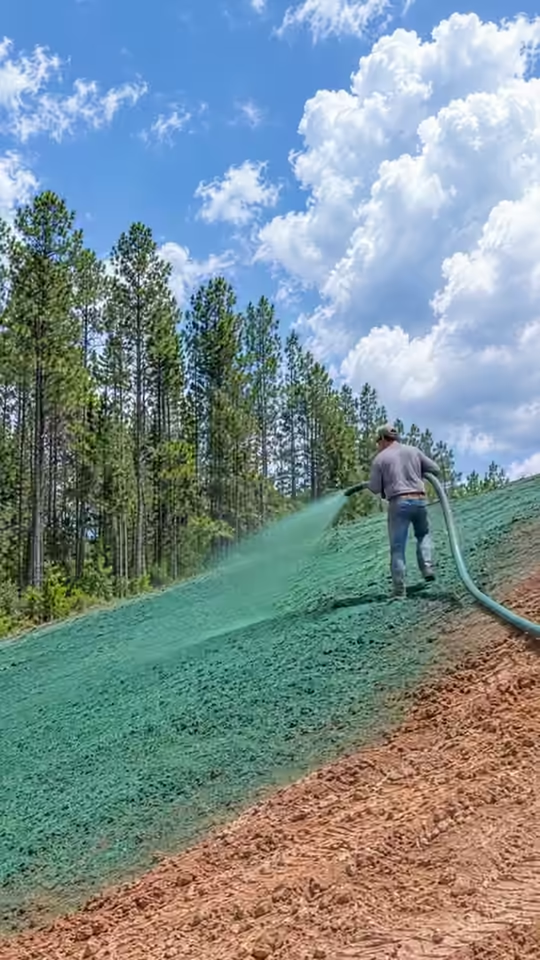
Bonded Fiber Matrix and Hydromulch
Sprayed erosion protection for slopes and bare ground: what BFM and hydromulch are, what FDOT requires of them, and when blankets are the better call.
Open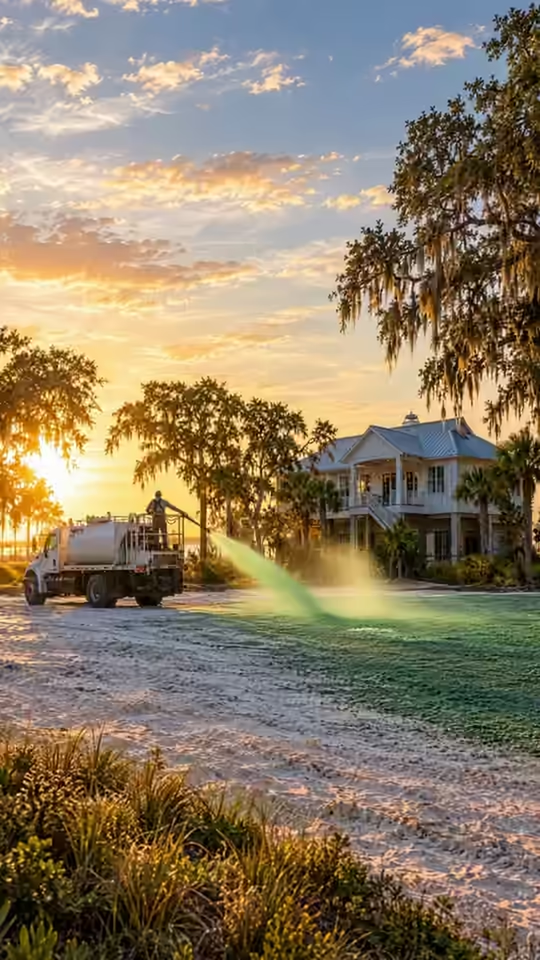
Request a quote
Tell us about the site and we will quote the mix and method that fit it.
OpenSources
Facts on this page come from public sources, mostly UF/IFAS Extension, the Florida Department of Environmental Protection, FDOT and NOAA. We recheck them whenever we update the page.
- NWS Mobile/Pensacola: Hurricane Ivan, September 16, 2004
- Florida DEP: Hurricane Sally Post-Storm Report (Nov 2020)
- NWS Mobile: April 29, 2014 flash flood
- NOAA NESDIS: Atlantic hurricane season hits its peak
- UF/FDOT, A Guide for Roadside Vegetation Management (2012)
- UF/IFAS ENH14, Overseeding Florida Lawns for Winter Color
- Florida DEP: CCCL Dune Planting Recommendations
- UF/IFAS Gardening Solutions: Salt-Tolerant Lawngrasses
Tell us about the ground
Send the address and what you are trying to grow or hold in place. We look at the site, the soil and the slope, then quote the mix and the method that fit it.