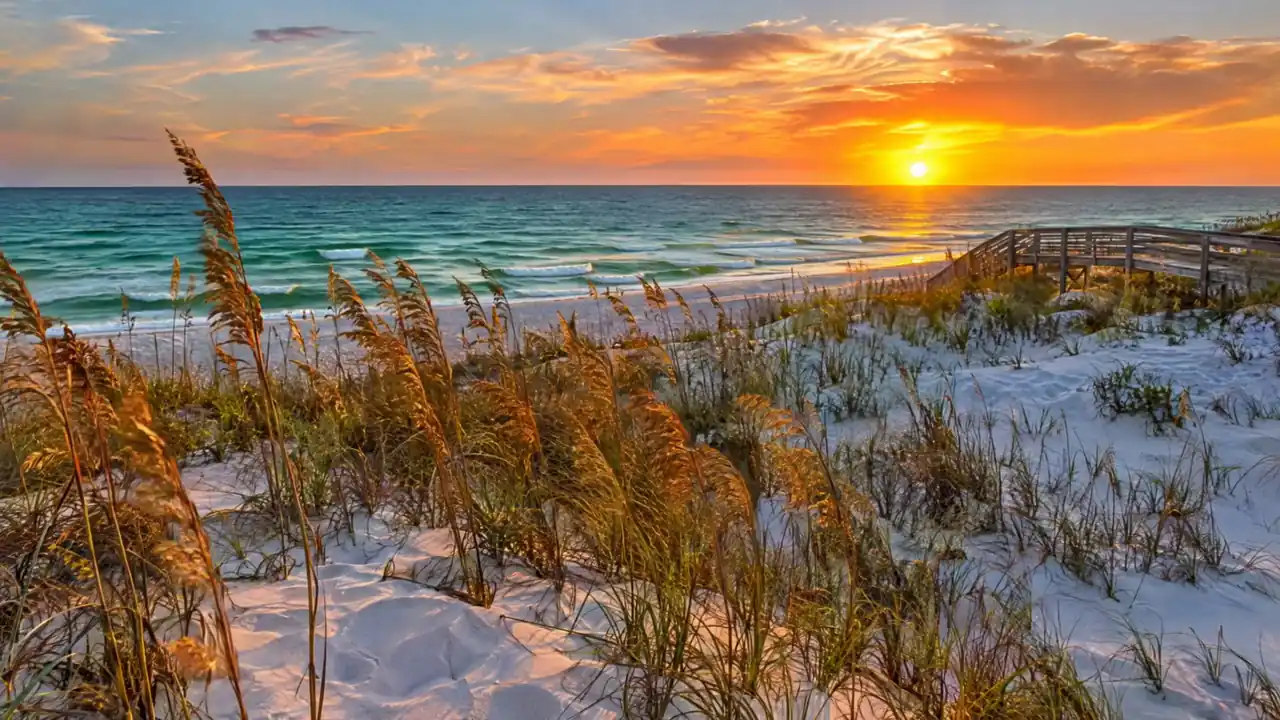
Hydroseeding on Perdido Key
A narrow island where most of the land is protected, the sand is pure quartz and the water on both sides is worth keeping clean. Small footprints, careful work.
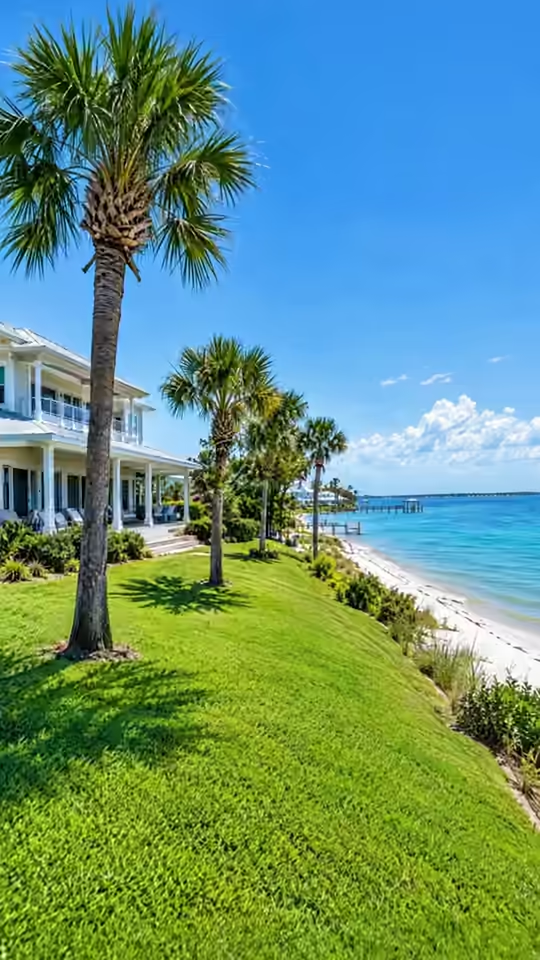
Hydroseeding in Perdido Key, FL suits yards, swales and disturbed ground away from the dunes, typically with salt-tolerant bermuda. Lawns are usually sodded St. Augustine or zoysia. About 60% of the island is federally or state protected, and dune work needs native plants and possibly a DEP permit. Inland of the bay, Escambia County land disturbance rules apply.
- County
- Escambia
- Island length
- About 16 miles
- Nearby waters
- Big Lagoon, Perdido Bay
- Best seeded grass
- Common bermuda
A narrow island between the Gulf and the lagoon
Perdido Key is an unincorporated barrier island in Escambia County, about 16 miles long and no more than a few hundred yards wide in most places. It became an island around 1933 when the Intracoastal Waterway was cut through. Roughly 60% of it is protected land, including part of Gulf Islands National Seashore, Big Lagoon State Park and Perdido Key State Park.
The island is home to the endangered Perdido Key beach mouse, and sea turtles nest on its beaches from May through September. Any work near the dune line needs to respect that. Our role on the key is the developed footprint: home sites, utility corridors, swales and the ground around driveways and parking.
On lots this narrow, blowing sand is as much a problem as washing sand. A tackified mulch layer holds the surface against wind while seed germinates, and it keeps regraded ground from drifting onto neighbors, roads and the dune line between storms.
Kureb and Corolla sands
The Escambia soil survey maps Kureb sand on coastal ridges as excessively drained, with very low available water. Closer to the Gulf, the units are Corolla, Newhan and Duckston sands and open beach. None of these hold water or nutrients for long.
That is why we never spray seed on this ground without a mulch layer and tackifier, and why the first two weeks of watering decide whether a Perdido Key job succeeds. Our aftercare guide lays out a watering schedule built for sand like this.
Coastal grass, chosen for salt
UF/IFAS rates bermuda, St. Augustine and zoysia good for salt tolerance and bahia very poor. Only bermuda among those can be seeded, so it is the hydroseeding grass on the key. Where a finished lawn is wanted at once, St. Augustine or zoysia sod is the usual answer, and you can read why on our hydroseeding vs sod page.
For dunes, Florida DEP recommends native plants such as sea oats, bitter panicum and railroad vine, and planting seaward of the Coastal Construction Control Line may need a permit. We do not put turf on dunes. Where a lot meets the dune, we stop the spray at the landward edge and leave the native vegetation alone.
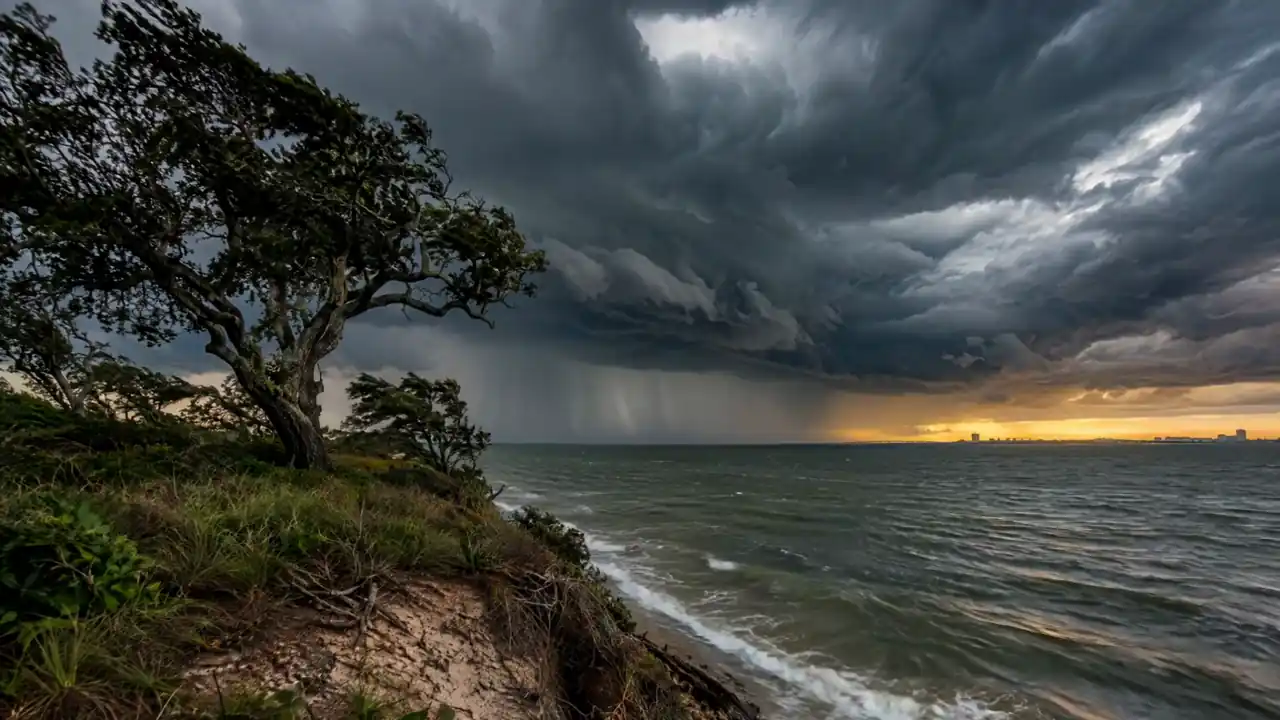
Small footprints on a protected island
With most of Perdido Key set aside for habitat, every developed lot should keep its sand at home and out of the lagoon.
The mainland side and the Perdido River
North of Big Lagoon, the Perdido area turns to mainland subdivisions on Escambia County land, where a land disturbance permit is required before clearing or grading. Runoff here drains toward Perdido Bay. The Perdido River, which forms the county's western boundary, is designated an Outstanding Florida Water, the state's highest level of water-body protection.
Hurricane Sally hit this corner hard in 2020; DEP reported major damage to 292 major structures in the Perdido Key and Pensacola Beach coastal building zone. Regrading and reseeding after storms is covered on our storm damage restoration page, and broader slope work on our erosion control page.
Common questions about hydroseeding in Perdido Key
Short, sourced answers to what people ask us most. If your site has a wrinkle these do not cover, send it through the quote form below and we will talk it through with you.
Can I hydroseed near the dunes on Perdido Key?
Only landward of the dune. Dune restoration uses native plants, and work seaward of the Coastal Construction Control Line may require a Florida DEP permit. The island is also habitat for the endangered Perdido Key beach mouse, so the dune line is not a place for turf.
What grass should I use on a Perdido Key lot?
Hydroseeded common bermuda for sunny utility areas, swales and side yards, and St. Augustine or zoysia sod where you want a finished lawn. Bahia and centipede tolerate salt poorly and rarely do well this close to the Gulf. On the mainland side of Big Lagoon, sheltered lots can sometimes support centipede.
Why does hydroseed need so much water on Perdido Key?
The Kureb and Corolla sands mapped here are excessively drained with very low available water. UF/IFAS recommends watering new seed two or three times a day in small amounts for about two weeks. The mulch layer helps, but the sand itself holds almost nothing.
Which rules apply to grading on the Perdido mainland?
Unincorporated Escambia County requires a land disturbance permit before clearing, filling or grading, and may require silt fence and grass stabilization. Sites of an acre or more also need coverage under the state Construction Generic Permit.
When is the best time to hydroseed on Perdido Key?
Late spring into early summer, once soil is warm enough for bermuda to germinate quickly, generally April through early July. Avoid seeding in the peak of hurricane season if you can. In fall and winter, a bonded mulch or temporary cover holds disturbed sand until permanent grass can go in.
Keep reading
Related guides and services for sandy soil, heavy rain and the grasses that hold on the Gulf Coast, each written for Escambia and Santa Rosa county sites.
Hydroseed aftercare: watering and mowing
Light, frequent water for two weeks, then a slow taper to deep, infrequent irrigation. The details below are tuned for fast-draining local soil.
Open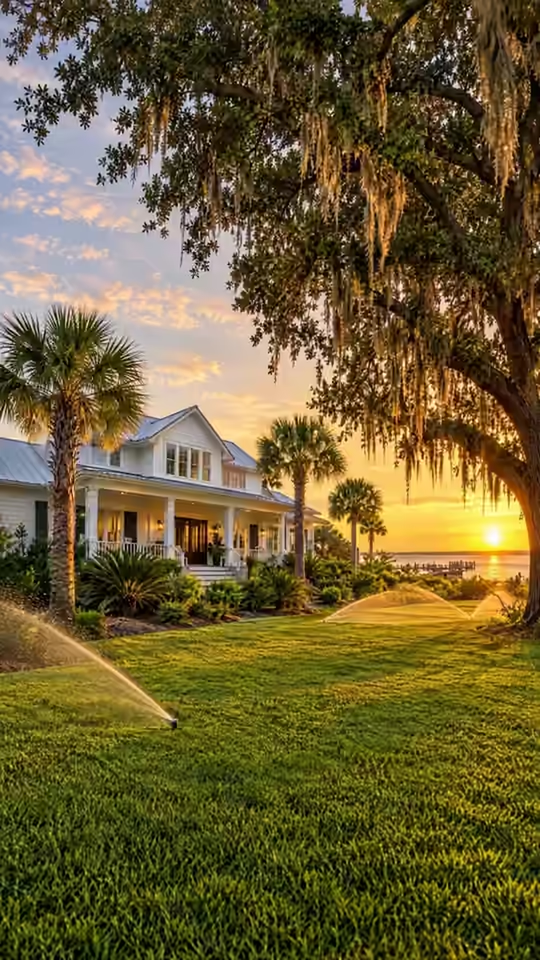
Hydroseeding vs. sod: an honest comparison
Seed costs less and suits big, open or sloped ground. Sod is instant and the only route to St. Augustine. Here is how to decide on local sites.
Open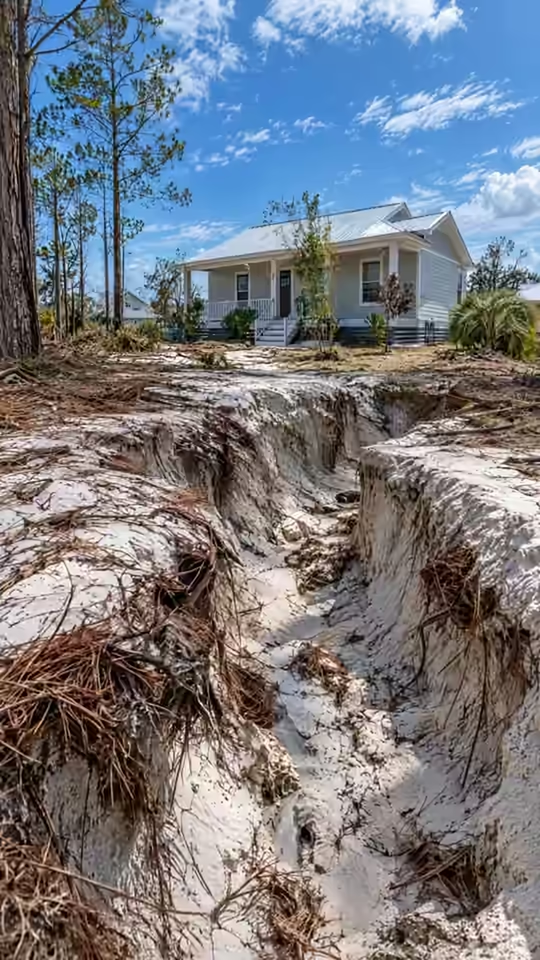
Storm Damage Lawn Restoration
After a hurricane or flash flood, we regrade washouts, cover bare sand before the next storm, and reseed permanent grass when the season allows.
Open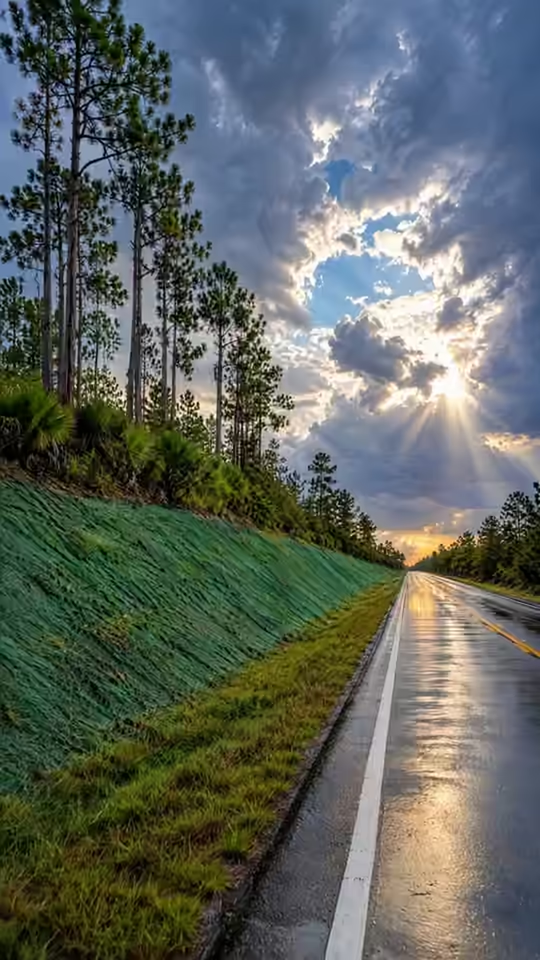
Erosion Control
Hydromulch, bonded fiber matrix, blankets and temporary grass for slopes, ditches and bare ground in one of the rainiest cities in the country.
Open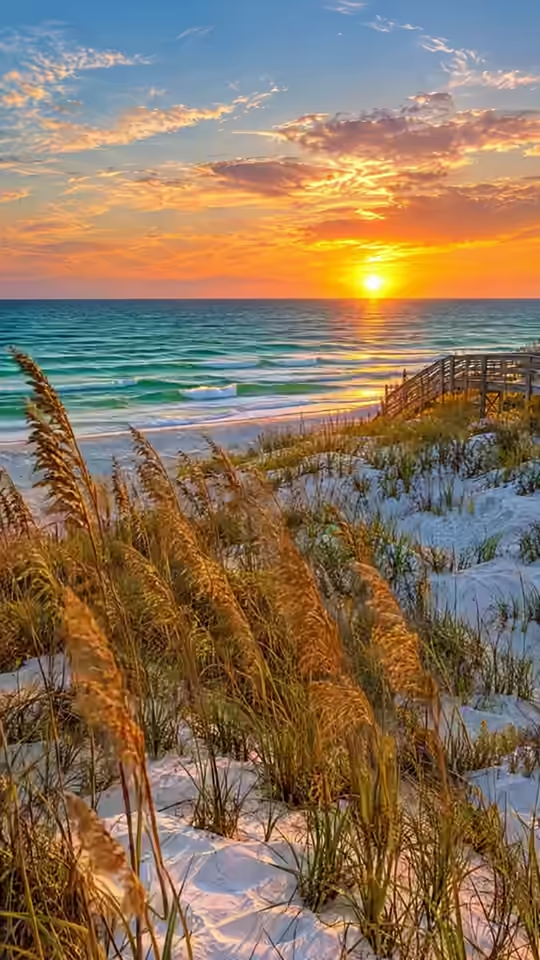
Pensacola Beach
Santa Rosa Island is sand, salt and wind. Turf has a place behind the dunes, native plants have the dunes themselves, and knowing the line between them is the job.
OpenSources
Facts on this page come from public sources, mostly UF/IFAS Extension, the Florida Department of Environmental Protection, FDOT and NOAA. We recheck them whenever we update the page.
Tell us about the ground
Send the address and what you are trying to grow or hold in place. We look at the site, the soil and the slope, then quote the mix and the method that fit it.