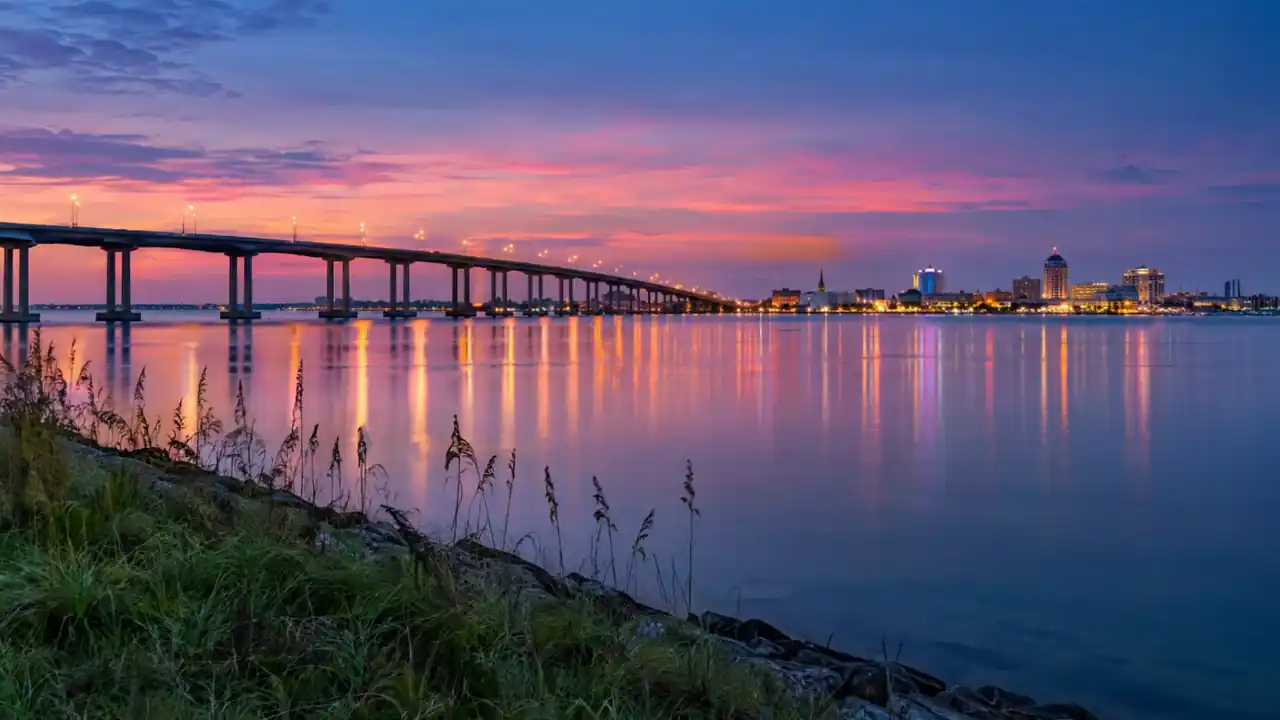
Hydroseeding in Pensacola
Deep sand, 68 inches of rain a year and bayous that catch every grain of runoff. Here is how hydroseeding works in the city that gave its name to a grass.

Hydroseeding in Pensacola, FL works best from April to early July, sprayed on prepared Lakeland or Troup sand with a mulch layer that holds moisture. Pensacola bahia and centipede are the usual seeded lawn grasses inland. St. Augustine needs sod or plugs. City projects fall under Land Development Code Chapter 12-8, and runoff drains to Pensacola Bay and its bayous.
- County
- Escambia
- Annual rainfall
- 68.31 in (1991-2020 normal)
- Common soils
- Lakeland and Troup sands
- Best seeded lawn grass
- Pensacola bahia or centipede
- City erosion code
- LDC Chapter 12-8
Sand, slopes and the bayous below them
Most Pensacola yards sit on deep, excessively drained sand. The USDA soil survey for Escambia County maps Lakeland, Troup, Resota and Foxworth sands across the mainland, and describes Lakeland as having very low available water and about 1% organic matter. A bare seedbed on that ground can dry out within hours on a summer afternoon.
The same survey maps a unit called Troup and Perdido soils, 8 to 35 percent slopes, severely eroded. Those slopes show up along the ravines and creek heads that feed the bayous, and they are where unprotected seed washes first. On grades like that we pair the seed with bonded fiber matrix rather than plain hydromulch.
Runoff from much of east Pensacola reaches Bayou Texar through Carpenter Creek, where urbanization has caused severe erosion. The City secured about $5.95 million in RESTORE funding for sediment-trapping outfall units there. Every yard that holds its soil helps that work.
City lots and the Chapter 12-8 rules
Inside city limits, erosion and runoff are governed by the Land Development Code, Chapter 12-8, Stormwater Management and Control of Erosion, Sedimentation and Runoff. Outside the city, Escambia County requires a land disturbance permit before clearing, filling or grading, and may call for silt fence, sediment traps and grass stabilization of disturbed areas.
Typical city jobs are infill homes on narrow lots, renovations after a pool or addition, and drainage swales behind commercial pads. Small lots still need the edges held, because a single storm can move sand from a fresh lot into the street inlet. Our erosion control work covers those edges.
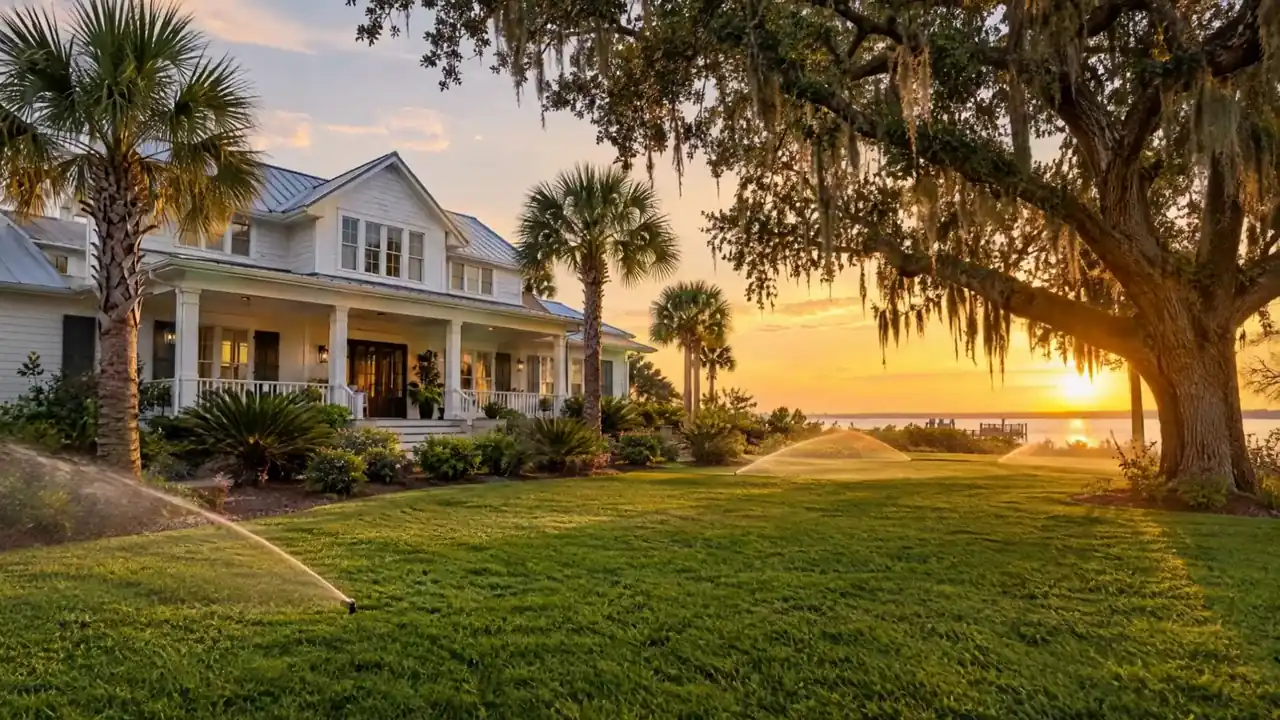
Every bare yard drains to a bayou
Bayou Texar, Escambia Bay and Pensacola Bay receive what washes off city lots. Fast cover on bare sand keeps that sediment where it belongs.
Choosing grass in the city that named a bahia
UF/IFAS reports that Pensacola bahiagrass was selected here in 1935, after an Escambia County Extension agent found it growing in streets and vacant lots near the docks. It is drought hardy, roots deeply and suits low-input lawns, roadsides and larger lots. Its drawbacks are tall seed heads and slow germination. Read the full story on our Pensacola bahiagrass page.
Centipede is the most common home lawn grass in the Panhandle according to UF/IFAS, and it prefers acidic soil around pH 5.0 to 5.5, which matches most of the city. For shady yards under live oaks, St. Augustine is the usual pick, but it is not available as seed and must go in as sod or plugs.
Storm years and seeding windows
Pensacola averages 68.31 inches of rain a year, with June through September the wettest stretch. On April 29, 2014, 15.55 inches fell in a single calendar day, and Hurricane Sally dropped 24.80 inches on the city in 2020. Fresh seed on bare sand cannot survive that kind of rain without a bonded mulch layer.
The best permanent seeding window runs from April into early July. Later in the summer we lean on temporary cover and heavier mulch, then return to permanent grass when the season allows. Our seeding calendar walks through each month.
May is the driest month in Pensacola at about 3.90 inches, and it falls right as spring seeding begins. Plan irrigation before the slurry goes down, not after the first brown patch appears.
Common questions about hydroseeding in Pensacola
Short, sourced answers to what people ask us most. If your site has a wrinkle these do not cover, send it through the quote form below and we will talk it through with you.
What is the best grass to hydroseed in Pensacola?
For sunny inland yards, centipede or Pensacola bahia. Centipede gives a finer, low-maintenance lawn and likes the acidic sand found across most of the city. Bahia is tougher in drought and works well on larger lots and roadside edges. Near the water or in heavy shade, plan on sodded St. Augustine instead.
Do I need a permit to regrade and hydroseed my Pensacola yard?
It depends on location and scope. Inside city limits, erosion control falls under Land Development Code Chapter 12-8. In unincorporated Escambia County, a land disturbance permit is required before clearing, filling or grading. Simple reseeding of an existing yard usually needs no permit, but check with the city or county before moving soil.
Will hydroseed wash off a sloped Pensacola lot?
Plain hydromulch can move on steep ground during a summer downpour. Escambia County maps severely eroded Troup and Perdido soils on 8 to 35 percent slopes, and those ravine edges need bonded fiber matrix or erosion blankets. On flat or gently sloped yards, standard hydromulch with tackifier holds well when watered correctly.
When should I hydroseed in Pensacola?
April through early July is the prime window for permanent warm-season grass. UF/IFAS says centipede should be seeded April to July and that fall seeding is undesirable. Outside that window, temporary cover such as browntop millet or annual ryegrass holds the soil until conditions suit permanent grass.
Keep reading
Related guides and services for sandy soil, heavy rain and the grasses that hold on the Gulf Coast, each written for Escambia and Santa Rosa county sites.
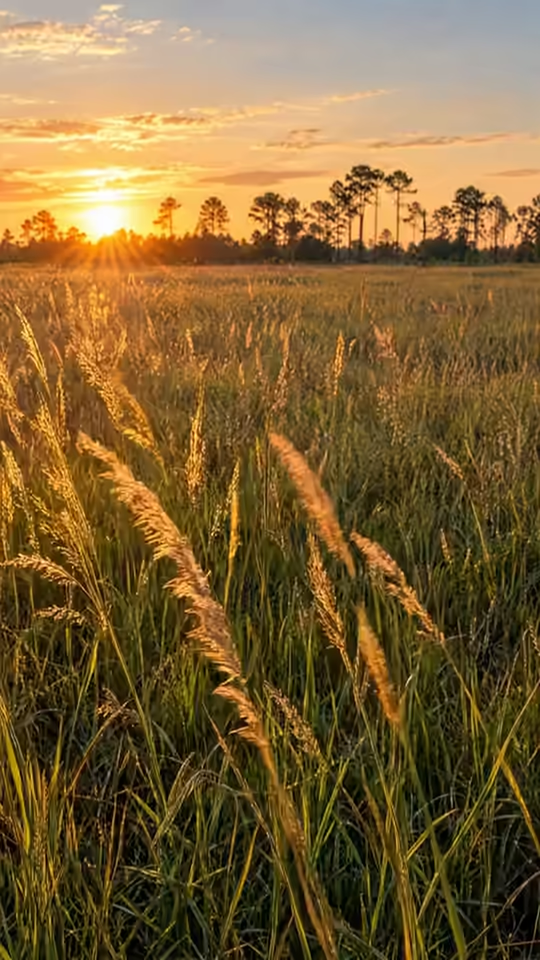
Pensacola bahiagrass: history, seeding and care
Found near the Pensacola docks and now planted across millions of Southeastern acres, it remains the toughest low-input grass for local sandy ground.
Open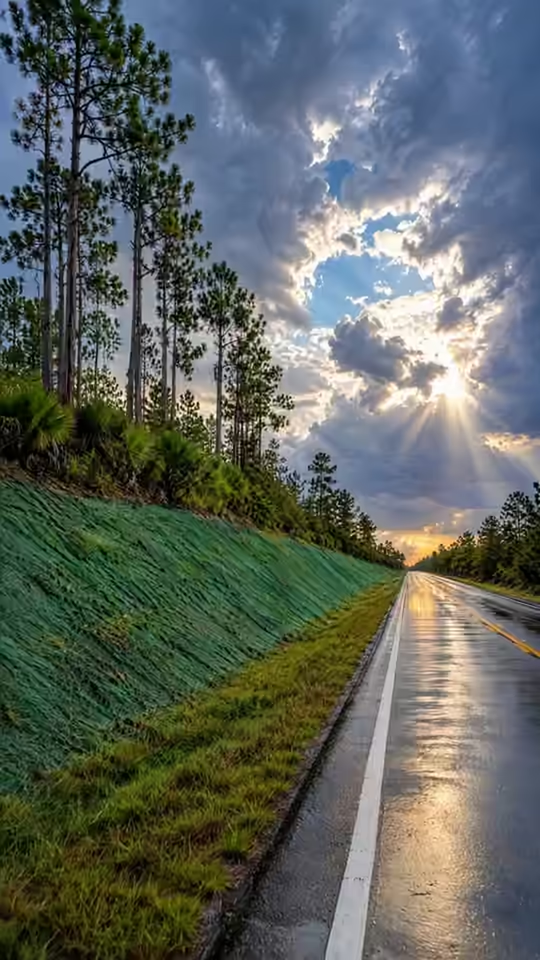
Erosion Control
Hydromulch, bonded fiber matrix, blankets and temporary grass for slopes, ditches and bare ground in one of the rainiest cities in the country.
Open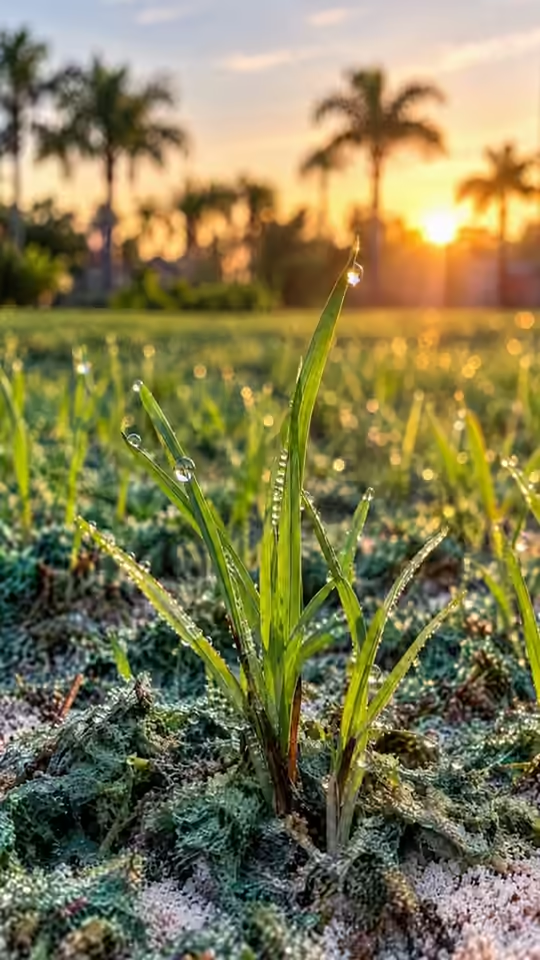
When to hydroseed: seeding calendar
April through early July is prime time for warm-season grass. The rest of the year calls for different seed, more protection or temporary cover.
Open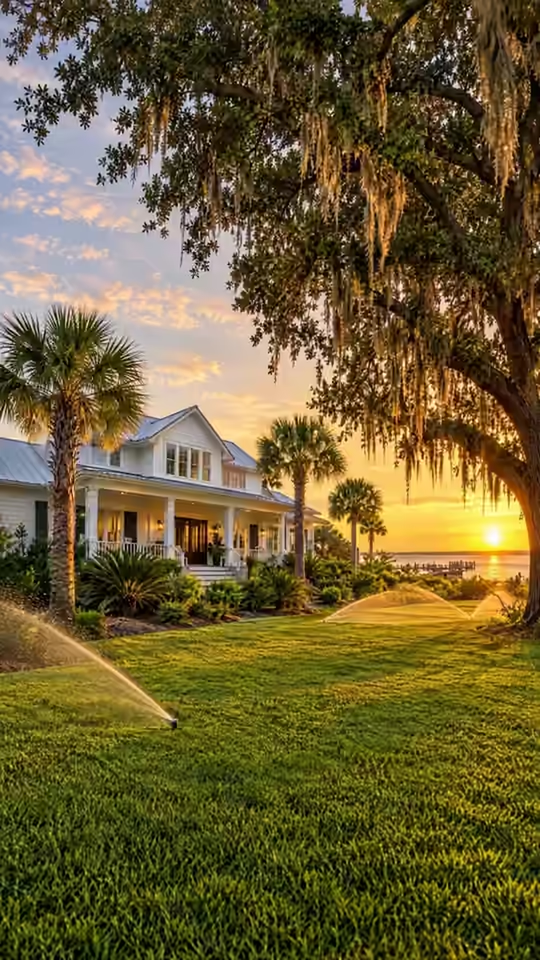
Residential Hydroseeding
New-build lots and thinning lawns, seeded with a grass that suits deep Panhandle sand, in the months when it will actually take.
OpenCantonment
North of Pensacola along Highway 29, Cantonment is acreage, long driveways and homesites cut from pine and pasture. Big areas are where hydroseeding pays.
OpenSources
Facts on this page come from public sources, mostly UF/IFAS Extension, the Florida Department of Environmental Protection, FDOT and NOAA. We recheck them whenever we update the page.
- USDA-NRCS Escambia County map unit descriptions
- Florida Climate Center: Pensacola 1991-2020 normals
- City of Pensacola: RESTORE funding for Bayou Texar
- City of Pensacola Code of Ordinances (Municode)
- Escambia County: Land Disturbance Permit
- UF/IFAS: Bahiagrass for Florida Lawns
- UF/IFAS EDIS LH009: Centipedegrass for Florida Lawns
- NWS Mobile: April 29, 2014 flash flood
Tell us about the ground
Send the address and what you are trying to grow or hold in place. We look at the site, the soil and the slope, then quote the mix and the method that fit it.