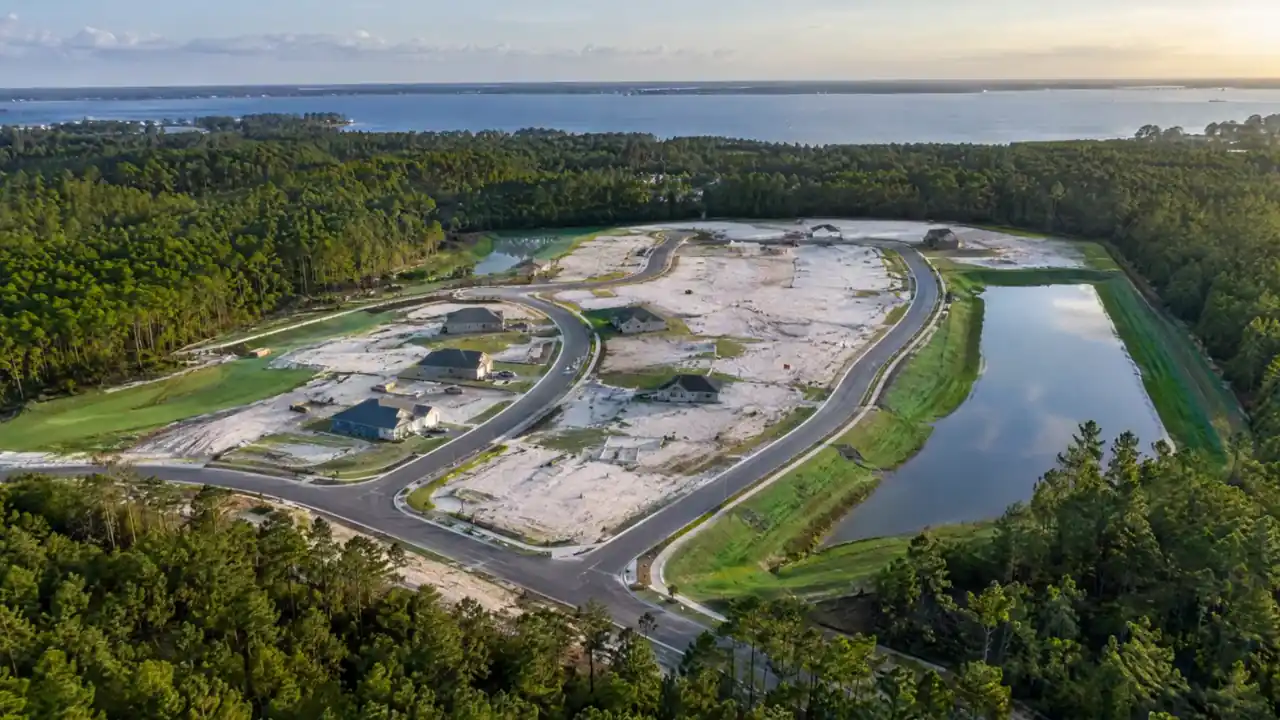
Hydroseeding in Milton
Santa Rosa County's seat sits near the mouth of the Blackwater River, with rural homesites, drainfields and pond banks spreading out around it.
Hydroseeding in Milton, FL covers new homesites, septic mounds, pond banks and ditches on sandy inland soil. Bahia and centipede are the usual seeded grasses. Steeper banks near the Blackwater River and its creeks need bonded fiber matrix or blankets. Santa Rosa County's Environmental Department, based in Milton, asks for temporary cover within 7 days of inactivity.
- County
- Santa Rosa (county seat)
- River
- Blackwater River
- Best seeded grass
- Bahia or centipede
- Nearby base
- NAS Whiting Field
County seat on the Blackwater River
Milton is the county seat of Santa Rosa County and sits near the mouth of the Blackwater River. Naval Air Station Whiting Field, one of the Navy's two primary pilot training bases, lies just north of town. Between the river, the base and Pace to the west, Milton mixes an older town grid with rural homesites and newer subdivisions.
That spread means variety: a homeowner regrading a backyard toward a creek, a rural lot that needs a septic mound grassed, a church or business pad with a retention pond, or a long ditch line along a county road. Most of this ground is deep, acidic inland sand that drains fast, so a mulch layer that holds moisture at the surface matters as much here as it does on the coast. Salt is not a factor this far up the river, which keeps bahia and centipede on the table.
Banks, ditches and sloped ground
Ground that falls toward the river and its tributaries washes first in a summer storm. On those slopes plain hydromulch is not enough. Bonded fiber matrix forms a continuous layer that does not dissolve when rewetted, and FDOT allows it in place of seed or hydroseed on geotechnically stable slopes.
Retention ponds and ditches need grass that tolerates both drought and wet feet. Bahia handles the upper bank, and wetter toes may need a different mix. Our pond banks and retention page covers repair of washed banks.
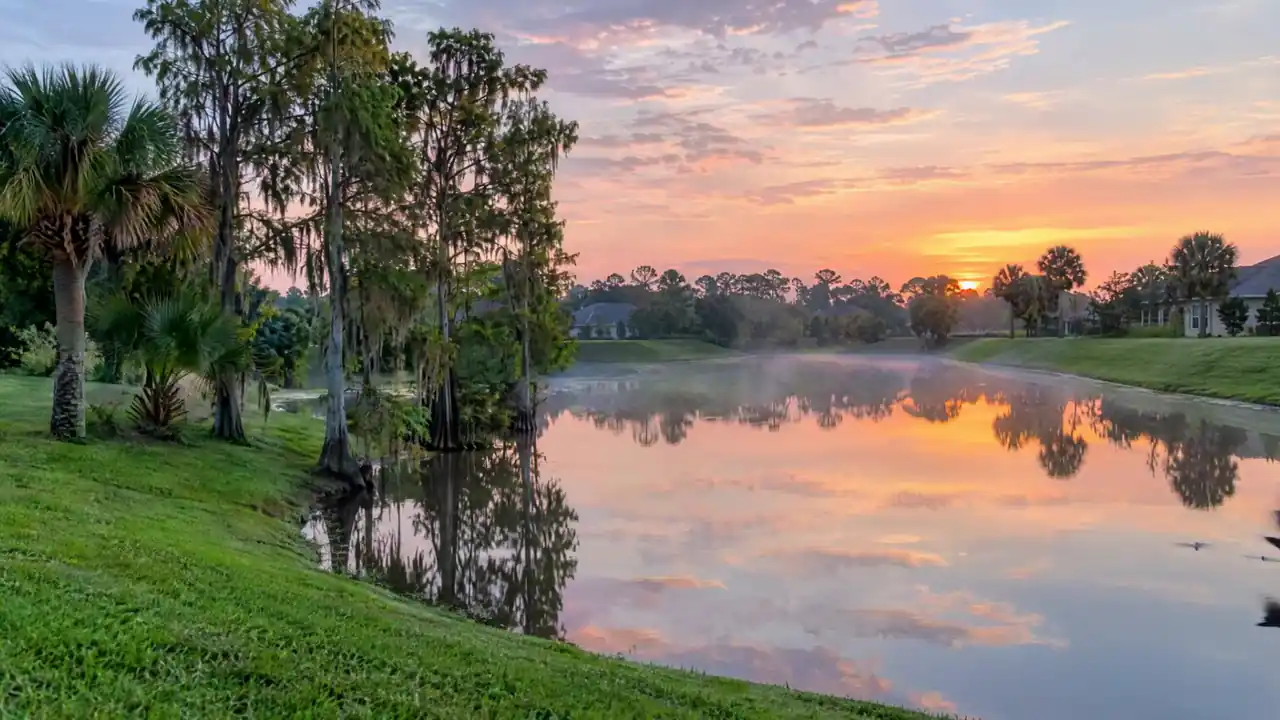
Every ditch here leads to the river
Sand that leaves a Milton lot rides the ditches into the Blackwater River and on toward the bay. Cover it fast and it stays put.
Septic mounds on rural lots
Outside the sewer area, many Milton homesites rely on septic systems, and some need mounds. Florida's septic rule requires the entire mound, including slopes, shoulders and cap, to be stabilized with vegetation. Slopes steeper than 5:1 must be sodded or hydroseeded, and final installation approval waits until stabilization is complete.
Hydroseeding a mound is quick and covers the slopes evenly without seams. Bahia is a common choice because it tolerates the dry, sandy cap. See septic mound hydroseeding for details installers ask about.
Mounds dry out faster than the surrounding yard because they sit above grade and drain in every direction. The first two weeks of light, frequent watering matter more on a mound cap than anywhere else on the property.
Santa Rosa County guidance, close to home
Santa Rosa County's Environmental Department, on Old Bagdad Highway in Milton, publishes the county's erosion and sediment control guidance. Exposed soil should get temporary cover within 7 days of no activity, and silt fence should stand at least 36 inches high, buried at least 8 inches. Hydroseeding is one of the listed practices.
The department notes that land clearing affects fish and oyster populations downstream. For larger pads and base-area construction of an acre or more, the state Construction Generic Permit adds 7-day stabilization and a 70% cover standard at closeout. Our erosion control page covers both small and large sites.
Common questions about hydroseeding in Milton
Short, sourced answers to what people ask us most. If your site has a wrinkle these do not cover, send it through the quote form below and we will talk it through with you.
Can you hydroseed a septic mound in Milton?
Yes. Florida's septic rule requires mound slopes steeper than 5:1 to be sodded or hydroseeded, and final approval waits until the mound is stabilized. Hydroseeding covers the slopes and cap evenly, and bahia is often used on the dry, sandy cap.
What grass should I seed on a Milton homesite?
Centipede for a finer, low-maintenance lawn, or bahia for larger lots, ditches and pond banks. Both prefer acidic, sandy soil and tolerate salt poorly, which is not a concern this far inland. Seed between April and early July for best results.
How do I stop a bank near the Blackwater River from washing out?
On slopes, use bonded fiber matrix or erosion blankets over the seed rather than plain hydromulch. BFM gives full coverage and does not dissolve when rewetted. Very steep or actively failing banks may need regrading or engineering before any seed goes down.
Where do I find Santa Rosa County erosion control rules?
The county Environmental Department in Milton publishes an erosion and sediment control brochure. It calls for temporary cover within 7 days of inactivity and lists hydroseeding, sod, matting and mulch as accepted practices. Larger sites also follow the state Construction Generic Permit.
Does construction near NAS Whiting Field need stabilization?
Any site disturbing an acre or more, on or off base, falls under the Florida DEP Construction Generic Permit. Stabilization must begin within 7 calendar days after work stops on any part of the site, and the permit closes only after perennial vegetative cover reaches at least 70% density.
Keep reading
Related guides and services for sandy soil, heavy rain and the grasses that hold on the Gulf Coast, each written for Escambia and Santa Rosa county sites.
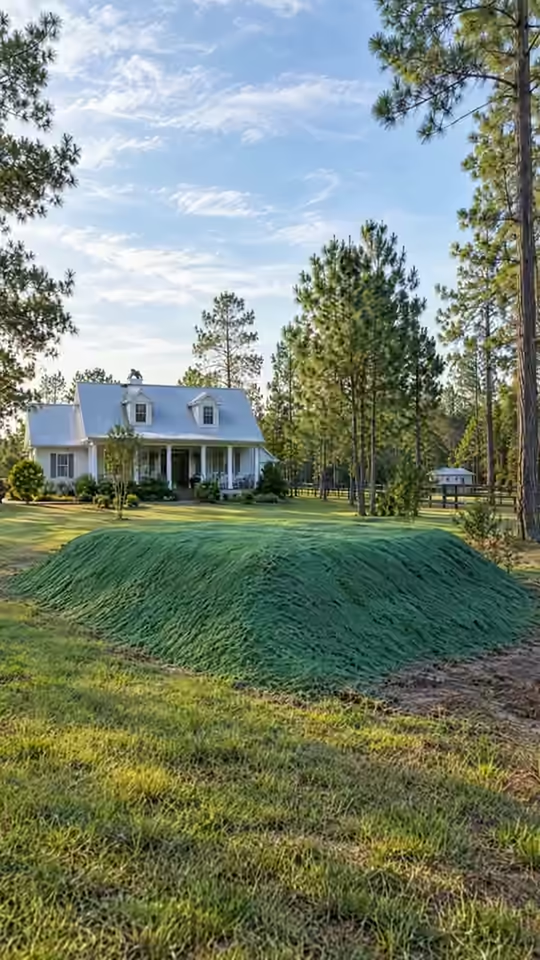
Septic Mound Hydroseeding
Florida will not give a mound system final approval until it is stabilized. We hydroseed mounds, shoulders and caps for installers and homeowners.
Open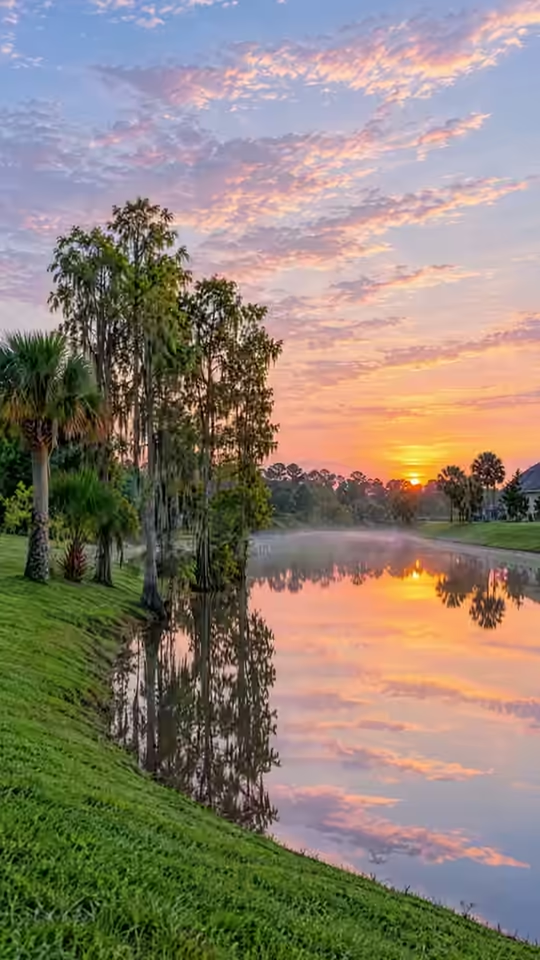
Pond Bank and Retention Pond Hydroseeding
Retention and detention pond banks, roadside ditches and swales, regraded where needed and seeded with grass that fits wet toes and dry crests.
Open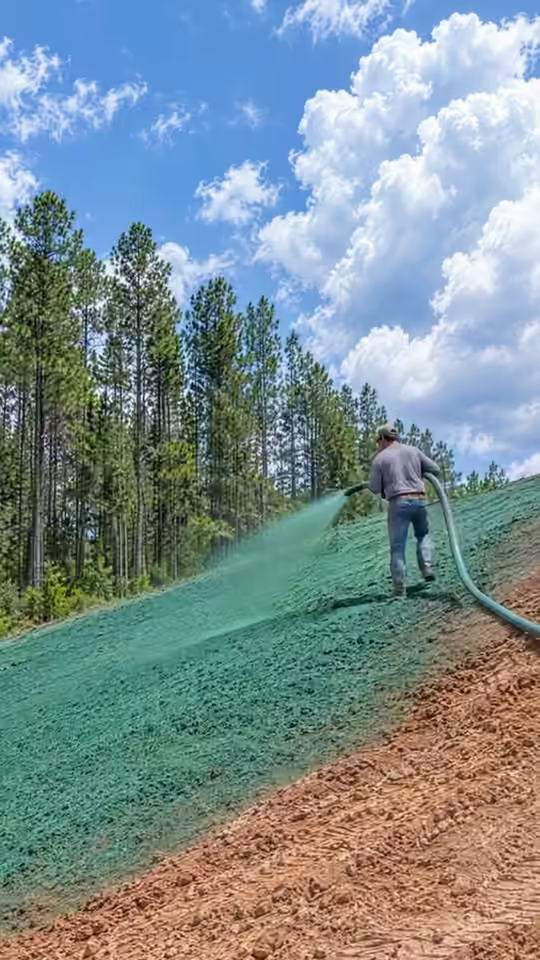
Bonded Fiber Matrix and Hydromulch
Sprayed erosion protection for slopes and bare ground: what BFM and hydromulch are, what FDOT requires of them, and when blankets are the better call.
Open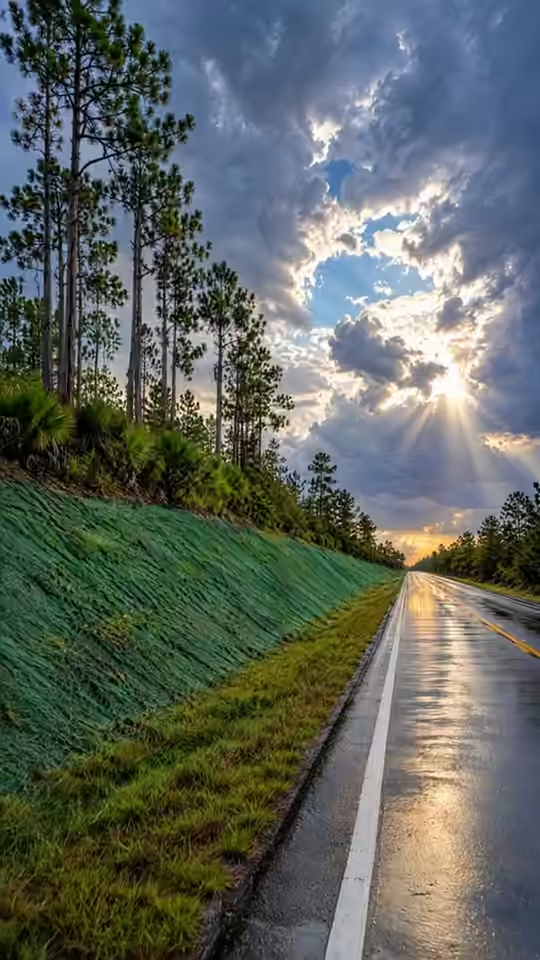
Erosion Control
Hydromulch, bonded fiber matrix, blankets and temporary grass for slopes, ditches and bare ground in one of the rainiest cities in the country.
Open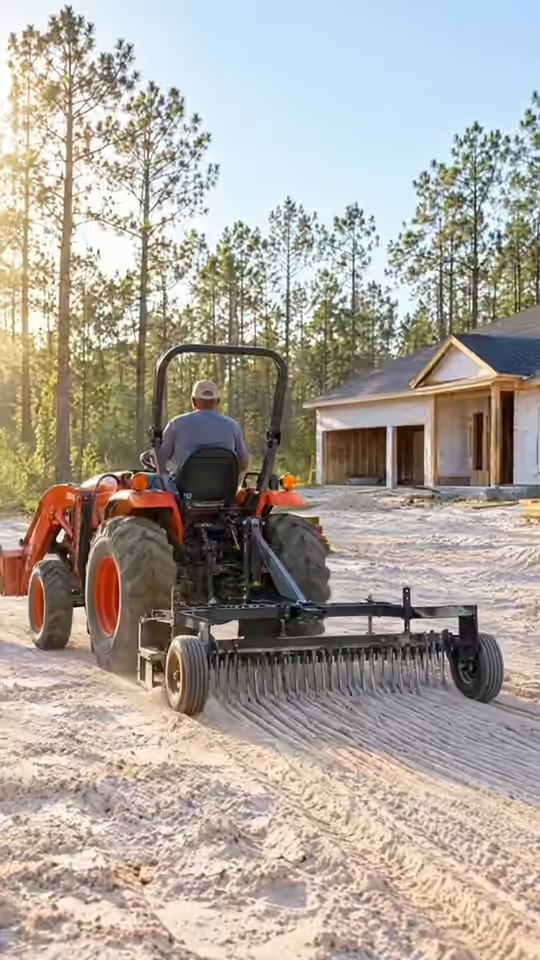
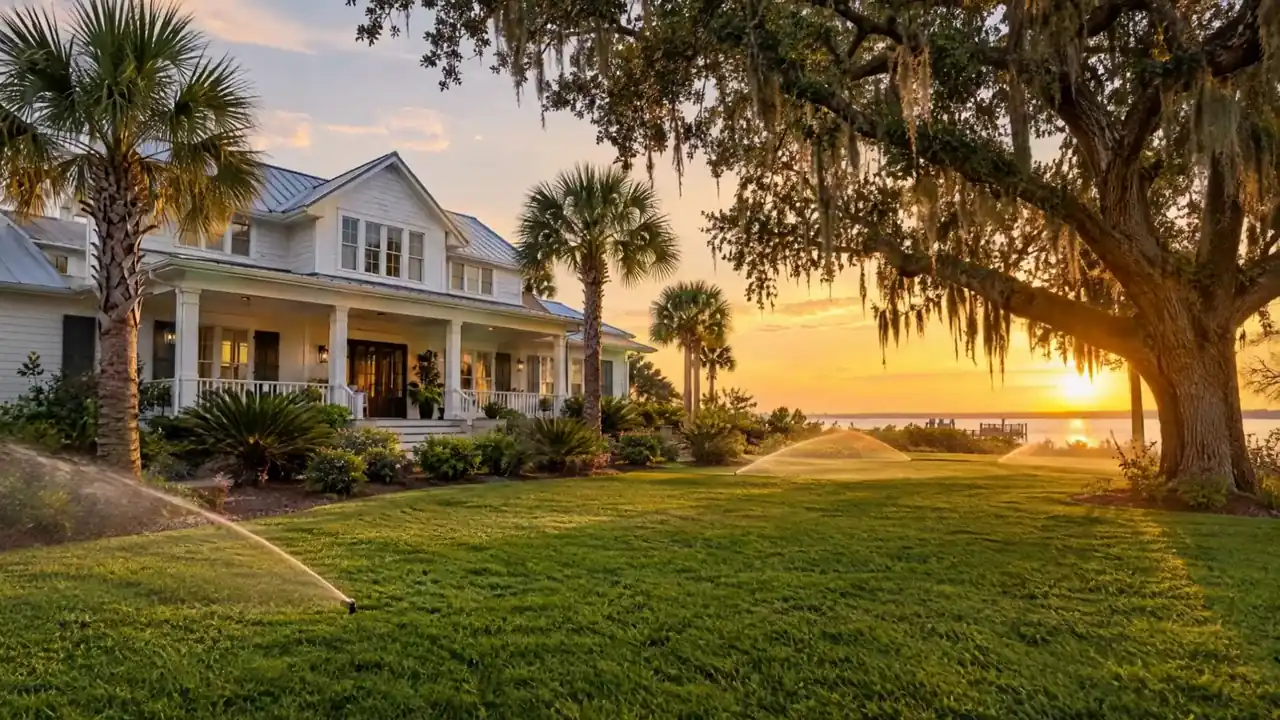
Pace
Pace has grown from a rural crossroads into one of Santa Rosa County's largest communities. Most of that growth arrives as bare sand waiting for a lawn.
OpenSources
Facts on this page come from public sources, mostly UF/IFAS Extension, the Florida Department of Environmental Protection, FDOT and NOAA. We recheck them whenever we update the page.
Tell us about the ground
Send the address and what you are trying to grow or hold in place. We look at the site, the soil and the slope, then quote the mix and the method that fit it.